

How to set up an easy clean dog feeding station that stays tidy
Key Takeaways
A tidy feeding area doesn’t need much: a sensible spot, surfaces you can wipe, and a small daily reset. Start with your dog’s habits and your home, then adjust as you go.
- Choose a calm spot that leaves your dog room to eat.
- Use washable, water-resistant surfaces where spills are likely.
- Pick bowls that suit your dog’s meals and are easy to clean.
- Keep food and water mess contained with a mat and nearby storage.
- Make cleanup part of an ordinary daily routine.
Choose a spot that works for you and your dog
A good feeding spot makes mealtime feel settled for your dog and keeps bowls from becoming a trip hazard for everyone else. Look for a place that is easy to reach with a water bowl and easy to wipe after a meal. Kitchens are often convenient, but a quieter corner can work just as well. If your feeding area shares space with meal prep, a weeknight prep routine can help you think through how people and pets move around the kitchen.
Keep the station away from busy walkways
Set bowls off the main path between rooms, doors, and appliances. Your dog can eat without people stepping around them, and you’re less likely to kick a bowl while carrying laundry or groceries. A quiet nook near the kitchen may be more practical than the middle of the room, as long as your dog can reach it comfortably.
Consider nearby floors, walls, and cabinets
Take a look at what’s around the bowls before you settle on a location. A hard floor is generally easier to wipe than carpet, while a nearby wall or cabinet can catch splashes or crumbs. Leave enough room to pull bowls out for washing and to clean the floor beneath them. If a station is built into a cabinet or island, make sure the surrounding area is still accessible for a quick wipe; a built-in feeding station offers one example of integrating a dedicated spot into a kitchen.
Make sure your dog has room to eat comfortably
Your dog should be able to approach, turn, and settle without squeezing between furniture or bumping into a wall. Watch where they naturally stand during meals, then place bowls where their posture looks relaxed. If your feeding routine includes outings as well as meals at home, KindTail Portabowls are nesting bowls for on-the-go or at-home feeding.
Pick materials that wipe down easily
A tidy station depends as much on what’s underneath and around the bowls as on the bowls themselves. Choose surfaces that can handle a splash and won’t make you nervous about crumbs or a little spilled water. You don’t need to remodel a room; a washable mat and a smooth nearby surface can make a noticeable difference. Here’s a quick comparison to help narrow down the options.
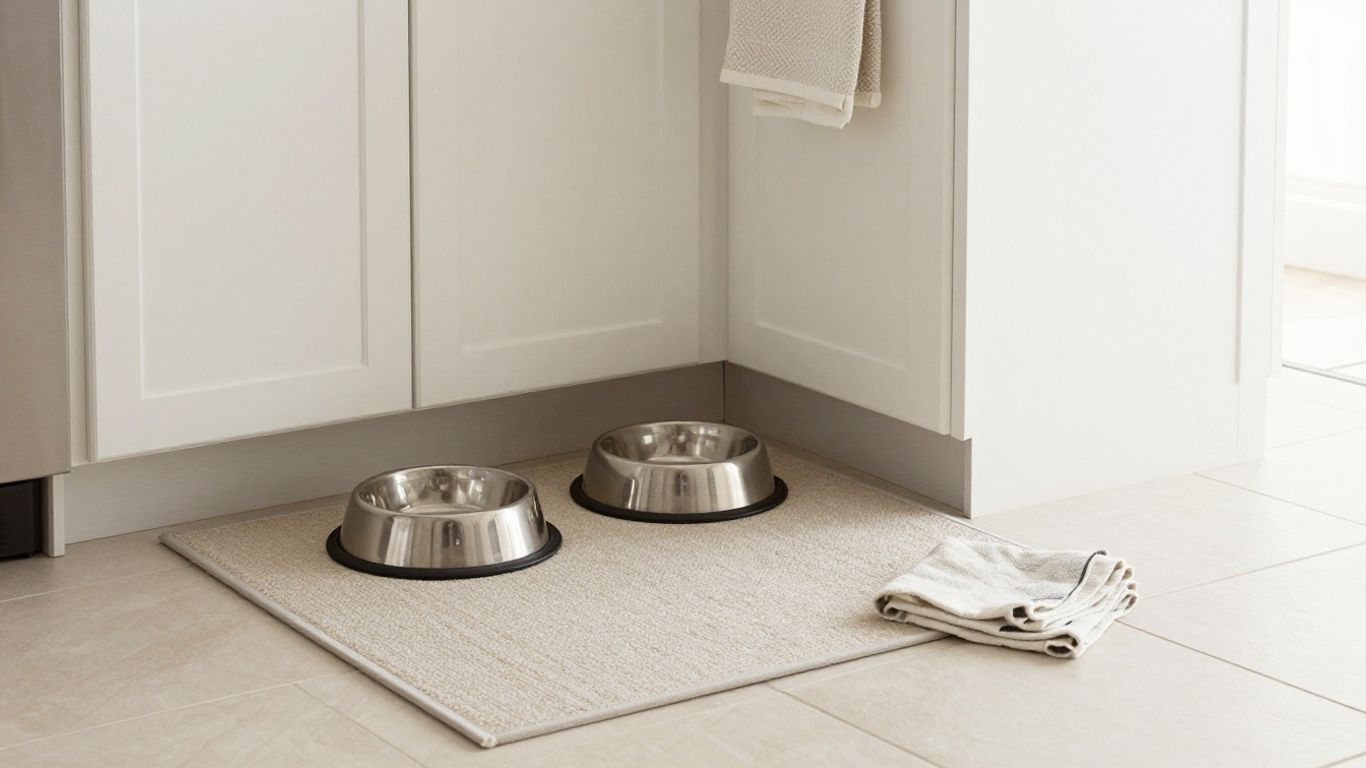
Compare tile, sealed wood, and washable mats
Each surface has its own upkeep, so consider what you’ll actually be comfortable cleaning every day. This quick guide compares common choices by the kind of care they usually need.
| Surface | Everyday cleanup | Useful to keep in mind |
|---|---|---|
| Tile | Wipe or mop spills | Grout may need extra attention |
| Sealed wood | Wipe promptly with a soft cloth | Avoid leaving water to sit |
| Washable mat | Lift and wash as needed | Check care instructions first |
Tile can be simple to wipe, while sealed wood benefits from prompt attention to moisture. A washable mat gives you a removable layer beneath the bowls, and a silicone dog food mat may be worth considering if you want a dedicated surface to catch mess.
Choose furniture with smooth, water-resistant surfaces
If bowls sit on a shelf, cabinet, or furniture-style station, smooth finishes are easier to wipe than rough or unfinished ones. Water-resistant surfaces also make small splashes less stressful to deal with. Check corners and edges, where crumbs can collect, and avoid adding decorative trim that makes routine cleaning fussy.
Check that removable parts are easy to clean
A mat or bowl holder is only helpful if you can lift it without a struggle. Look for pieces that come away easily, then check whether their shape leaves hard-to-reach grooves. The simpler the parts are to handle, the easier it is to clean underneath them instead of putting the task off.
Find the right bowls for everyday use
The best bowl is one your dog can use comfortably and you can wash without a fuss. Think about the size of a normal meal, how much water your dog drinks, and whether you need to move bowls around during the day. KindTail Portabowls are nesting bowls for on-the-go or at-home feeding, giving pet parents an option for routines that shift between home and outings. Whatever you choose, make sure the bowls sit steadily in the space you’ve prepared.
Match bowl size to your dog’s meals
A bowl should hold a usual serving without making the meal feel cramped or awkward to reach. If it’s much larger than needed, food can spread around the rim; if it’s too small, meals may be harder to serve neatly. Use your dog’s normal portion and bowl position as your guide, rather than choosing by appearance alone.
Choose stainless steel or ceramic for simple cleanup
Stainless steel and ceramic are common choices for everyday bowls because their smooth surfaces are straightforward to wash. Check for chips, cracks, or worn areas as part of regular upkeep, and follow any care instructions that come with the bowl. Keeping bowls separate from food-prep tools is sensible too; this cutting board cleaning guide covers care for a separate kitchen surface.
Decide whether raised bowls suit your dog
Raised bowls aren’t a must-have for every dog. Consider your dog’s comfort, mobility, and the way they naturally approach a meal, and ask your veterinarian if you’re unsure whether a change would suit them. The right height is the one that lets your dog eat comfortably without making the station unstable or difficult to clean beneath.
Keep food and water mess under control
A little planning can keep splashes and stray kibble from spreading across the room. Set bowls on a surface that contains everyday spills, leave enough space to reach around them, and store food close by without crowding the station. KindTail Portabowls are nesting bowls for on-the-go or at-home feeding, which can fit a routine that moves between the house and outings. These small choices help make a feeding area feel orderly without making it complicated.
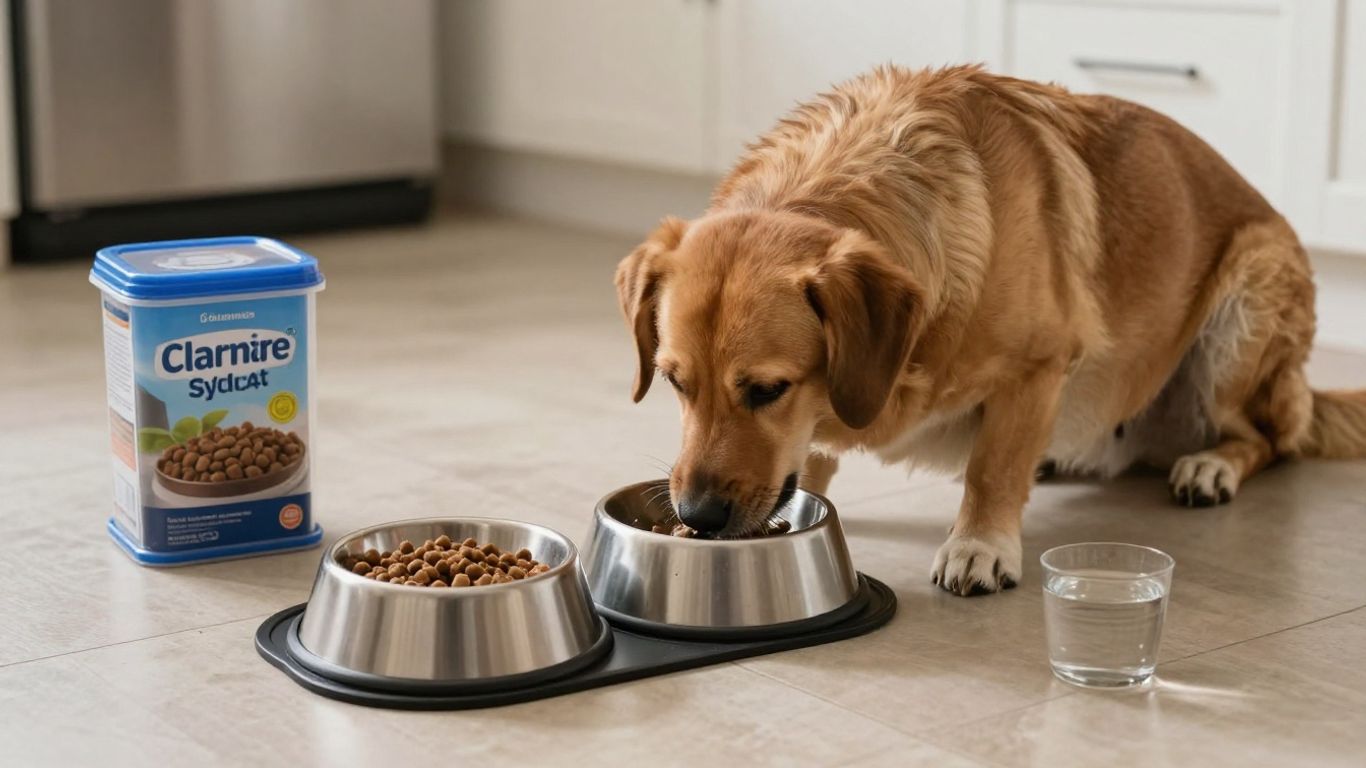
Use a mat with a raised edge to catch splashes
A mat gives water and crumbs a defined landing place instead of letting them travel across the floor. Raised edges can help contain some splashes, though you’ll still want to wipe up standing water rather than leave it sitting. Choose a mat that fits beneath the bowls with room around them, and lift it now and then to clean the floor below.
Leave space around bowls to reduce spills
Crowded bowls are harder to refill and harder to clean around. Leave enough open mat or floor space to lift each bowl straight up, wipe the surface, and put everything back without knocking the other bowl. A little breathing room can also help a dog settle into a comfortable position instead of nudging bowls around.
Store kibble in an airtight container nearby
Keep dry food in a sealed container close enough to make serving easy, but not so close that it blocks access to the bowls. A dedicated scoop can help you portion meals without scattering kibble across the counter or floor. If you’re also organizing your own kitchen routine, a macro calculator can help with personal nutrition targets; keep your dog’s food and portions separate from that planning.
Build a quick cleaning routine
Short, regular cleanups tend to feel easier than waiting for the whole area to look messy. Pick a simple rhythm that fits your dog’s meal schedule, then keep the supplies you need nearby but safely stored. The goal is a feeding station that’s ready for the next meal, not a spotless kitchen after every bite. If you notice a musty smell or poor airflow elsewhere in the home, these air conditioner deep-clean signs are a separate home-maintenance read—not a substitute for cleaning the bowls and feeding area.
Rinse bowls after meals and wash them regularly
Rinsing bowls after meals clears away loose food before it dries on. Wash them regularly with dish soap and water, then rinse well and let them dry before refilling. A repeatable routine is easier to remember when it follows the meal itself, rather than becoming a separate chore you have to fit in later.
Wipe the mat and feeding area on a simple schedule
A small schedule keeps the less obvious spots from being forgotten. You can use this as a starting point and adjust it to suit your dog’s habits and the amount of mess:
- After meals: rinse bowls and pick up visible food.
- Daily: wipe fresh water splashes and crumbs.
- Weekly: wash the mat and clean beneath the station.
- As needed: clean any dried spills or sticky patches.
That’s enough structure for many homes, but a messy eater may need a quicker wipe after each meal. For a broader pet-cleaning routine, this dog crate cleaning guide covers care of a separate part of your dog’s space.
Tackle crumbs and spills before they dry
Fresh spills are usually simpler to wipe than dried food stuck to a mat or floor. Keep a cloth or paper towel within easy reach, and use it as soon as you spot a splash. Store cleaning products safely away from your dog, and follow their labels when cleaning surfaces near food and water bowls.
Adjust the setup to your dog’s needs
Dogs change, and a feeding setup can change with them. A puppy may need a different arrangement as they grow, while an older dog may appreciate a clear, easy-to-reach path to the bowls. Notice what happens during ordinary meals: does your dog bump into the water bowl, push food around, or seem hesitant to approach? Small adjustments can make the station more comfortable without adding extra fuss.
Make the station accessible for puppies and older dogs
Keep the route to the bowls clear and avoid placing them behind furniture or beside anything your dog might trip over. For a puppy, check the arrangement again as they grow, since the space that worked a few weeks ago may soon feel cramped. For an older dog, prioritize an easy approach and a stable bowl position; if you have questions about what’s comfortable, ask your veterinarian.
Separate food and water for messy eaters
If your dog nudges bowls together or splashes while drinking, try giving food and water a little more room. You might keep them on different parts of one mat or use separate easy-to-clean areas. If your feeding routine includes trips away from home, KindTail Portabowls are nesting bowls for on-the-go or at-home feeding. For a move across borders, a Canada-to-UK pet move guide can help you think through travel arrangements and settling into a new home.
Keep cleaning supplies and pet food safely out of reach
Store pet food in a closed container and put cleaning supplies somewhere your dog cannot access. A nearby cabinet can keep the area neat, as long as the door closes securely and the food stays dry. Keep only the items you use regularly at the station; fewer things on the floor mean fewer places for crumbs to hide.
Conclusion
An easy clean dog feeding station is less about buying a perfect setup and more about choosing a comfortable spot, simple-to-wash surfaces, and a routine you can stick with. Start with one small change—perhaps moving the bowls out of the walkway or adding a washable mat—and see what makes mealtime calmer for your furry family member.
Frequently Asked Questions
Where should I put my dog’s feeding station?
Choose a quiet, easy-to-reach spot away from busy walkways. A hard floor or washable surface nearby can make routine cleanup easier.
What should I put under dog bowls?
A washable mat can give spills and crumbs a defined landing place. Choose one that fits beneath the bowls and is easy to lift for cleaning.
How often should I wash my dog’s bowls?
Rinse away leftover food after meals and wash bowls regularly with dish soap and water. Follow any care directions for the bowl material.
Are raised bowls right for every dog?
No single setup suits every dog. Consider your dog’s comfort and mobility, and ask your veterinarian if you’re unsure whether raised bowls are appropriate.
How do I keep kibble from scattering?
Use a bowl that suits the meal size, leave room around it, and serve with a dedicated scoop. Wipe stray pieces up before they get tracked around.
How can I make a feeding station work in a small home?
Use a compact spot outside the main walkway, keep only everyday essentials nearby, and store food in a closed container. A removable mat can help define the area.
What’s the easiest way to clean a feeding mat?
Lift it to remove crumbs, then wash it according to its care instructions. Wipe up fresh spills promptly and clean the floor underneath as needed.