

Collapsible dog crate large enough for your pup: how to choose the right one
Key Takeaways
A good crate should fit your dog today, support their comfort, and make sense for the way your family lives. A little measuring and careful checking can save you from a frustrating return later.
- Measure your dog and compare the numbers with the crate’s interior dimensions.
- Choose a style and material that match your dog’s habits and where you’ll use it.
- Check latches, seams, stability, and openings before trusting a crate for daily use.
- Keep the setup comfortable with suitable bedding, a calm location, and gradual introductions.
- Compare cleaning, storage, warranty, and price—not just the crate’s appearance.
Get the size right
A crate should give your dog room to settle without taking up more space than you can use comfortably. Start with your dog’s measurements, then compare them with the crate’s interior dimensions rather than relying on a size label alone. This is especially helpful when you’re looking for a collapsible dog crate large enough for a full-grown pup but still practical to store.
Measure your dog from nose to tail and floor to head
Measure your dog while they’re standing naturally, from the tip of the nose to the base of the tail, then from the floor to the top of the head or ears, whichever is higher. Add a little room to each measurement so your dog can shift position; a snug measurement is not a comfortable crate measurement. For a quick reference, compare the two measurements with the usable interior space, not the outside dimensions.
| Measurement | How to take it | What to check |
|---|---|---|
| Length | Nose to base of tail | Interior length allows a little extra room |
| Height | Floor to top of head or ears | Dog can stand without crouching |
| Width | Across the widest part of the body | Dog can turn without squeezing |
The numbers are a starting point, not a substitute for watching your dog move. A crate sizing guide can help you compare measuring approaches, while a crate dimensions overview is another way to think through fit before choosing a model.
Leave room to stand, turn around, and stretch out
Your dog should be able to stand naturally, turn around, and lie down in a relaxed position. Imagine the crate as a small resting space rather than a carrier where your dog only needs to sit briefly. If the fit looks close on paper, check the interior measurements again and consider whether bedding will take up some of that usable room.
Account for puppies who are still growing
A puppy can outgrow a crate surprisingly quickly, so think about their likely adult size as well as their current one. A divider can make a larger crate more usable during the growing stage, provided it can be fitted securely and adjusted as needed. Growth also brings changing routines: for example, a Labrador puppy feeding guide can help with meal planning, while crate sizing remains a separate decision based on your pup’s measurements.
Avoid sizing up so much that crate training gets harder
A very large crate may give a puppy more room than they need while they’re learning to settle, and it can be harder to make the space feel like a cozy nap spot. Choose enough room for comfortable movement, then use a suitable divider if your dog is still growing. If you’re weighing a large crate against furniture and floor space, space-saving crate ideas offer another angle on fitting a resting spot into your home.
Choose a crate style and material
Collapsible crates come in different forms, and the right one depends on your dog as much as your décor. Wire, fabric, and enclosed designs each bring different trade-offs in visibility, ventilation, portability, and cleaning. Picture where the crate will live on an ordinary day, not just how it looks in a product photo.
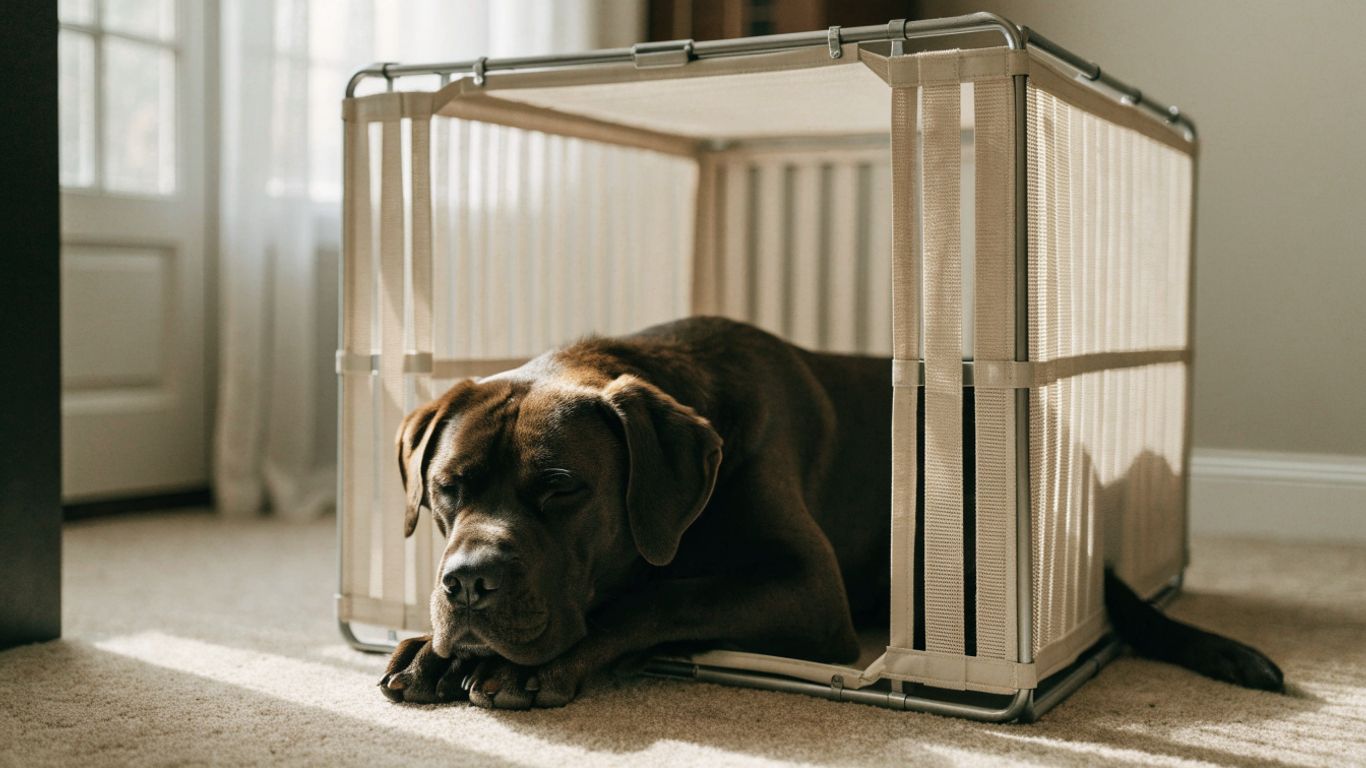
Compare wire, soft-sided, and other collapsible designs
Wire crates provide an open view and broad airflow, while soft-sided styles may be lighter to carry and easier to fold. Enclosed collapsible designs can offer a more sheltered feel, though you’ll still want to check how air circulates and how the openings work. The KindTail PAWD is described as a modern collapsible dog crate with an enclosed shell, so consider whether that kind of den-like setup suits your dog and your room.
Match the material to your dog’s chewing habits
A crate material should be chosen with your dog’s behavior in mind. A determined chewer may damage fabric or mesh, while a dog who tends to rest quietly may be comfortable in a soft-sided option. Be realistic about what your dog does when left alone; if you’re unsure, supervise early sessions and inspect the crate often for signs of wear.
Think about where you’ll use the crate most
A crate for a quiet corner at home may have different priorities from one you plan to carry on trips. Consider the floor surface, nearby foot traffic, airflow, and how often you’ll move it. For more context on weighing portability against everyday use, a guide to crates for travel and home can help you frame the decision.
Check how easily it folds and stores
A collapsible crate is only convenient if you can fold it without a struggle and store it where you have room. Check whether the folded shape fits in a closet, under a bed, or in the area you use for pet supplies. The KindTail PAWD is described as folding flat in about 60 seconds; that stated folding time may be useful to compare with your own routine, but check the product’s current instructions for details.
Check for safety and sturdy construction
A crate should feel dependable when your dog steps inside, shifts around, or leans against a side. Take a few minutes to inspect the parts that experience repeated movement, including latches, seams, corners, and folding joints. No single feature guarantees a safe fit, so assess the whole structure and use the crate as directed.
Look for secure locks and reliable hinges
Open and close every door and latch several times before using the crate. The hardware should move smoothly and stay closed when secured, without requiring a workaround or extra force. Hinges should line up properly, and folding joints should not feel loose or pinchy as the crate opens and closes.
Inspect mesh, bars, seams, and corners
Look over the crate from top to bottom, checking for sharp edges, loose stitching, bent bars, frayed mesh, or gaps around corners. Pay extra attention to the points your dog can reach with their mouth or paws. A quick inspection after cleaning or folding can also catch small problems before they become bigger ones.
Make sure the crate stays stable when your dog moves
Set the crate on the type of floor where you plan to use it and gently test whether it rocks or slides. Your dog should be able to change position without the whole structure shifting in a way that feels unsettling. If a crate has feet or a base, confirm they sit evenly and follow any setup guidance supplied with it.
Skip designs with gaps that could catch paws or collars
A gap that looks minor at first glance can still be a snag point, so inspect openings from your dog’s perspective. Check the door edges, folding sections, and places where material meets a frame. Remove a collar or tags if your veterinarian or training professional recommends doing so during crating, and never leave a dog unattended in a crate that has a known hazard.
Pick features that suit your routine
Small details can make daily use feel easier, especially if you set up and put away the crate often. Think about cleanup after muddy walks, how you’ll carry it, and whether your dog needs access from more than one side. Choose features that solve real routine problems rather than adding complexity you won’t use.
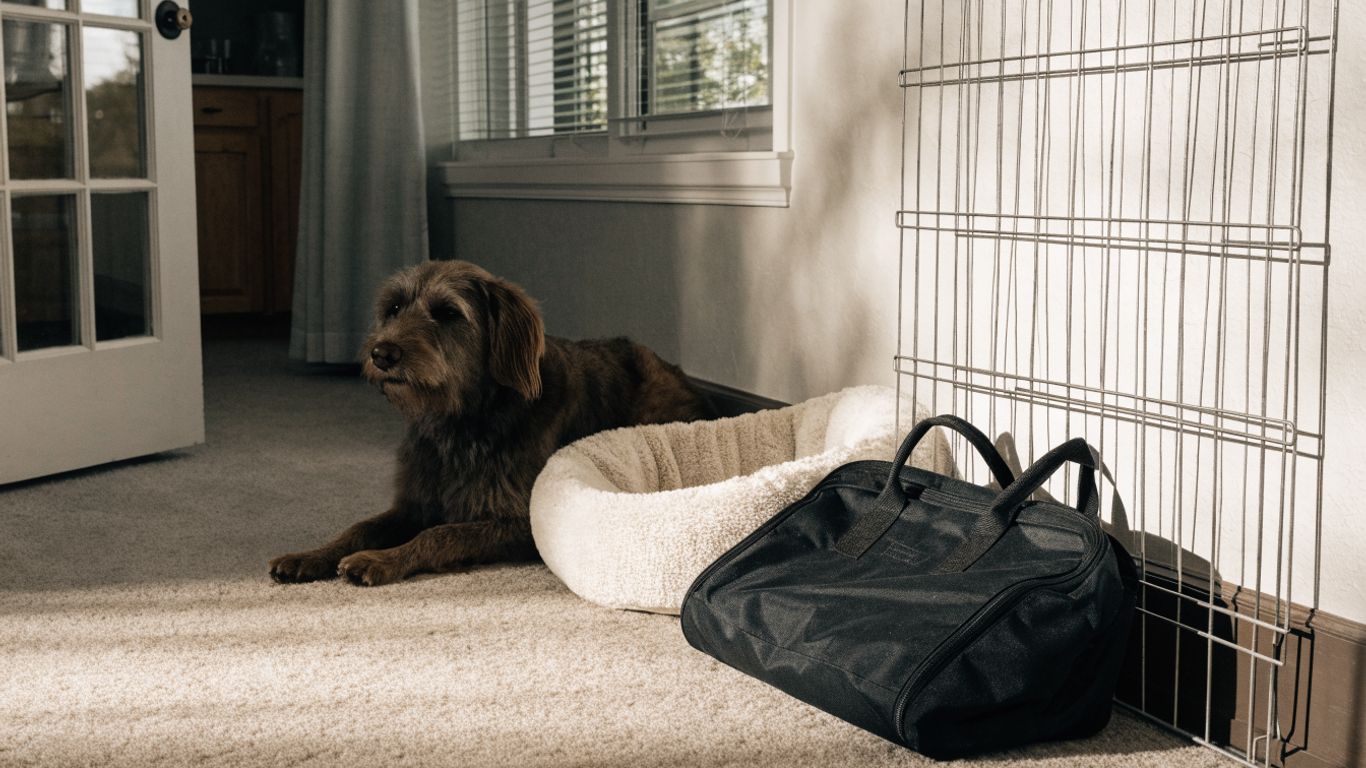
Consider removable trays and washable covers
A removable tray or washable cover can make routine cleanup simpler, but check how each piece comes out and whether it can be cleaned the way you prefer. Look for care instructions before buying, not after a spill. If the crate has fabric panels, find out whether they can be removed or must be wiped in place.
Look for handles and a carrying case for travel
Handles and a carrying case can be useful if you move the crate between rooms or take it along on trips. Check the folded weight and shape, too: a handle won’t help much if the crate is awkward to lift or store. For soft-sided crate shoppers, soft-crate travel notes can provide another perspective on sizes and included accessories.
Check whether the crate has useful doors and access points
Think about how you’ll approach the crate in the room where it will sit. A door that opens toward a wall or blocks a walkway may become an everyday annoyance, while an extra access point could make it easier to place the crate in a particular spot. Before purchasing, picture the door swinging open and make sure you’ll have room to use it.
Decide if dividers or extra storage would help
A divider can help make a larger crate more practical for a growing puppy, while storage pockets may be handy for treats, leads, or small care items. Consider what you’ll actually keep nearby and whether any accessory could become a chewing or snagging hazard. These four questions can help narrow your choices:
- Will the crate stay in one place or move around often?
- Do you need a divider while your puppy grows?
- Can you clean the parts your dog is most likely to soil?
- Will the folded crate fit where you plan to store it?
Your answers should point toward a few useful features, not a longer shopping list. Keep the setup simple enough that it’s easy to use consistently.
Make the crate comfortable for your dog
A well-sized crate is only part of a welcoming setup. Your dog also needs a comfortable surface, a location that feels settled, and time to learn that the crate is a safe place to rest. Small, positive steps usually make the space feel more familiar than rushing to use it for long stretches.
Add bedding that fits without blocking ventilation
Choose bedding that lies flat and leaves the crate’s vents or mesh unobstructed. The bed should fit without bunching against the door or taking away too much room for your dog to turn around. If your dog chews or pulls at bedding, supervise at first and select a setup that suits their habits.
Choose a spot that feels calm but not isolated
A quiet corner can help your dog rest, but a crate placed far from everyday family activity may feel lonely to some dogs. Try a spot where your pup can settle without being in the middle of constant traffic, noise, or direct sun. If the room gets warm, adjust the location and keep airflow in mind.
Introduce the crate gradually with treats and short sessions
Let your dog investigate the crate at their own pace, then reward calm curiosity with a treat or praise. Begin with short sessions and an open door, building up gradually as your dog becomes comfortable. For new pet parents, puppy crate basics can offer additional ideas for making early introductions feel positive.
Adjust the setup for warm weather and anxious dogs
Watch how your dog responds to the crate rather than assuming one setup suits every season or temperament. Keep the space ventilated, away from heat, and calm; for an anxious dog, a familiar blanket or gradual practice may help, while persistent distress calls for advice from a veterinarian or qualified trainer. Household comfort can also depend on the room itself: commercial building sunshades address shade and glazing in larger buildings, a separate consideration from choosing a crate.
Compare prices and care requirements
The lowest price is not always the best value if the crate is awkward to clean, difficult to store, or poorly suited to your dog. Compare the full routine: setup, daily use, cleaning, and where the crate goes when it’s folded. A little homework now can make the crate feel like a practical part of life rather than another bulky item to work around.
Weigh the upfront cost against durability
Compare materials, construction, and care needs alongside the price tag. A crate that is used every day may need to handle more folding, moving, and cleaning than one kept in a guest room for occasional visits. Focus on the features that matter for your dog and routine, and avoid paying extra for details you won’t use.
Check cleaning instructions before you buy
Read the care instructions and consider whether you can manage them with your usual supplies and schedule. The KindTail PAWD’s enclosed shell is described as easy to wipe or hose clean; follow the current product guidance for the appropriate cleaning method. For any crate, let surfaces dry fully before setting it up again.
Review the warranty and return policy
Check what the warranty covers, how long the return window lasts, and whether the crate must be returned in its original packaging. Keep the receipt and assembly information until you’re sure the size and setup work for your dog. When comparing product information, separate practical crate questions from unrelated household research such as post-transfer rest research or dry eye treatment options.
Confirm the folded crate fits your storage space
Measure the place where you plan to store the folded crate, including doorway clearance if you need to carry it through a narrow space. Compare those numbers with the product’s folded dimensions and account for any carrying case or accessories. Before you order, it can help to measure the storage spot once more; a crate that folds neatly is most useful when it has somewhere convenient to go.
Conclusion
Choosing a crate comes down to a comfortable fit, sensible construction, and details that work with your everyday routine. Measure carefully, check the setup in person when possible, and give your dog time to settle in. With the right choice, a collapsible crate can become a familiar resting place at home or away.
Frequently Asked Questions
How do I know what size crate my dog needs?
Measure your dog from nose to tail and from the floor to the top of the head or ears, then compare those measurements with the crate’s interior dimensions. Your dog should be able to stand, turn around, and lie down comfortably.
Is a collapsible crate suitable for a large dog?
It can be, as long as the crate’s interior dimensions suit your dog and its construction is appropriate for their behavior and strength. Check the maker’s size guidance and inspect the assembled crate for stability.
Should I buy a larger crate for a puppy?
You can plan for your puppy’s expected adult size, but too much unused space may make early crate training less straightforward. A secure divider can help adjust the usable area as your puppy grows.
Which crate material is best for a dog that chews?
There is no single material that suits every chewer. Consider how intensely your dog chews, supervise early use, and avoid a design that your dog can quickly damage or pull apart.
How can I make a crate more comfortable?
Use bedding that fits without blocking ventilation, place the crate in a calm area, and introduce it gradually with short, positive sessions. Adjust the setup if your dog seems too warm or unsettled.
How often should I clean a dog crate?
Clean it whenever it becomes soiled and follow the manufacturer’s care directions for the crate’s materials. Regularly inspect seams, latches, and corners while cleaning so you can spot wear early.
What should I check before buying a folding crate?
Compare the interior and folded dimensions, test how the latches and hinges work if possible, and review cleaning instructions, warranty terms, and returns. Make sure the folded crate will fit the space where you plan to store it.