






How to Choose the Best Space Saving Dog Crate for Your Home
Key Takeaways
A space-saving crate should conserve room without making your dog feel cramped or unsafe. The best choice depends on your dog’s measurements, temperament, your home’s layout, and how often the crate will move.
- Measure your dog before choosing a crate size.
- Look for folding, collapsible, corner-friendly, or furniture-style designs.
- Prioritize secure locks, ventilation, stable construction, and washable bedding.
- Place the crate where your dog can rest without being isolated or disturbed.
- Introduce the crate gradually and stop if confinement causes serious distress.
Understand how a space saving dog crate works
A space-saving crate reduces the amount of floor area it occupies, the storage space it needs, or both. Some designs fold flat, while others use vertical height, corner placement, or furniture-style construction more efficiently. The goal is not simply to buy the smallest enclosure. It is to create a practical, comfortable retreat that fits naturally into your home.
Features that reduce the crate’s footprint
Look for a crate with a slim profile, a folding frame, removable panels, or doors that do not need a wide swing. Rounded corners can also make placement easier in a busy room. A design with a tidy exterior may leave more usable walking space around it, especially in an apartment or narrow living area.
Think about the footprint when the crate is both open and stored. A model that folds quickly but is awkward to carry may not save much effort in practice. Daily convenience matters just as much as the number of inches saved on the floor.
Foldable, collapsible, and furniture-style designs
Foldable crates are useful when you need a familiar resting place at home but want the option to store it later. Collapsible models can be especially practical for travel, visits, or rooms that serve more than one purpose. A furniture-style crate takes a different approach by making the enclosure part of a side table or another piece of decor.
For a broader look at flexible options, this foldable crate guide discusses how foldable designs can support home use, travel, and storage without sacrificing a cozy den-like feel. Consider the mechanism, not just the label: a crate is only space-saving if you can actually fold, move, or reposition it with reasonable effort.
When vertical or corner placement makes sense
Corners can turn unused floor area into a calm resting zone, provided the crate still has good airflow and an accessible entrance. Vertical designs may work when ceiling height is available and the upper structure remains stable. Avoid squeezing a crate between furniture so tightly that your dog cannot enter comfortably or you cannot reach the door quickly.
Leave enough clearance to clean around the crate and inspect its fasteners. A few extra inches can make a meaningful difference when you need to remove bedding, open a latch, or help your dog during an unexpected situation.
Trade-offs between compactness and daily convenience
A smaller exterior can mean less room for a wide door, storage pockets, or a substantial mat. Some lightweight models are easy to move but may not suit a dog who pushes, chews, or tries to escape. Before choosing, picture the ordinary tasks: opening the door, changing bedding, carrying the crate, and storing it between uses.
The right crate feels compact to the household but appropriately spacious to the dog. If saving space makes cleaning difficult or compromises stability, the design is solving the wrong problem.
Choose the right crate size for your dog
Size is the foundation of a good crate choice. A crate that fits the room but not the dog will not provide a comfortable sanctuary. Measure first, then compare those measurements with the manufacturer’s interior dimensions rather than relying only on weight ranges or breed labels.
Measuring your dog for a safe fit
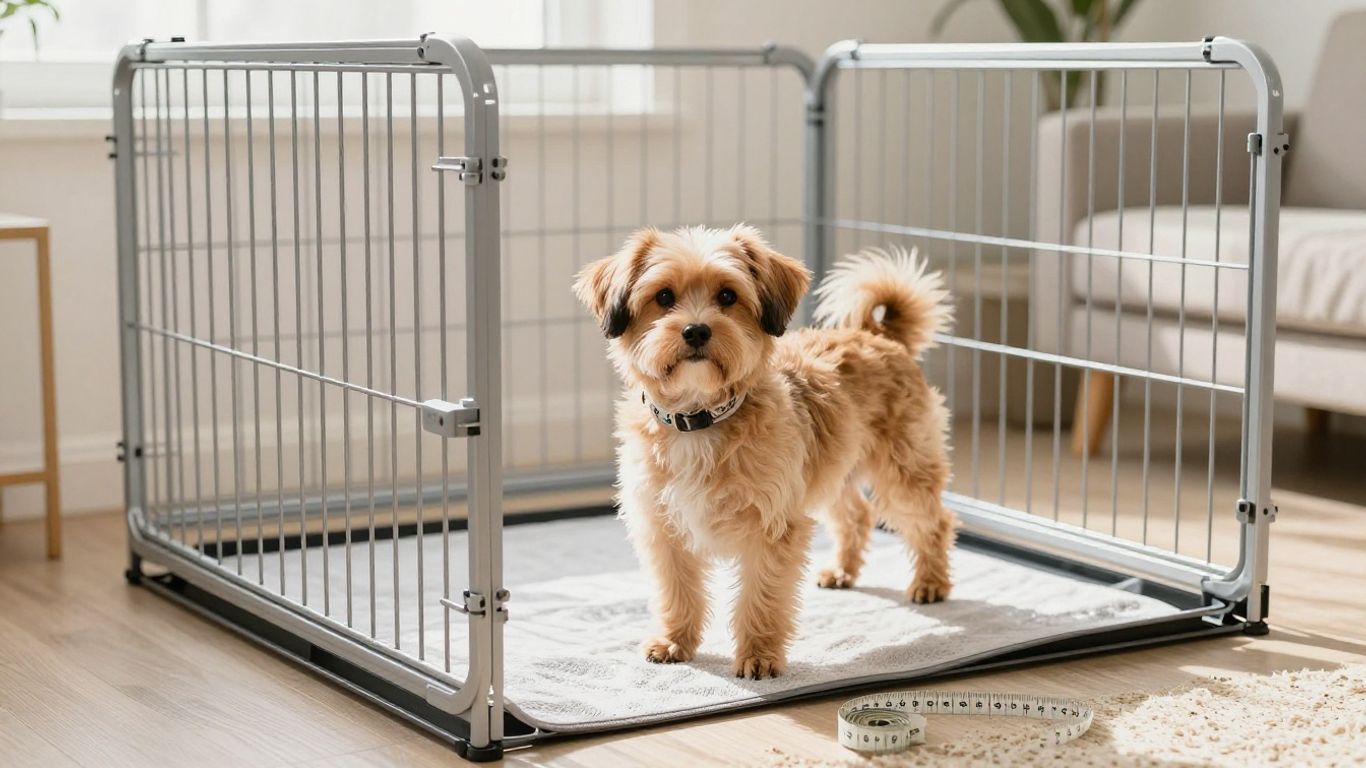
Measure your dog from the tip of the nose to the base of the tail, not including the tail itself. Then measure from the floor to the top of the head or ears, whichever is higher when your dog is standing naturally. Add a modest amount of clearance so your dog can move without rubbing against the crate.
Repeat the process while your dog is standing straight and relaxed. If you are preparing for a puppy, record the measurements periodically because a crate that fits today may become restrictive surprisingly quickly.
Providing room to stand, turn, and lie down
Your dog should be able to stand without crouching, turn around without squeezing, and lie down fully on their side. These simple movements are more useful than an oversized interior because they reflect how a dog settles and changes position during rest.
Bedding takes up some of the usable height and floor area, so account for the mat when checking the fit. A dog crate sizing guide can help you compare measurements, accessories, and the difference between a home crate and a travel crate.
Accounting for growth in puppies
Puppies need a plan for growth. A crate with a divider can give a young dog a suitably sized area while allowing the enclosure to expand later. Without a divider, buying far too large may make the space less restful and can complicate house training.
Check the divider regularly as your puppy grows. It should remain secure, leave enough room for natural movement, and never create sharp edges or loose gaps. A flexible setup is often more useful than replacing the entire crate several times.
Avoiding crates that are too large or too restrictive
An oversized crate may take more room than necessary and can feel less like a den. An undersized crate is worse: it can prevent comfortable posture, trap heat, and make rest stressful. Neither choice is improved by adding extra bedding or accessories that further reduce the interior.
Use your dog’s current behavior as a final check. If they cannot settle, repeatedly change position, or appear physically uncomfortable, reassess both the size and the setup rather than assuming they simply need more time.
Compare the main space-saving crate types
Different crate types save space in different ways. Wire models often prioritize ventilation and storage flexibility, soft-sided crates favor portability, and furniture-style options blend into shared rooms. The best match depends on your dog’s behavior as much as on your decorating preferences.
Foldable wire crates for flexible storage
Foldable wire crates can be practical when you need a sturdy enclosure that stores more easily between uses. Their open construction usually makes it simple to see through the sides and place the crate in a room where your dog wants to remain part of family life.
Inspect the folded shape and the weight before buying. If the crate will move often, handles and a straightforward folding motion may matter more than a few extra decorative details.
Soft-sided crates for travel and temporary use
Soft-sided crates are often convenient for trips, short visits, and temporary rest. They can be lighter to carry and less visually imposing in a small room. However, they are not ideal for every dog, particularly one who scratches, chews fabric, or presses persistently against mesh.
A foldable dog crate may be worth comparing when portability, breathable panels, and easy folding are central to your routine. Always check that the frame stays open securely and that mesh panels cannot be reached and damaged by your dog.
Furniture-style crates for shared living spaces
Furniture-style crates can make a dog’s resting area feel like part of the room instead of an object placed in the middle of it. They may work well beside a sofa or in a living room where appearance matters. Their solid panels can also offer a little visual separation, although ventilation must remain adequate.
Do not use the top as a table unless the construction is designed for that purpose. Keep doors, hinges, and ventilation openings accessible. For more ideas on combining home decor with a canine retreat, see this indoor crate furniture guide.
Stackable or modular options for multi-dog homes
Modular systems can help organize separate spaces for multiple dogs, but stacking introduces extra safety concerns. Each level needs firm support, stable connections, and enough ventilation. A dog should never be placed in a position where a loose upper crate could shift or fall.
Measure the whole arrangement, including the space needed to open each door. In many homes, two appropriately sized crates placed side by side are safer and easier to maintain than a tall arrangement that saves floor space but complicates access.
Evaluate safety, comfort, and durability
A compact crate still needs to function as a secure resting place. Examine the frame, door, flooring, and ventilation before considering color or style. Durability is not only about heavy materials; it is also about whether the crate remains reliable after repeated folding, cleaning, and everyday use.
Checking door locks, hinges, and frame stability
Open and close every door several times before use. The latch should engage fully, hinges should move without catching, and the frame should remain steady when gently nudged. If the crate folds, make sure each locking point is fully engaged before your dog enters.
A quick pre-use inspection can become part of your routine. Check for loose screws, bent wire, cracked connectors, or fabric that has pulled away from its seam. Small faults are easier to address before they become an escape route.
Choosing breathable materials and proper ventilation
Air should circulate through the crate from more than one direction. Mesh, open wire, slatted panels, and carefully placed openings can all support airflow, but they should not create reachable gaps or sharp edges. Keep the crate away from direct heat, strong drafts, and blocked vents.
Your dog’s coat, age, and local climate also matter. Watch for panting, restlessness, or an unusually warm interior, especially after adding a cover or thick mat.
Using a secure, washable crate mat
A mat should lie flat and resist bunching when your dog turns around. Washable materials make accidents and muddy paws easier to manage, while a suitable thickness can make the floor more inviting without stealing too much interior space. Avoid bedding with loose strings, exposed foam, or pieces your dog can chew off.
This is also where thoughtful feeding and routine planning can help. A dog feeding guide can support better portion decisions, while a separate water setup should be stable, spill-resistant, and positioned so it does not soak the sleeping area.
Identifying designs that could pinch, snag, or collapse
Run your hand along accessible edges and inspect every folding joint. Look for gaps where toes, collars, nails, or fabric could catch. A crate should not collapse when a dog leans against a side, and its floor should not flex in a way that makes standing uncertain.
Use this short inspection sequence before regular use:
- Test every latch with the door closed.
- Press gently on each side and corner.
- Inspect seams, mesh, hinges, and exposed hardware.
- Confirm the mat cannot slide into the door or a gap.
Afterward, open the door and check that no component has shifted. This simple habit helps distinguish a genuinely practical compact crate from one that is merely small.
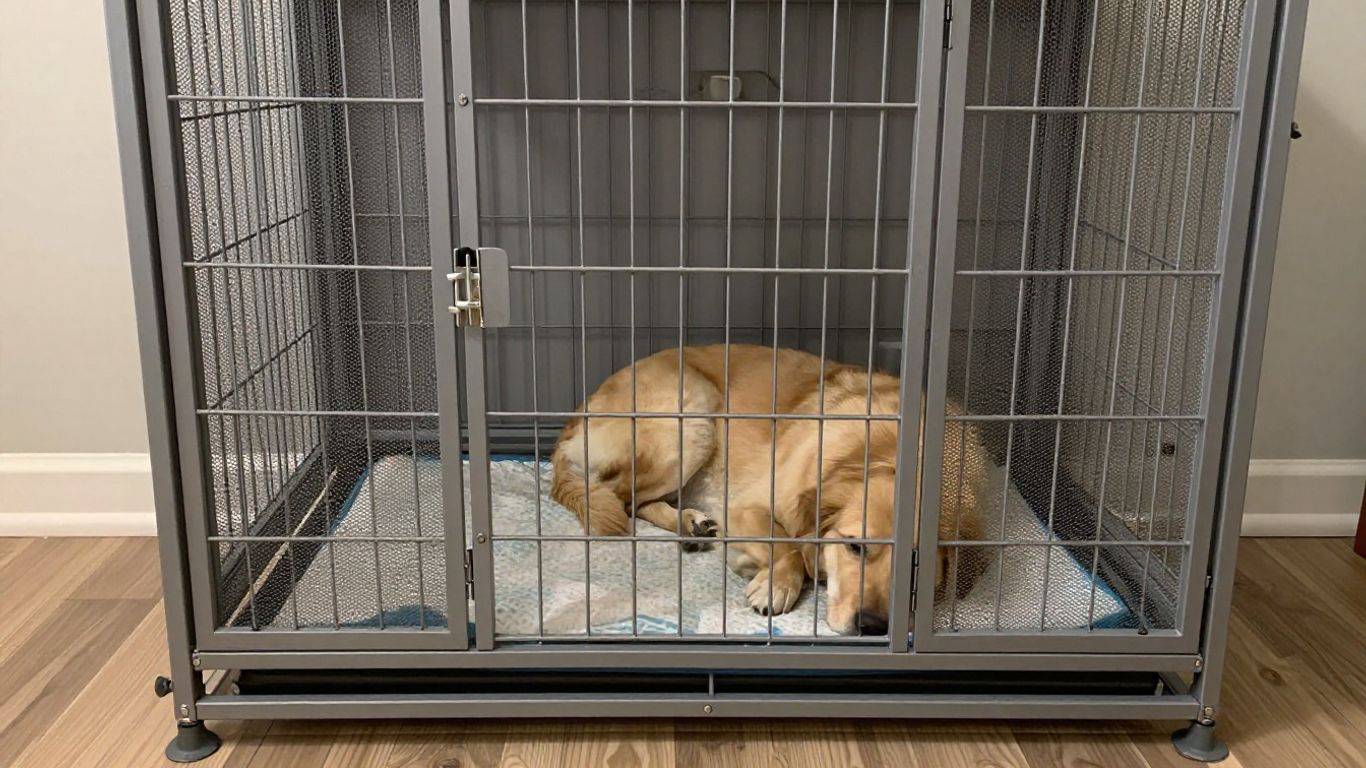
Match the crate to your home and routine
The best crate location balances your dog’s need for connection with their need for uninterrupted rest. A quiet corner near everyday family activity often works better than a hidden spot, provided the area is not a constant walkway. Think about how the crate will function during mornings, work hours, meals, and bedtime.
Finding the best location in a small room
Start by mapping the paths people use most. Keep the crate out of door swings, narrow walkways, and areas where bags or shoes collect. A corner beside a sofa can work well if the entrance remains clear and your dog can see enough of the household to feel included.
Measure before moving furniture. If you are planning a larger household rearrangement, even a mini crane planning guide illustrates the broader principle of checking access and clearances before moving heavy items; the same careful thinking helps with a crate in a tight room.
Managing noise, airflow, and household traffic
Avoid placing the crate beside loud appliances, speakers, or a frequently slammed door. At the same time, total isolation can make some dogs uneasy. Choose a spot with moderate activity, steady airflow, and a temperature that stays comfortable throughout the day.
Observe your dog rather than assuming the first location is correct. Relaxed posture, regular sleep, and an easy willingness to enter are encouraging signs; pacing, persistent vocalizing, or avoidance suggest a change may be needed.
Selecting features for travel and storage
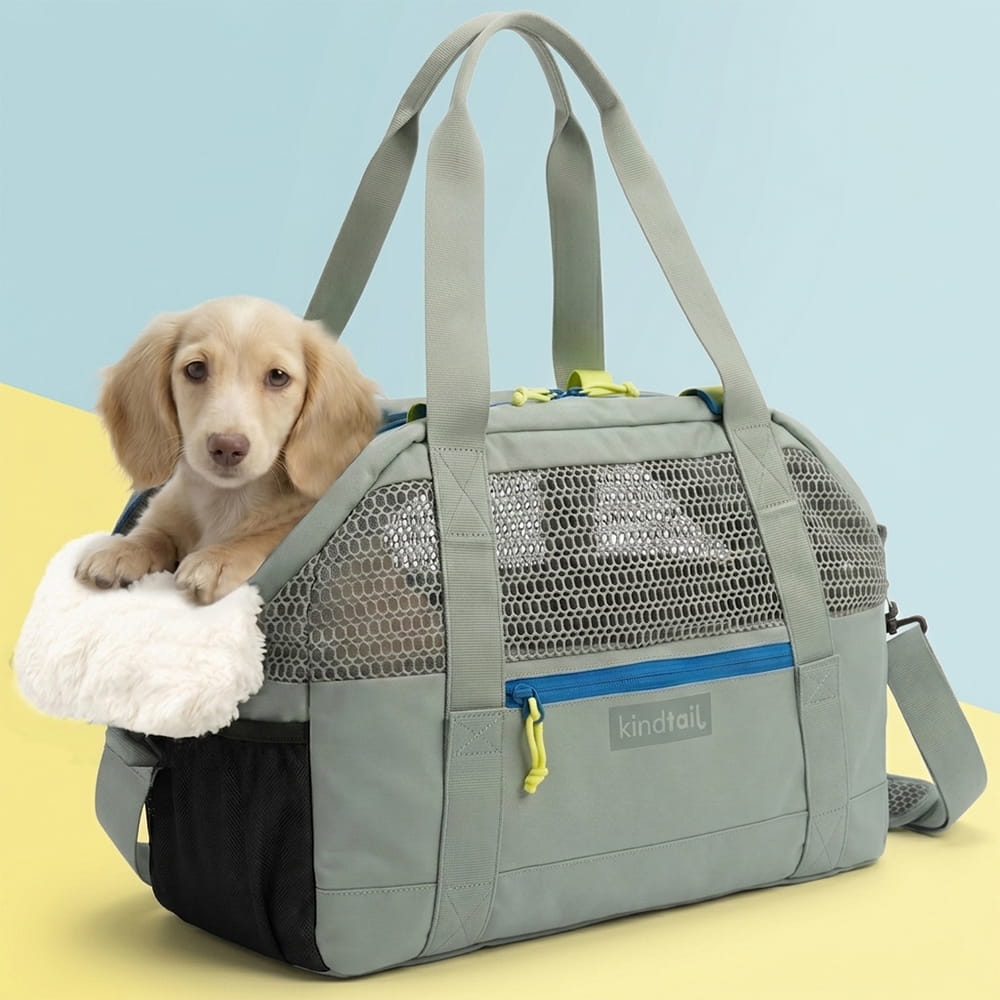
For travel, prioritize manageable weight, secure closures, ventilation, and a shape that fits your vehicle or storage area. Handles, removable parts, and a quick setup can make a real difference when you are carrying other supplies too. Keep familiar bedding available so the crate feels recognizable in a new place.
If you are planning an overseas trip, even unrelated first safari planning advice is a reminder to think through transport, access, packing, and destination conditions before departure. For a dog crate, that means measuring the vehicle or lodging space ahead of time rather than discovering a problem at the last minute.
Balancing appearance with cleaning and maintenance needs
A crate can complement your home without becoming difficult to clean. Smooth, accessible surfaces are usually easier to wipe than deep decorative grooves, and removable mats simplify regular care. If you are considering a furniture-style design, check whether you can reach every corner and remove the bedding without moving the entire piece.
Soft furnishings deserve equal attention. A double sheepskin rug guide offers useful general inspiration about checking material quality and planning maintenance for plush household textiles, though crate bedding should still be selected specifically for safety, fit, and washability.
Set up and use the crate successfully
A well-chosen crate becomes useful through patient, positive use. It should never be presented as punishment or used to avoid meeting a dog’s needs for exercise, companionship, bathroom breaks, and enrichment. Start with short, easy experiences and let trust build at your dog’s pace.
Introducing your dog to the crate gradually
Begin with the door open and place a familiar mat or safe treat inside. Reward curiosity without pushing your dog through the entrance. Once your dog chooses to enter comfortably, practice closing the door for a few seconds, then reopen it before distress begins.
Increase time slowly and vary the context. Calm praise, meals near the crate, and predictable practice can help create a positive association. A crate comfort guide also explores gradual training, bedding, and positive associations in more detail.
Making a compact crate feel comfortable
Comfort comes from more than softness. Provide enough room to change position, keep the interior ventilated, and place the crate where your dog can rest without being startled. A familiar-smelling blanket may help, but do not fill a small interior with so many items that movement becomes difficult.
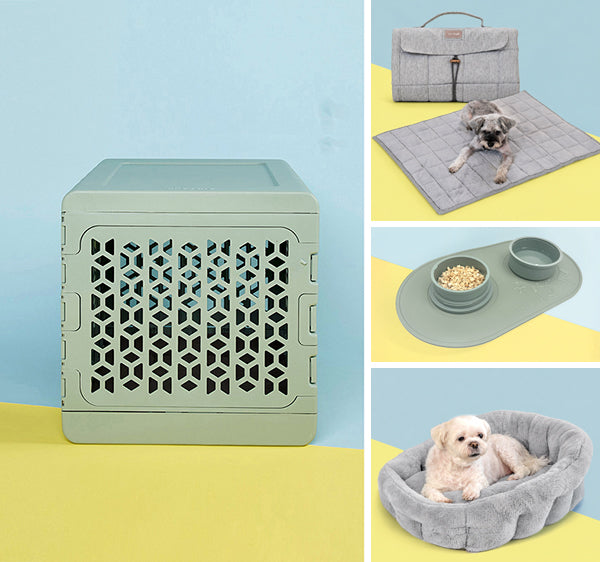
KindTail’s PAWD crate is described as a lightweight, stylish, collapsible crate made with dog-safe materials, with lounger pads that can serve as crate liners or standalone beds. Those documented features illustrate the kind of combination many pet parents seek: a cozy nap spot that is practical at home and easy to adapt.
Establishing a consistent crate routine
Use the crate around predictable moments such as naps, quiet work time, or short periods when supervision is not possible. Keep departures and releases calm rather than turning them into dramatic events. Continue offering exercise, play, training, and social contact outside the crate.
A consistent routine helps your dog understand what the crate means. If the crate moves between rooms or homes, bring the same mat and familiar cues so the experience remains stable.
Knowing when a space-saving design is not suitable
Not every dog is comfortable in a compact enclosure, even when the measurements are technically correct. Persistent panic, frantic escape attempts, heavy panting, drooling, repeated vocalizing, or attempts to injure themselves are signs to stop and reassess. Some dogs may need a larger pet-proof area, an exercise pen, professional guidance, or a different management plan.
Never leave a dog confined for an extended period without opportunities to relieve themselves, move, play, and engage in natural behaviors. A space-saving crate is helpful only when it supports your dog’s welfare as well as your household’s layout.
Conclusion
Choosing a space-saving crate is a matter of fitting three things together: your dog’s body and temperament, the crate’s safety and comfort, and the rhythm of your home. Measure carefully, inspect the construction, plan the location, and introduce the crate with patience. When those pieces align, even a small room can hold a secure, peaceful retreat for your furry family member.
Frequently Asked Questions
What is the best type of space-saving dog crate?
The best type depends on your dog’s size, behavior, and routine. Foldable wire, soft-sided, furniture-style, and modular crates can all save space, but they differ in ventilation, durability, portability, and ease of cleaning.
How much room should a dog have in a crate?
A dog should be able to stand naturally, turn around, and lie down fully on their side. Measure your dog and account for the space taken by a mat or other safe accessories.
Are collapsible crates safe for everyday use?
They can be safe when the frame locks securely, the materials are intact, ventilation is adequate, and the crate suits the dog’s behavior. Inspect folding joints and closures regularly, especially after frequent transport.
Can a crate be too large for a dog?
Yes. An excessively large crate may take unnecessary room and can feel less settled. For puppies, a divider can help provide an appropriately sized area while allowing the crate to expand as they grow.
Where should a crate go in a small apartment?
Choose a calm corner with clear access, moderate household activity, and good airflow. Avoid blocking walkways, placing it beside loud appliances, or positioning it where doors and furniture could strike it.
How can I make a small crate more comfortable?
Use a correctly sized washable mat, maintain good ventilation, and add only safe items that do not restrict movement. Familiar bedding and gradual, positive introductions can make the crate feel more reassuring.
When should a dog not be left in a crate?
A dog should not be left confined when they show severe distress, attempt to injure themselves, or have not had adequate opportunities for bathroom breaks, exercise, play, and social contact. Consider a larger safe area or professional help when needed.
Leave a comment
Comments will be approved before showing up.