






How to make a dog crate comfortable: Create a cozy space your dog loves
Key Takeaways
A comfortable crate should feel like a safe, familiar place—not a timeout spot. The right size, bedding, location, and gradual routine can make a big difference for your furry family member.
- Choose a crate that lets your dog stand, turn, stretch, and rest naturally.
- Match bedding to your dog’s age, chewing habits, and temperature needs.
- Place the crate near family activity while protecting it from drafts and busy traffic.
- Build positive associations with meals, treats, praise, and short practice sessions.
- Recheck the setup regularly as your dog grows, changes, or develops new needs.
Choose the right crate size and setup
The foundation of a cozy crate is a sensible fit. A crate that is too small can feel restrictive, while one that is much too large may feel less secure and make house training harder for some dogs. Think of the crate as a personal room: compact enough to feel sheltered, but spacious enough for ordinary movement.
Measure your dog for a comfortable fit
Measure from your dog’s nose to the base of the tail, then add a little length for turning and stretching. For height, measure from the floor to the top of the head or ears, whichever is higher. It is also wise to check the manufacturer’s sizing guidance, since dimensions and proportions vary between crate styles.
A tape measure is more useful than guessing from breed labels. If your dog is still growing, choose a crate that will suit their adult size and use a secure divider to keep the available area appropriately sized. For more help comparing dimensions and styles, browse this space-saving crate guide.
| Dog’s need | What to check | Helpful setup choice |
|---|---|---|
| Growing puppy | Adult size and current usable space | A divider that can be adjusted |
| Long-bodied dog | Interior length while lying down | Extra room to stretch fully |
| Tall dog | Head and ear clearance | A crate with generous height |
| Nervous dog | Whether the space feels sheltered | A calm, suitably sized interior |
These measurements give you a starting point, but your dog’s behavior matters too. If they repeatedly avoid turning around or cannot settle comfortably, reassess the fit rather than adding more cushions to a cramped space.
Leave room to stand, turn, and stretch
Your dog should be able to stand without hunching, turn around without bumping into the sides, and lie down in a natural position. That does not mean filling every corner with accessories. Open floor space matters just as much as soft padding, especially for dogs who like to change positions while they sleep.
Watch your dog enter, turn, lie down, and get back up. Those everyday movements tell you more than a quick glance at the crate from across the room. If the door, bed, bowl, or toy blocks movement, simplify the interior before sizing up the entire crate.
Pick the best crate style for your dog
Crates come in several materials and designs, and your dog’s habits should guide the choice. Consider whether they chew fabric, startle at rattling doors, prefer a more enclosed den, or need something easy to move for travel. The crate should also be stable, well ventilated, and simple for you to clean.
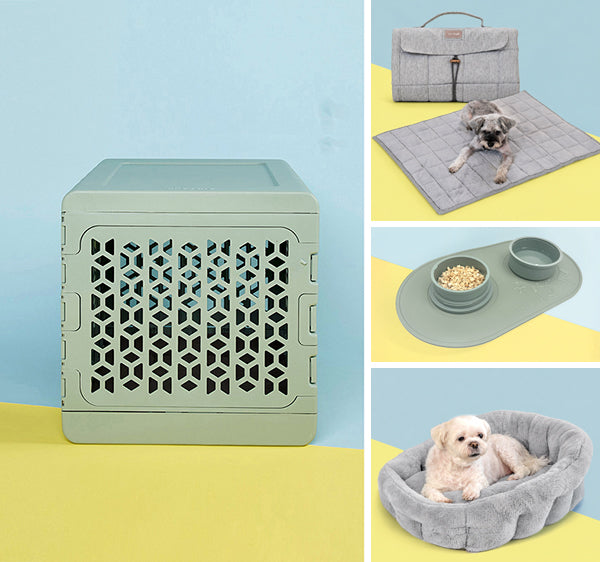
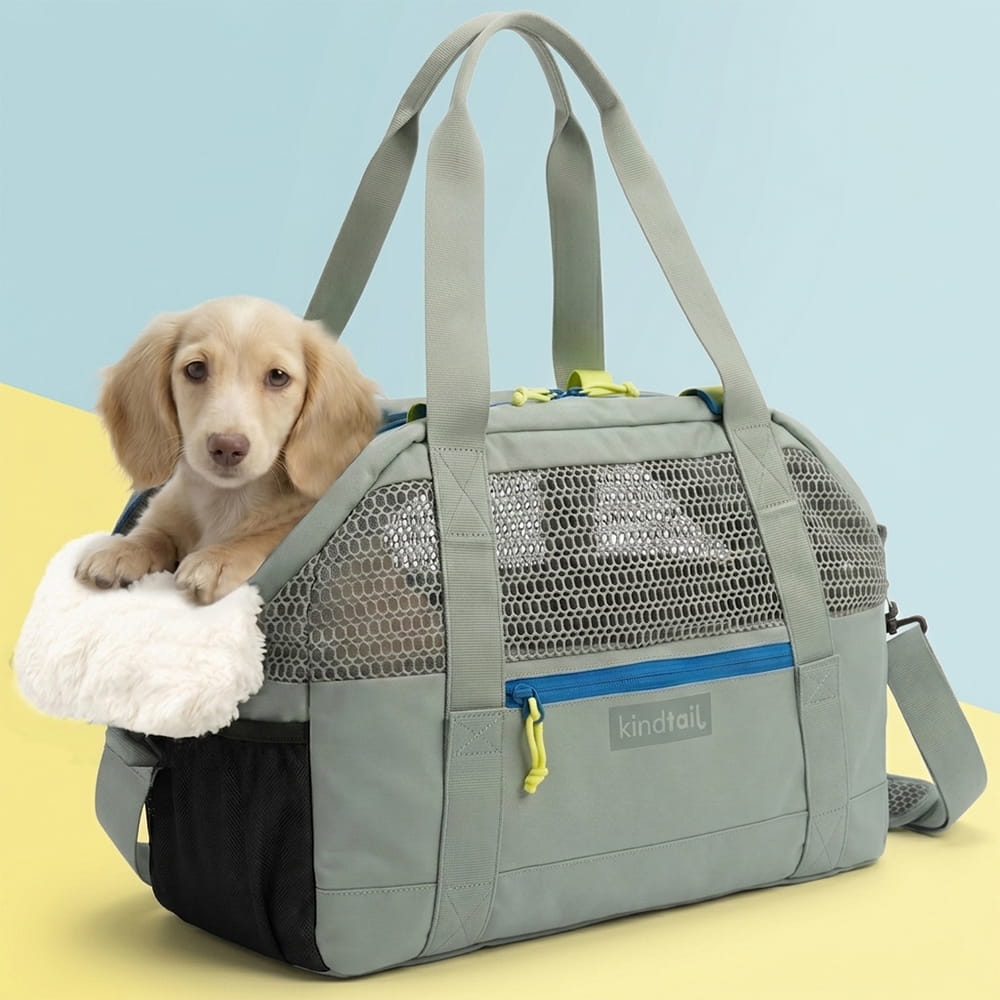
For homes where appearance and portability both matter, KindTail offers medium and small crates described as comfortable and safety-focused, with portable and functional pet products. A furniture-style option can also help the crate blend into a shared living space; this modern crate furniture guide explores that approach without making décor more important than your dog’s fit.
Position the door for easy access
Set the door where your dog can enter without squeezing past furniture or navigating a narrow path. The opening should be easy for you to reach during cleaning and should not swing into a walkway where someone might bump it. Check the latch each time you move the crate.
A clear approach also makes training feel less pressured. Your dog can look out, step in, and step away without feeling cornered. Keep food, water, and favorite resting areas arranged so the doorway remains inviting rather than crowded.
Add comfortable, dog-safe bedding
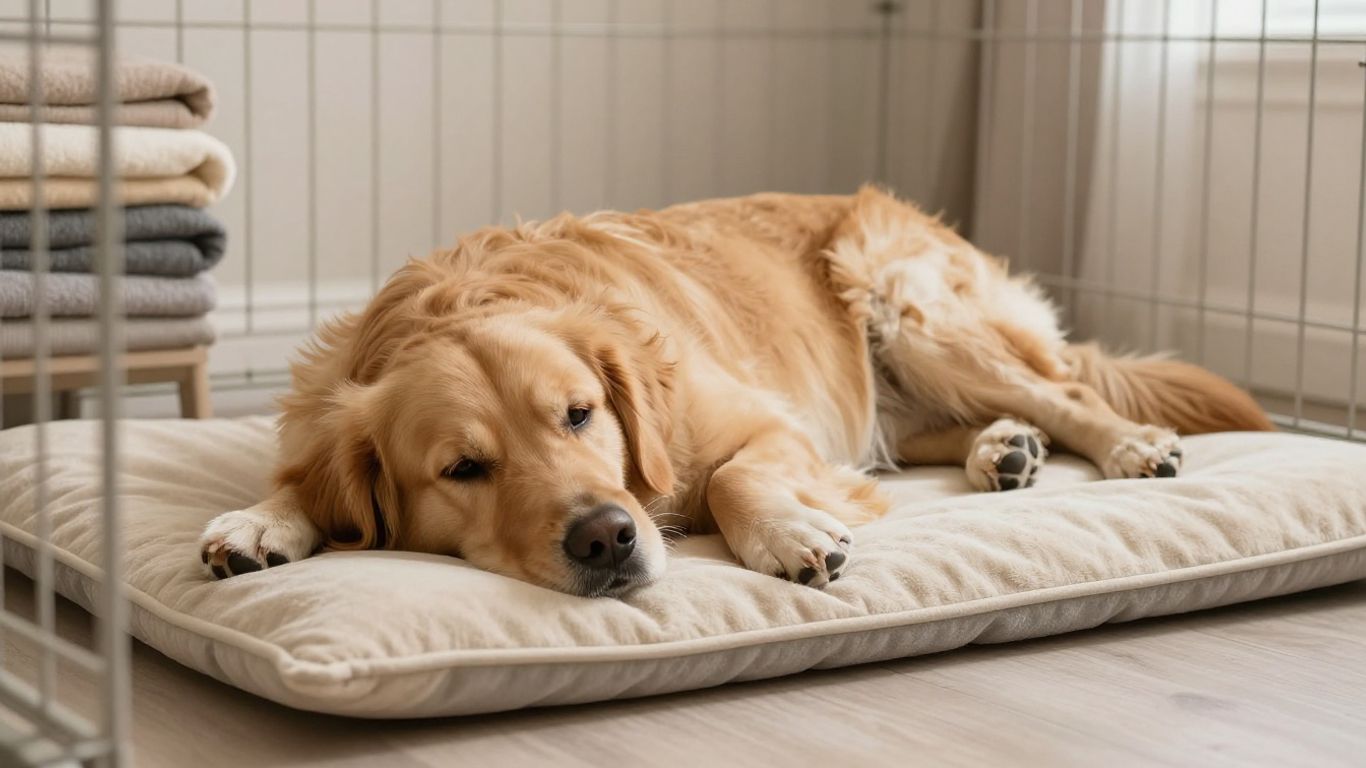
A hard crate floor rarely feels like a welcoming nap spot on its own. Bedding can add cushioning, warmth, and grip, but the best choice depends on your dog—not on how plush the bed looks in a photograph. Start with a surface that fits the base without bunching or sliding.
Choose beds based on chewing and digging habits
A gentle nester may enjoy a padded bed, while an energetic chewer or determined digger may need a simpler, sturdier surface. Look for bedding that stays flat, has no loose threads, and can be removed quickly for washing. If your dog tears or eats bedding, leave it out when unsupervised and use a safer, more durable option instead.
A crate pad should not reduce the usable floor area or create a raised edge that catches paws. The PAWD Pad is described as providing cushioning, joint support, pressure relief, insulation, and a fit intended for crate use. Those features can be useful when they match your dog’s needs, but always observe how your own dog interacts with any new accessory.
Support puppies, seniors, and dogs with joint issues
Young puppies may need a washable, uncomplicated surface while they learn bladder control. Older dogs and dogs with joint issues may appreciate steadier cushioning that helps them lie down and rise without sliding. Keep the bedding low enough that stepping in and out remains easy.
If your dog seems stiff, restless, or reluctant to settle, ask your veterinarian whether additional support is appropriate. A bed cannot solve every mobility concern, but a stable sleeping surface can make the crate easier to use. You can also review this comfortable dog bed guide for ideas about fit and washability.
Know when blankets and bedding may be unsafe
Blankets can feel familiar and cozy, but they are not right for every dog. Avoid loose fabric if your dog shreds it, swallows threads, or becomes tangled. Skip beds with exposed foam, dangling ties, or pieces that can be pulled off and chewed.
Introduce one change at a time and watch what happens. If your dog calmly settles, the material stays intact, and the crate remains roomy, it may be a good fit. If not, remove it and try a flatter, tougher surface.
Keep the crate cool, dry, and clean
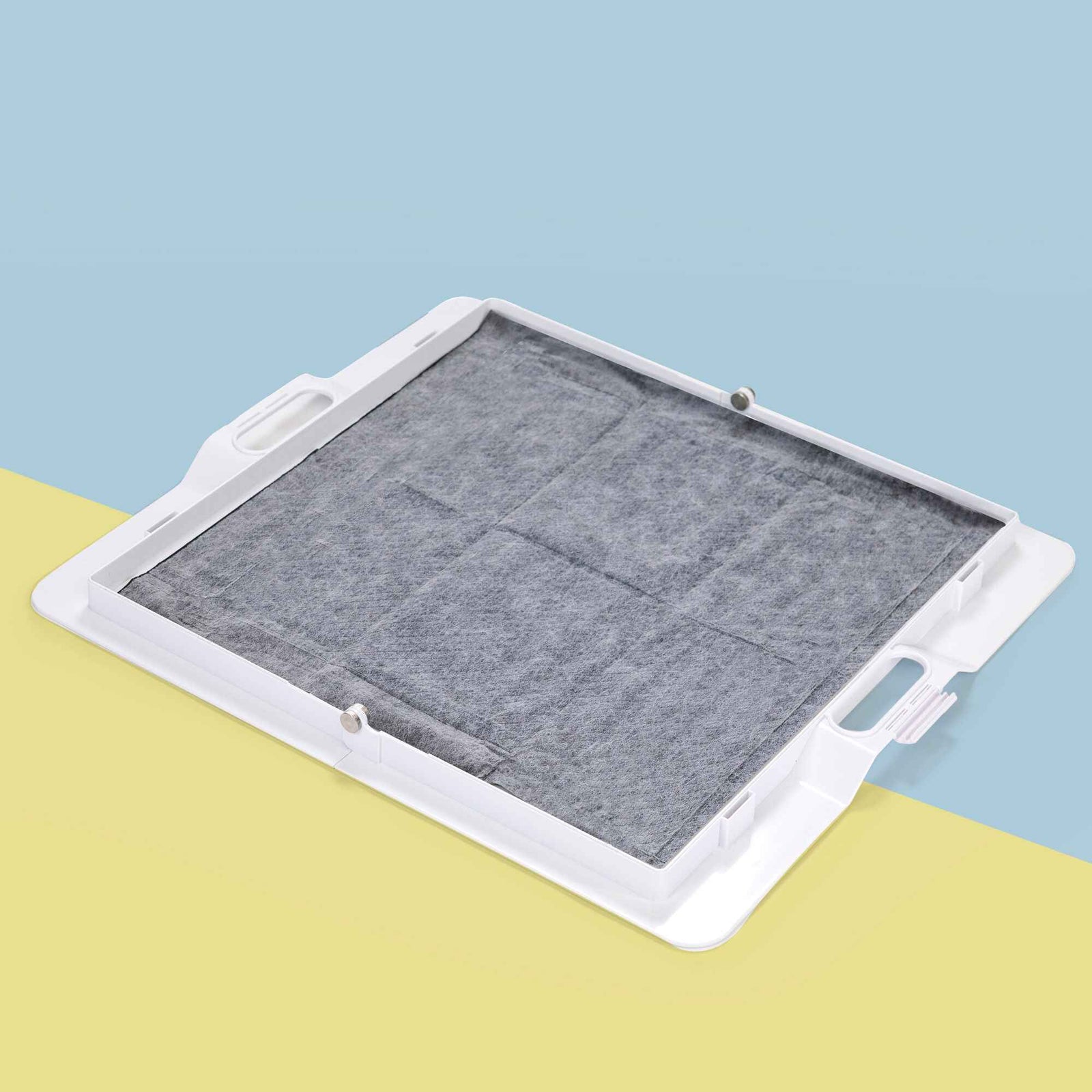
Bedding should be dry before it goes back into the crate. Damp fabric can become unpleasant quickly, especially after an accident or during humid weather. Keep a spare washable pad nearby so you can refresh the space without leaving your dog without a comfortable surface.
For a practical maintenance routine, this crate cleaning guide discusses washable bedding, absorbent pads, and prompt accident care. Cleanliness is not just about appearances; a fresh crate is more inviting and easier for your dog to relax in.
Create a calming crate location
Even a well-sized crate can feel uncomfortable if it sits in the wrong part of the home. Dogs often want a balance between privacy and connection: a place where they can rest without being isolated from the people they trust. Notice where your dog naturally naps and use that preference as a clue.
Find a quiet spot near the family
A living room corner, home office, or nearby family area can work well when it is not constantly noisy. Your dog can see and hear familiar people without being in the middle of every conversation or game. Leave enough space around the crate for safe entry and cleaning.
A crate should remain a retreat, not a stage. Ask children and visitors to let your dog rest undisturbed when they are inside. That simple boundary helps the space stay predictable.
Avoid drafts, direct sunlight, and busy walkways
Do not place the crate beside a heating vent, in a cold draft, or where strong afternoon sun can heat the interior. Hallways and doorways may also create too much foot traffic. A stable wall-side position often feels more secure than an exposed spot in the middle of a room.
Check the temperature at your dog’s level rather than standing above the crate. Move it if the floor is unusually cold, the air feels stale, or people keep brushing against it. Small placement changes can make a noticeable difference.
Adjust the setup for nighttime and daytime
During the day, your dog may enjoy being near normal household activity. At night, a quieter bedroom or nearby landing can make settling easier, especially for a new puppy. Keep the routine consistent so the crate does not become associated only with departures or confinement.
If you move the crate between rooms, preserve familiar elements such as the same bedding and cue words. For households managing other home-safety concerns, this accessible home guide offers a broader reminder to keep routes clear and hazards under control—principles that also help create a safe path to the crate.
Use crate covers without blocking airflow
A partial cover can soften light and visual distractions for some dogs. Leave ventilation openings clear, keep fabric away from heaters, and make sure your dog cannot pull the cover through the bars. Start with one side covered rather than enclosing the entire crate.
Watch your dog’s response. If they paw at the fabric, pant, or seem more distressed, remove it. A cover is an optional comfort aid, not a requirement for a peaceful crate.
Make the crate feel familiar and inviting
Comfort comes from more than padding. Familiar smells, predictable objects, and a little enrichment can help the crate feel like part of your dog’s world. Keep the arrangement simple enough that your dog can move freely and you can spot damage quickly.
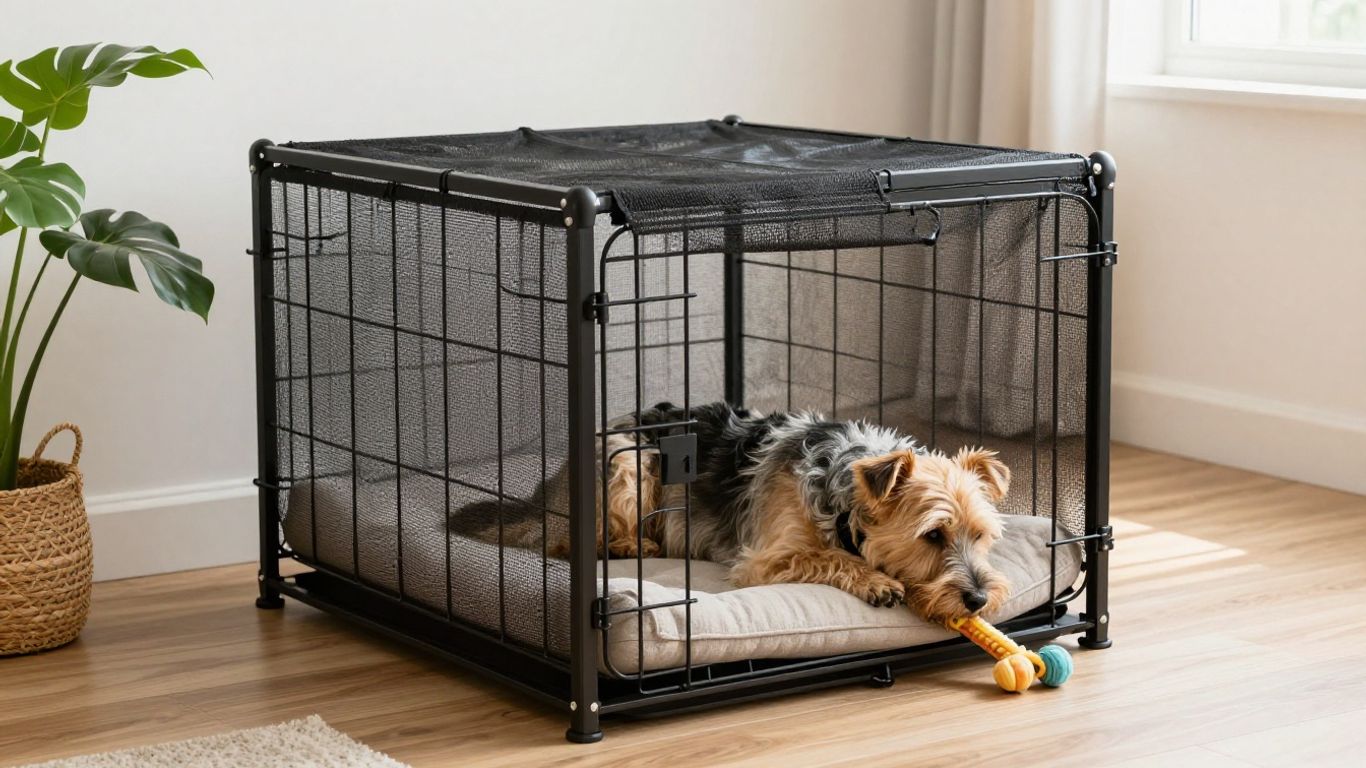
Add a favorite toy or comfort item
Offer one or two items your dog already enjoys rather than filling the crate with new objects. A familiar toy can make the space feel less strange, while a washable comfort item may help a dog settle. Inspect everything first for loose seams, detachable parts, or stuffing that could be swallowed.
Rotate toys occasionally if your dog becomes bored, but avoid making each crate visit feel like a sudden pile of unfamiliar things. Familiarity grows through repetition.
Use familiar scents to reduce stress
A clean T-shirt that smells like you may be comforting for some dogs, provided your dog does not chew or ingest fabric. You can also transfer familiarity by placing the dog’s usual blanket or bed in the crate for short periods. Avoid strong perfumes, air fresheners, and essential oils around the sleeping area.
The goal is a recognizable, calm scent—not an intensely fragranced environment. Let your dog’s body language guide you, since some dogs prefer a very plain space.
Offer safe chew toys and enrichment
A durable chew or food puzzle can give your dog something constructive to do while relaxing. Choose an item sized for your dog and suited to their chewing style, then supervise the first few uses outside the crate. Remove it if pieces break off or your dog tries to swallow large chunks.
Useful crate enrichment may include:
- A durable chew toy that matches your dog’s size.
- A simple food puzzle introduced gradually.
- A familiar toy with no loose parts.
- A washable item that your dog already uses calmly.
After the list, keep only the items your dog can use safely and comfortably. Enrichment should support rest, not turn the crate into a cluttered play bin.
Keep the crate free from clutter
Leave enough room for your dog to stretch, turn, and choose a comfortable position. Too many toys, bowls, blankets, and accessories can make even a large crate feel cramped. Remove anything your dog ignores or repeatedly pushes into the doorway.
A tidy interior is easier to inspect and clean, too. For more ideas about combining a cozy crate with a welcoming home, see this guide to pet-friendly home décor.
Make the crate a positive place
A comfortable setup works best when your dog has good experiences with it. The crate should never be used as a punishment or a place where your dog is suddenly shut away for a long stretch. Patience is part of the furniture, in a way: the emotional feel of the space matters as much as the bed inside it.
Introduce the crate without forcing your dog inside
Start with the door secured open and let your dog investigate at their own pace. Toss a treat near the entrance, then just inside, without reaching in or pushing your dog forward. Praise curiosity, even if your dog only sniffs the threshold.
Some dogs walk in immediately; others need several quiet sessions. This positive crate training guide focuses on building positive associations, teaching a crate cue, and handling door movement without creating anxiety. Follow your dog’s pace rather than treating hesitation as disobedience.
Use treats, meals, and praise to build trust
Place meals near the crate at first, then gradually move the bowl farther inside as your dog becomes comfortable. Keep the door open while your dog eats if closing it would create worry. Calm praise is usually more helpful than excited attention that interrupts the meal or rest.
Reward voluntary choices: looking inside, stepping in, lying down, or remaining relaxed. The message is simple—good things happen around this space, and your dog can leave when the exercise is over.
Start with short periods and gradually add time
Once your dog is comfortable entering, close the door for a few seconds, then open it before they become upset. Slowly build duration while you remain nearby. Later, practice stepping away for brief moments, always returning before distress escalates.
A useful progression might look like this:
- Relaxing near the open crate.
- Eating or resting inside with the door open.
- Briefly closing the door while you stay nearby.
- Adding distance and everyday household activity.
- Practicing short departures only when earlier steps are calm.
Move back a step if your dog begins to struggle. Progress is not perfectly linear, and a slower session today can protect trust for tomorrow.
Recognize signs that your dog needs a break
Panting when the room is cool, frantic scratching, repeated vocalizing, drooling, stiff posture, or attempts to escape can signal that the session is too difficult. Let your dog out calmly when it is safe to do so, then shorten the next practice period. Do not wait for panic to become the lesson.
If distress continues despite careful training, speak with a qualified trainer or veterinarian. Some dogs may need a different management plan or an alternative to extended crating.
Adapt the crate for your dog’s needs
There is no single perfect setup for every dog. A puppy who is still learning house manners needs different materials from a senior dog with sore joints, and a thick-coated dog may need more airflow than a small dog who gets cold easily. Adjust the space according to the individual in front of you.
Make puppy crates easy to clean
Puppies benefit from washable bedding, a removable tray, and as few hard-to-clean layers as possible. Keep a spare pad available and inspect the crate after naps, meals, and play. A divider can preserve a comfortable sleeping area while limiting unnecessary room as your puppy grows.
Place the crate where accidents are easy to reach without dragging it through the house. If food or water is offered inside, use stable containers that cannot tip easily.
Add extra support for older dogs
Senior dogs may need a surface with more cushioning and better traction. Keep the entry low and unobstructed, and avoid requiring them to step over thick bolsters. Give them enough time to stand and turn without pressure.
Watch for changes in sleep position, stiffness, or reluctance to enter. These details can help you decide when the bedding, crate location, or overall routine needs an update.
Help anxious dogs feel more secure
An anxious dog often benefits from predictable routines, a quieter location, and gradual practice. Reduce visual stimulation if a partial cover helps, but do not force a cover on a dog who dislikes it. Familiar scents and calm enrichment can support the process, while pressure usually makes the crate feel less safe.
This crate comfort resource also emphasizes positive introductions, suitable placement, familiar scents, and gradual acclimation. Keep expectations modest and celebrate relaxed behavior rather than insisting on a certain amount of time.
Adjust for hot and cold weather
In warm weather, prioritize airflow, shade, and access to a comfortably cool room. Avoid heavy bedding that traps heat, and never cover the crate in a way that restricts ventilation. In colder weather, add a washable layer only if your dog needs it and can use it safely.
Panting, shivering, unusual lethargy, or frantic repositioning means the environment deserves immediate attention. Temperature comfort should be checked throughout the day, since sunlight and room conditions change.
Keep the crate comfortable and safe over time
A crate is not a set-it-and-forget-it purchase. Dogs grow, chew, shed, spill, and develop new preferences. A quick weekly check can catch small problems before they turn into a broken latch, a sharp edge, or bedding that no longer fits.
Inspect the crate for damage and sharp edges
Run your hands along accessible surfaces and look closely at hinges, bars, seams, trays, and latches. Replace or repair damaged parts rather than covering them with fabric and hoping your dog will not notice. The crate should remain stable when your dog shifts, leans, or enters with enthusiasm.
If you use a plastic crate, check for cracks. If you use fabric, inspect stitching and zippers. Any material can become unsafe when it begins to break down.
Wash bedding and clean accidents promptly
Remove soiled bedding as soon as you can, blot accidents, and use a pet-safe cleaner according to its instructions. Wash fabric regularly even when it looks clean, since dander and odor accumulate in enclosed spaces. Let everything dry completely before rebuilding the crate.
Protect the surrounding floor as well, especially near the crate entrance. These hardwood floor care tips cover moisture, pet messes, and everyday protection—useful considerations when a crate sits on a finished floor.
Replace worn-out accessories
Toys, pads, bowls, and covers all have a working life. Replace anything with frayed edges, broken pieces, loose hardware, or a surface that no longer stays stable. For feeding on the go or in a flexible routine, the Portabowl is described as one of KindTail’s food-and-water solutions, while your dog’s crate accessories should still be chosen and checked for individual safety.
A replacement does not need to be fancy. It needs to be intact, appropriate in size, easy to clean, and compatible with the amount of space your dog has.
Reassess the setup as your dog grows
Measure again after a growth spurt, weight change, injury, or major change in sleeping habits. You may need to adjust the divider, replace bedding, move the crate, or reduce the number of accessories. A PAWD crate is described as stylish, easy to clean, and secure, but whichever crate you use, regular reassessment keeps the setup aligned with your dog’s current needs.
The best crate arrangement is the one your dog can enter willingly, rest in comfortably, and leave feeling settled. Small, thoughtful adjustments keep that experience positive over time.
Conclusion
Learning how to make a dog crate comfortable is mostly about paying attention: measure carefully, choose safe materials, create a calm location, and build trust one easy session at a time. When the crate fits your dog’s body and routine, it can become a genuinely cozy retreat—a place for peaceful naps, quiet decompression, and a little security close to home.
Frequently Asked Questions
What should I put in my dog’s crate to make it comfortable?
Start with a properly fitted, washable bed or pad, then add one safe familiar toy if your dog enjoys it. Keep the interior uncluttered and remove anything your dog chews, shreds, or tries to swallow.
How much space should a dog have in a crate?
Your dog should be able to stand without hunching, turn around easily, lie down naturally, and stretch. Extra space is not always better, especially for puppies who are still learning where to sleep and eliminate.
Should I cover my dog’s crate?
Some dogs relax with a partial cover that reduces light and movement, while others dislike it. Keep airflow clear, prevent your dog from pulling the fabric inside, and remove the cover if it causes panting or agitation.
Is it safe to leave blankets in a dog crate?
Blankets can be safe for dogs who leave them intact, but they are risky for dogs who chew, shred, ingest threads, or become tangled. Choose flat, washable bedding and supervise a new item before leaving it in the crate.
How can I help my dog like the crate?
Leave the door open at first, reward voluntary exploration, and use treats or meals to create positive associations. Gradually introduce brief closed-door periods and increase time only while your dog remains relaxed.
How do I make a puppy crate easy to clean?
Use a removable tray, washable bedding, and a divider that keeps the sleeping area appropriately sized. Keep spare bedding ready, clean accidents promptly, and avoid adding unnecessary layers that make cleanup difficult.
What are signs that my dog is uncomfortable in the crate?
Persistent panting, frantic scratching, drooling, stiff posture, repeated vocalizing, or escape attempts can indicate distress. End or shorten the session safely and consult a qualified professional if the problem continues.
Leave a comment
Comments will be approved before showing up.