

How to make a dog crate more comfortable: A practical guide for a calmer, happier dog
Key Takeaways
A comfortable crate is less about filling it with accessories and more about creating a secure, well-fitted place your dog can choose to enjoy.
- Measure for enough room to stand, turn, stretch, and lie down.
- Choose bedding and toys according to your dog’s habits and supervision level.
- Manage temperature, light, noise, and household traffic around the crate.
- Build comfort through gradual, reward-based practice rather than pressure.
- Treat sudden distress or ongoing discomfort as a reason to seek professional help.
Choose the right crate size and setup
The right crate gives your dog room to move naturally without becoming so large that it feels exposed or complicates house training. Start by watching how your dog rests, turns, and settles rather than choosing based only on breed labels. A thoughtful setup should feel stable, private enough to relax in, and connected to the family’s daily rhythm. For more sizing detail, this dog crate size guide can help you check your measurements before buying.
Measure your dog for enough room to stand, turn, and lie down
Measure from your dog’s nose to the base of the tail, then add a little length for comfortable repositioning. Measure from the floor to the top of the head or ears, whichever is higher, and allow enough height for standing without crouching. Your dog should be able to turn around and lie on their side with their legs extended. Puppies may need a crate with a divider so the usable area can grow with them instead of offering too much space all at once.
Decide between wire, plastic, soft-sided, and furniture-style crates
Each crate style changes the feel of the space. Wire crates offer visibility and airflow, plastic crates can feel more enclosed, soft-sided models are often useful for calm dogs and travel, and furniture-style crates may blend more easily into a living area. Think about your dog’s chewing, escape habits, tolerance for household activity, and the places where the crate will be used. The best choice is the one that remains secure and comfortable in your actual routine, not merely the one that looks nicest in a room.
Position the crate for security without isolating your dog
Place the crate where your dog can sense that people are nearby without being in the middle of constant foot traffic. A corner of the living room or bedroom often works better than a remote utility area, especially during early training. Keep one side against a wall for steadiness, while leaving the entrance clear and easy to approach. If your dog startles easily, a quieter position with a view of the room may provide connection without too much stimulation.
Remove hazards from doors, latches, and nearby surroundings
Check that the crate sits flat and cannot slide when your dog shifts their weight. Inspect doors, clips, hinges, and latches for sharp edges or loose parts, and keep collars, harnesses, cords, curtains, and household chemicals out of reach. Nearby furniture should not create a climbing route or allow paws to become trapped. These simple checks matter just as much as a soft floor because comfort depends on safety first.
Add comfortable and appropriate crate essentials
Once the crate itself is suitable, add only what helps your dog rest, settle, or occupy themselves safely. Too many blankets and toys can reduce usable space or create hazards, particularly for a puppy or determined chewer. Choose items that match the dog in front of you, then observe how they actually use them. This broader guide to creating a cozy dog crate covers bedding, familiar scents, toys, covers, and cleaning in one place.
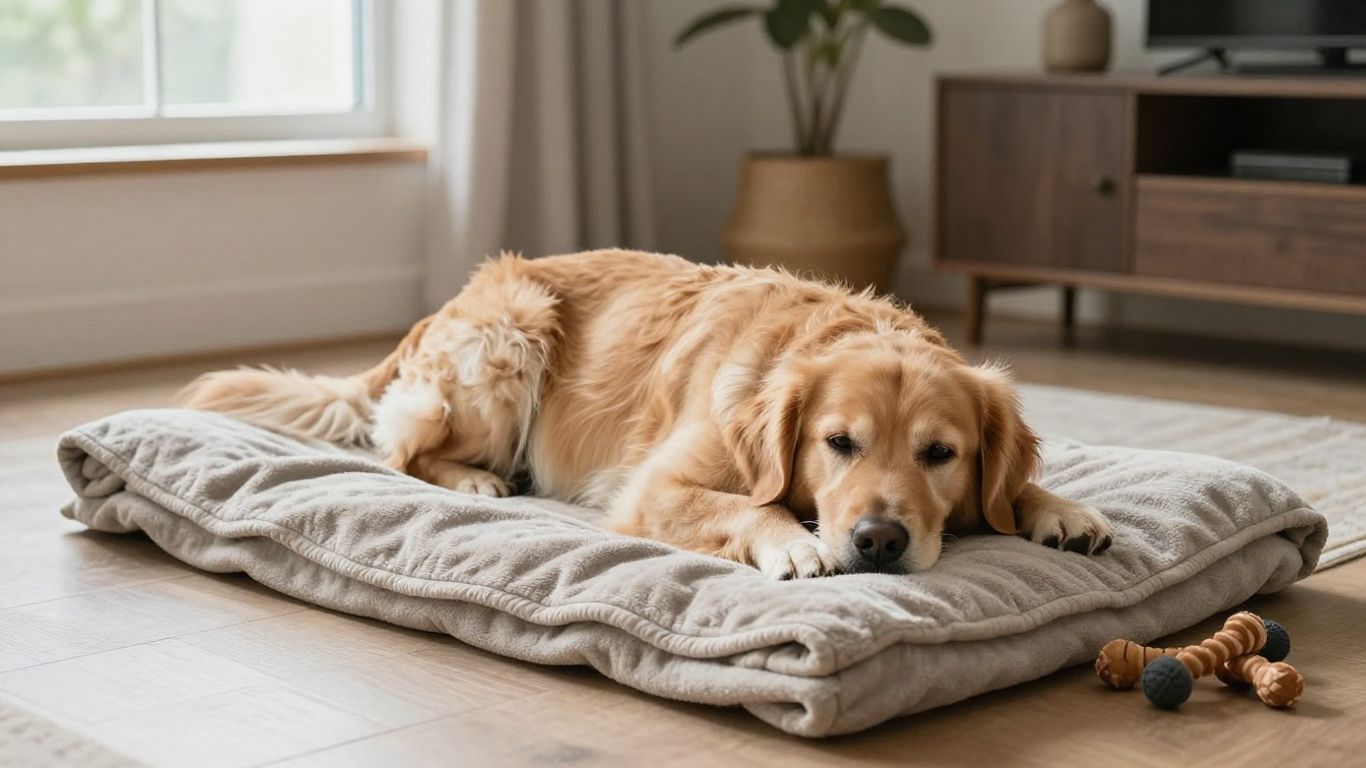
Select bedding that matches your dog’s age, habits, and chewing behavior
A young puppy who shreds fabric needs a different bed from an older dog who needs cushioning for resting joints. Begin with a firm, stable mat or pad that does not bunch under your dog’s feet. If your dog repeatedly chews or swallows bedding, remove plush materials when unsupervised and reintroduce them only when you can watch closely. KindTail’s PAWD Pad is described as providing cushioning, joint support, pressure relief, insulation, and a chew-proof design, so it may suit pet parents looking for those documented features in a crate pad.
Use washable blankets, mats, and liners for easy cleanup
Washable layers make accidents and muddy paws less disruptive, but they should fit the floor without curling at the edges. Keep a spare liner available so the crate can be cleaned and reset quickly. A thin blanket can add familiarity, while a mat or pad provides a more stable resting surface. For dogs still learning bladder control, leave enough open space that a damp area does not spread across every layer.
Introduce safe toys and long-lasting enrichment
Offer one or two toys your dog already uses safely rather than filling the crate with unfamiliar objects. Food-stuffed toys, durable chew items, and quiet puzzles can make short crate sessions more rewarding, but every item should be tested while you are present first. Rotate enrichment so it stays interesting without becoming clutter. A useful crate essentials guide can help you think through bedding, toys, feeding items, replacement pans, and cooling options.
Know which items to avoid when your dog is unsupervised
Avoid anything that can be torn apart, swallowed, wrapped around a limb, or pulled through the crate bars. That may include loose strings, fragile toys, unsecured water containers, and thick bedding for a dog who chews destructively. Do not assume an item is safe simply because it is marketed for dogs; your dog’s individual behavior matters more. Supervision is the best way to learn what can later be left behind.
Improve the crate’s temperature, lighting, and atmosphere
A crate can be physically soft and still feel unpleasant if it is too hot, bright, noisy, or exposed. Dogs vary widely: some relax in an open, airy crate, while others settle more easily with partial visual cover. Make one change at a time so you can tell what helps. The goal is a calm retreat that remains ventilated, accessible, and connected to ordinary family life.
Use crate covers to create a den-like feeling safely
A breathable cover over the top and two or three sides can reduce visual distractions and give the crate a sheltered feeling. Leave the entrance open unless your dog is already comfortable with the arrangement, and make sure fabric cannot be pulled inside or tangled. Watch your dog’s body language after adding a cover; increased panting or frantic movement means the change is not helping. Some dogs prefer a fully open view, and that preference deserves equal respect.
Prevent overheating, drafts, and direct sunlight
Keep the crate away from radiators, fireplaces, air-conditioning vents, and windows that receive strong afternoon sun. Check the temperature at the dog’s level rather than relying only on how the room feels to you. Airflow should remain clear on multiple sides, particularly if you use a cover. A cooling mat or fan should never introduce cords or small parts that your dog can reach.
Reduce noise and household traffic around the crate
A crate beside a slamming door, television speaker, or busy hallway may prevent deep rest. Move it a short distance from the disturbance, or use a partial cover to soften visual movement while preserving ventilation. Ask children and visitors to leave the dog alone when they are resting inside. A predictable, low-traffic spot often makes more difference than adding another accessory.
Adjust the setup for nighttime and daytime use
At night, many dogs settle best near the bedroom or in another quiet, familiar room. During the day, a place where your dog can hear normal household sounds may prevent the crate from feeling like isolation. Keep the basic bedding and scent consistent while adjusting light or location as needed. A portable setup can be useful for travel, but introduce it gradually rather than changing every part of the environment at once.
Help your dog build positive crate associations
A comfortable crate cannot replace patient training. Your dog needs repeated experiences showing that entering the crate leads to good things and that the door does not always mean a long separation. Start with the door open and work at a pace your dog can handle. This step-by-step crate training guide offers additional guidance on positive associations, door dynamics, and when to seek help.
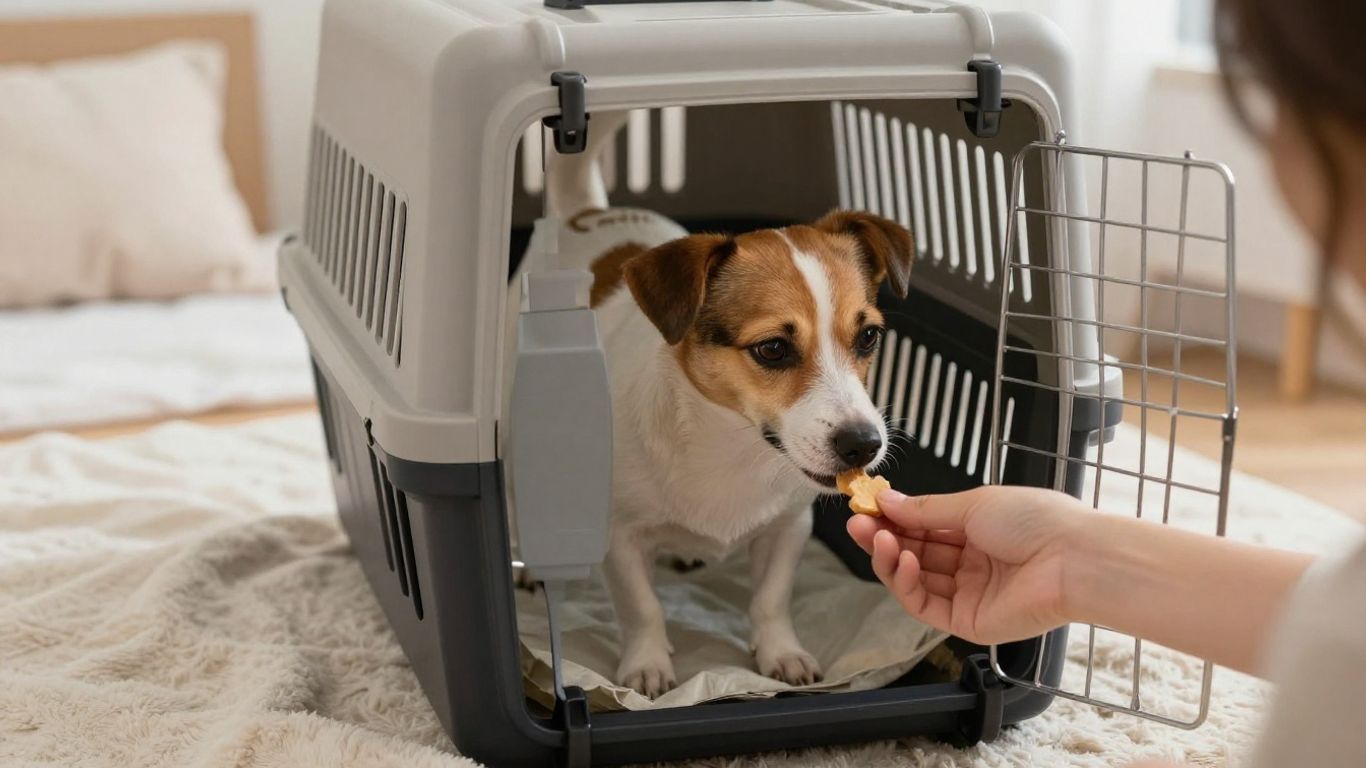
Pair the crate with treats, meals, and favorite activities
Toss a treat near the entrance, then just inside, and let your dog choose whether to follow it. Feed meals beside the crate at first, moving the bowl inward only when your dog remains relaxed. A favorite chew or calm toy can make the space part of an enjoyable routine. Keep rewards low-pressure; the point is to build trust, not lure your dog into a situation they are not ready to tolerate.
Practice entering and exiting without pressure
Use a simple cue if you wish, but avoid pushing, dragging, or repeatedly calling your dog out. Let your dog enter, reward calm behavior, and allow them to leave while the door stays open. Repeat brief sessions throughout the day rather than turning practice into one long event. If your dog backs away, make the next repetition easier by moving the reward closer to the entrance.
Increase closed-door time gradually
Once your dog can relax inside with the door open, close it for a second or two, reward, and open it before distress begins. Add time in small increments, sometimes varying the duration so the dog does not learn that every closure lasts longer. Stay nearby at first, then take one step away and return. The crate modification guide is also useful when a change in size, material, floor padding, or cover may make practice more appealing.
Recognize stress signals and slow down the training
Panting unrelated to heat, repeated yawning, lip licking, trembling, frantic scratching, escape attempts, and sudden refusal of food can all signal that the session is too difficult. Whining alone does not explain the whole picture, so look at posture, breathing, and recovery time. If stress appears, open the door when it is safe to do so and return to an easier step later. Progress is measured by relaxed behavior, not by how quickly the door can stay closed.
Adapt the crate for puppies, seniors, and anxious dogs
Age, mobility, past experiences, and temperament all affect what comfort means. A puppy may need management around chewing and toileting, while a senior dog may need a low-effort entrance and more cushioning. An anxious dog benefits from predictability and a slower training plan, not from being left to “get used to it.” Notice the individual dog rather than applying one setup to every furry family member.
Set up a puppy-safe crate during teething and house training
Use a divider to keep the sleeping area appropriately sized as your puppy grows, and check the fit regularly. Choose bedding and toys that can withstand supervised teething sessions, then remove anything your puppy starts to dismantle. Take the puppy out on a consistent schedule and clean accidents thoroughly so the crate stays a pleasant resting place. The crate should support house training, not become a substitute for regular bathroom breaks, exercise, or interaction.
Make the space easier to access for older or less mobile dogs
Choose a stable floor surface and avoid bedding that your dog must climb over. A low threshold, gentle entry, and ample room to turn can make settling easier for a stiff or arthritic dog. Watch for slipping, difficulty standing, or repeated repositioning, and adjust the padding rather than simply adding more of it. If mobility changes suddenly, comfort may be a health issue rather than a crate-design issue.
Use calming routines for dogs with separation concerns
Keep departures quiet and predictable, and practice very short absences only after your dog can relax while you are nearby. A familiar blanket, steady background sound, and consistent pre-crate routine may help some dogs settle. Do not use the crate for absences that exceed your dog’s current ability to remain calm. Dogs with serious separation distress may need a behavior plan beyond crate adjustments.
Balance comfort features with supervision and safety
Every new bed, cover, toy, or feeding item should be introduced while you can observe how your dog responds. Remove anything that causes overheating, guarding, chewing, or entanglement, even if it looks cozy. Comfort is not a contest to create the softest possible space; it is the result of a safe setup that your dog can use comfortably. For a furniture-style option, wooden crate ideas may be worth browsing, while still checking ventilation, stability, and chew resistance for your individual dog.
Troubleshoot common crate comfort problems
Problems such as barking, accidents, or pacing are clues rather than moral failures. First review the basics: crate size, recent exercise, bathroom timing, temperature, noise, and whether the dog was asked to stay inside too long. Then change one variable and observe the result. A calm, methodical approach is more useful than adding several new products at once.
Fix whining, barking, pacing, and repeated attempts to escape
Consider whether your dog needs a bathroom break, is overtired, is under-exercised, or has been confined beyond their current comfort level. Return to shorter sessions and reward quiet, relaxed moments rather than waiting for a full meltdown. If barking escalates or escape attempts become frantic, stop increasing duration and seek qualified guidance. A crate should never be used in a way that risks broken nails, damaged teeth, or other injury.
Address accidents, drooling, and destructive chewing
Accidents may mean the crate is too large, the schedule is unrealistic, or the dog is experiencing stress or illness. Drooling and chewing can also increase with anxiety, heat, nausea, or frustration. Clean the crate with an appropriate pet-safe cleaner, wash bedding, and record when the problem occurs. Repeated destruction is a signal to improve management and training rather than simply buying tougher accessories.
Determine whether discomfort may be caused by pain or illness
A dog who suddenly avoids the crate, struggles to lie down, pants at rest, vomits, has diarrhea, or cries when moving may be uncomfortable for a medical reason. Check for obvious heat or bedding problems, but do not try to solve persistent symptoms with environmental changes alone. Changes in appetite, bathroom habits, movement, or sleep are worth taking seriously. A sudden behavior change deserves more attention than a long-standing training preference.
Know when to consult a veterinarian or qualified trainer
Contact a veterinarian for possible pain, illness, breathing trouble, repeated gastrointestinal symptoms, or distress that appears physical. A qualified, reward-based trainer or veterinary behavior professional can help with panic, separation concerns, aggression, or unsafe escape behavior. Bring notes about the crate, duration, triggers, body language, and what you have tried. Professional support is not a failure; it can make the process safer and kinder for everyone.
Conclusion
Learning how to make a dog crate more comfortable starts with a suitable size and a safe location, then grows through practical bedding choices, a calmer atmosphere, and patient training. Keep observing your dog, make changes gradually, and let relaxed behavior guide the next step. With time, the crate can become a dependable cozy nap spot rather than a place your dog feels forced to endure.
Frequently Asked Questions
Should a dog be able to stand and turn around in a crate?
Yes. Your dog should be able to stand without crouching, turn around easily, and lie down in a natural position. A divider can help manage space for a growing puppy.
What bedding is best for a dog crate?
Choose bedding that fits securely, can be washed, and matches your dog’s age, mobility, temperature needs, and chewing habits. Dogs who destroy fabric may need a simpler mat or supervised bedding.
Should I cover my dog’s crate?
Some dogs relax with a breathable partial cover, while others prefer an open view. Keep airflow clear, prevent your dog from pulling the cover inside, and remove it if your dog pants or becomes more distressed.
How can I make my dog like the crate?
Pair the crate with treats, meals, calm toys, and familiar routines. Begin with the door open, allow voluntary entry and exit, and increase closed-door time only while your dog remains relaxed.
Why does my dog whine in the crate?
Whining can reflect a bathroom need, boredom, fear, discomfort, or training that progressed too quickly. Look at the full body-language picture and make the next session easier if your dog is showing stress.
Is it safe to leave toys in a dog crate?
Only leave toys that your dog has already used safely under supervision. Avoid objects that can be swallowed, shredded, pulled apart, or wrapped around a limb.
When should I ask for professional help?
Seek veterinary advice for sudden physical changes, pain signs, breathing problems, or persistent digestive symptoms. A qualified reward-based trainer or veterinary behavior professional can help with severe anxiety, panic, or unsafe escape attempts.