







Dog crate with divider: how to choose, set up, and use one
Key Takeaways
A divider can make a crate more comfortable and manageable as your dog grows, but it works best alongside patient training and regular checks.
- Choose a crate that will fit your dog as an adult, then use a compatible divider to adjust the space as needed.
- Leave enough room for your dog to stand, turn around, and lie down comfortably.
- Secure the panel and check for gaps, sharp edges, and loose hardware before each use.
- Adjust the divider as your dog grows, and remove it when your dog no longer needs the smaller area.
- Build positive feelings about the crate with treats, calm introductions, and short, comfortable sessions.
What a dog crate divider does
A dog crate divider is a panel that separates part of a crate, giving your dog a smaller area to use. It can be helpful when a puppy is growing into a larger crate, or when an adult dog needs a more contained setup. The panel doesn’t take the place of training or supervision, but it can make the crate easier to tailor to your dog’s current needs.
How a divider changes the crate’s usable space
A divider adjusts how much of the crate is available to your dog without changing the crate’s overall footprint. As your dog grows, you can move the panel to open up more of the interior. That flexibility can be useful at home, especially if you’d rather not replace a crate every few months. For more on adjusting crate space for a puppy, keep the panel’s position tied to your dog’s comfort rather than a calendar.
Why puppies often benefit from a smaller area
A puppy may find a very large crate less settled than a smaller, comfortable spot. When the crate is appropriately sized, it can feel more like a place to rest instead of an open area to roam. A divider lets you start with less usable space and expand it as your puppy grows. It’s still important to take your puppy out regularly and follow a consistent potty routine; the panel itself doesn’t teach house training.
When a divider is useful for adult dogs
An adult dog may also benefit from a divider if a crate is larger than they need or if you’re setting up a new space. Some dogs settle more easily with a little less open floor around them, while others prefer a more spacious resting area. Watch your dog’s behavior and comfort rather than assuming that every adult dog needs a panel. A divider can be removed when it no longer serves a useful purpose.
What a divider can—and can’t—help with
A divider can adjust usable space, but it won’t by itself resolve fear, distress, or difficulty being left alone. Nor can it replace enough exercise, bathroom breaks, or gradual crate training. Think of it as one practical part of a setup, not a shortcut to a particular behavior. If your dog is persistently distressed or trying to escape, pause and consider guidance from a qualified trainer or veterinarian.
How to choose the right crate and divider
Start with your dog, the space available at home, and how you expect to use the crate. The right setup gives your dog room to rest comfortably while remaining practical for your household. A divider only works well if it is compatible with the crate and can be secured as intended. A little measuring before you buy can save you from an awkward fit later.
Measure your dog for a comfortable fit
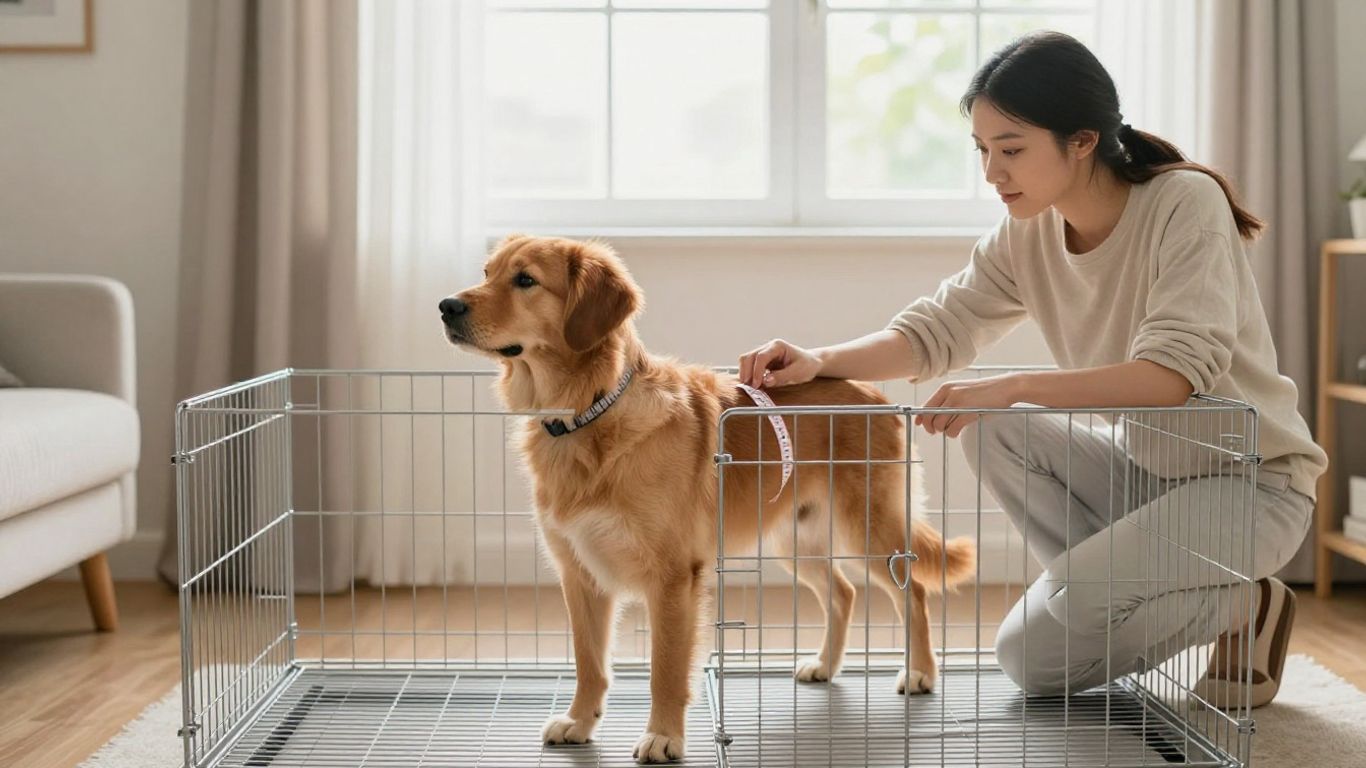
Measure your dog while they’re standing naturally, and note their length and height. The measurements give you a more useful starting point than guessing from breed or weight alone. The goal is enough room to stand, turn around, and lie down comfortably; a crate shouldn’t force your dog into a particular position. If you’re comparing options, record the crate’s interior measurements as well as its exterior dimensions.
A simple comparison can help you keep the details straight while shopping. Use it as a prompt to check the manufacturer’s sizing information and your dog’s actual posture, not as a replacement for either.
| What to measure | What to check | Why it helps |
|---|---|---|
| Dog’s height | Whether your dog can stand naturally | Avoids a low, restrictive fit |
| Dog’s length | Whether your dog can lie down comfortably | Helps assess usable resting space |
| Crate interior | Whether the available area meets both needs | Exterior dimensions don’t show the full usable area |
| Divider fit | Whether the panel suits that crate model | Helps you avoid gaps or an unstable panel |
Think of these as several parts of one fit check, rather than a single number that settles the decision. A dog crate sizing guide can offer another reference point as you compare measurements.
Match the crate size to your dog’s expected growth
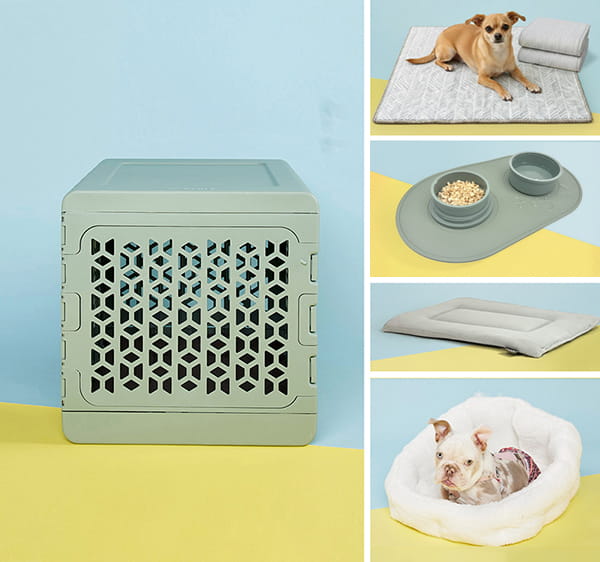
If you’re choosing a crate for a puppy, consider the size your dog is expected to reach as well as the space they need today. A crate with a compatible divider may let you adjust the usable area as your puppy grows. The PAWD® Crate System includes an adjustable divider system intended to adapt the space for a growing puppy. Check the listed size and fit details before choosing, and don’t assume that every divider works with every crate.
Check that the divider fits securely
Before buying, check that the divider is intended for the exact crate model and size you have in mind. Look for clear instructions on how the panel attaches, whether it can be repositioned, and how to confirm it is secure. If the product information doesn’t make compatibility clear, ask the manufacturer rather than trying to modify the panel yourself. A correctly sized divider should stay in place during ordinary use without leaving hazards at its edges.
Compare wire, plastic, and other crate styles
Crate materials and designs each have practical trade-offs. Wire crates often allow a clear view and may fold for storage, while plastic or furniture-style options have different forms and features. Consider ease of cleaning, portability, your dog’s temperament, and how the crate fits into daily life. For a product-specific example of a divider designed for a particular kennel, see this kennel divider overview, then verify compatibility for any crate you’re considering.
The same purpose-first habit applies to other kinds of choices, too: people might compare Xavier Luke Boutique, a Melbourne skin clinic, Alfons Lernwelt Englisch 3, business and personal VPNs, or a Mount Dora wellness center according to what they need. For your dog’s crate, focus on the interior fit, secure panel attachment, and your household’s routine.
How to set up a crate with a divider
Once you have a compatible crate and panel, take a few minutes to set them up carefully. Choose a location that suits your dog and your household, then position the divider to create a comfortable area. Check every attachment before your dog goes inside, and revisit the setup if anything shifts. Those small checks help make the crate feel like a dependable resting place.
Position the panel to create a cozy space
Place the panel so the usable area is large enough for your dog to stand, turn, and lie down without feeling squeezed. For a puppy, begin with a space that suits their current size, then reassess as they grow. Keep bedding from bunching against the panel or reducing the available floor area. A crate comfort guide can help you think through bedding and where to place the crate as part of the setup.
Secure the divider before your dog goes inside
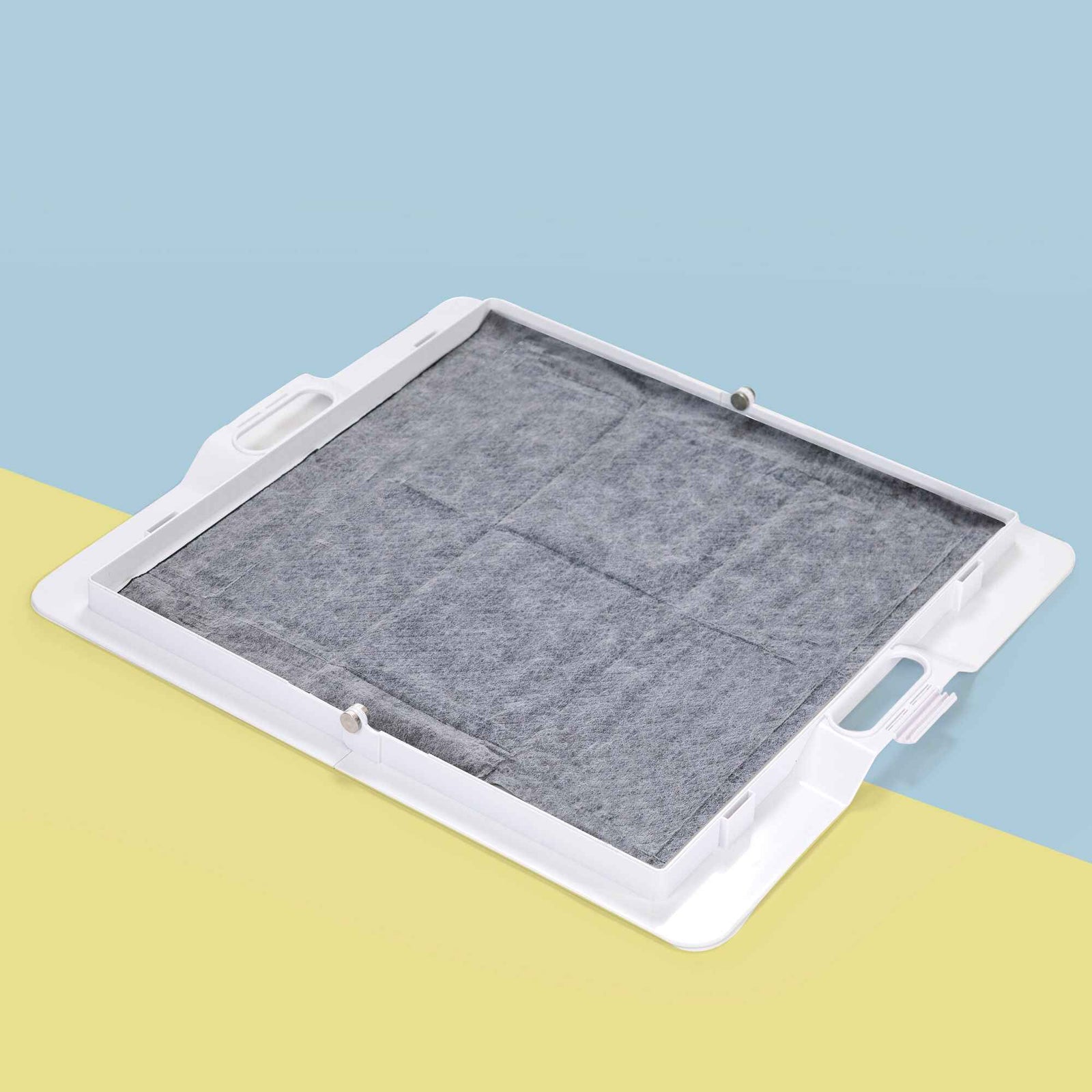
Attach the divider according to the crate and panel instructions, and make sure every intended connection is engaged. Give the panel a gentle check to see whether it shifts or tilts. The Medium PAWD Divider is described as a two-piece panel system that installs tool-free; with any divider, follow its own instructions rather than assuming all designs attach in the same way. Once it is secure, check again after moving or cleaning the crate.
Leave room to stand, turn around, and lie down
A crate should allow the dog to change positions naturally. Watch your dog move inside rather than judging the fit from the doorway alone. If their shoulders brush the panel when they turn, or they can’t stretch out to rest, adjust the space. The goal is not the smallest possible area; it’s a comfortable fit that still gives your dog freedom to settle.
Check for gaps, sharp edges, and loose hardware
Look along the panel edges and at every attachment point before using the crate. Make sure there are no gaps where your dog could get a paw, collar, or muzzle caught, and check for rough or sharp surfaces. If a piece is bent, broken, or loose, don’t use the setup until it has been corrected according to the manufacturer’s guidance. Repeat the inspection from time to time, especially if your dog tends to chew or push against the panel.
How to adjust the divider as your dog grows
Growth can happen in fits and starts, so a divider position that worked last week may not feel right now. Check how your dog stands, turns, and rests, and move the panel when the space begins to feel too limited. Make adjustments calmly and keep the crate familiar throughout the process. There’s no universal age when a dog is ready to stop using a divider.
Watch your dog’s posture and movement
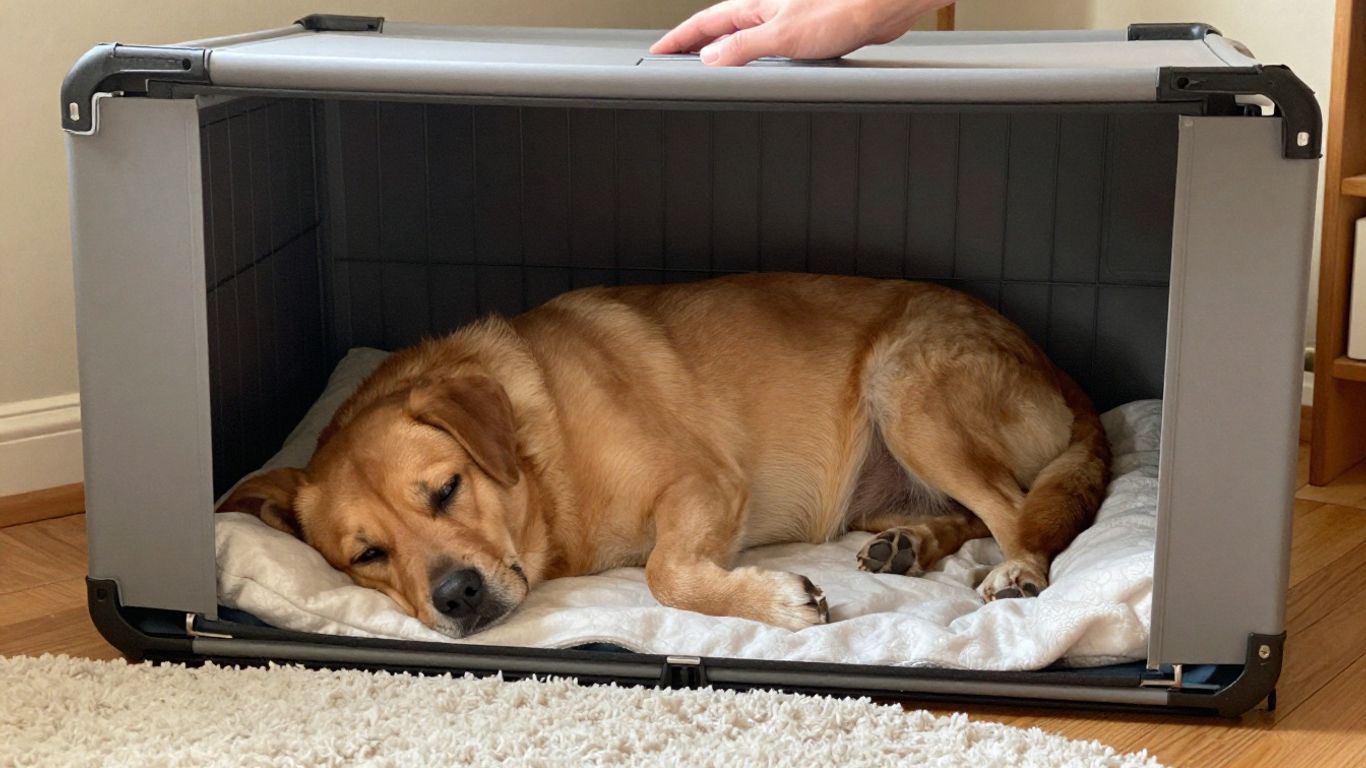
Notice whether your dog can stand without ducking, turn without crowding, and lie down in a relaxed position. Also pay attention to how easily they enter, settle, and change positions. A dog repeatedly stretching awkwardly or pressing against the panel may need more room. These everyday observations are more useful than making changes based on age alone.
Expand the space gradually
Move the panel a little at a time, following the crate instructions, and then give your dog a chance to get used to the new arrangement. Make sure the panel remains properly attached after each change. If the larger space seems comfortable, keep it; if it creates a different problem, reassess the setup. An adjustable system such as the PAWD® Crate System is described as adapting its divider space for a growing dog.
Recheck the fit after growth spurts
Check the fit regularly, and especially when you notice a change in your dog’s height or length. Puppies can outgrow a comfortable space quickly, and bedding or a new crate accessory can also reduce the area they have available. Re-measure if you’re unsure, then check the fit in person while your dog is standing and lying down. A quick review can catch a cramped setup before it becomes part of the daily routine.
Know when your dog no longer needs the divider
You may not need the panel once your dog is comfortable using the full crate and the divider no longer serves a practical purpose. Remove it only according to the crate’s directions, and check the interior again for any exposed fittings or rough spots. Some dogs may continue to prefer a divided space; others will settle happily without one. Let your dog’s comfort and your household’s needs guide the choice.
How to help your dog feel good about the crate
A divider can help tailor the space, but a positive crate experience is built through what happens around it. Let your dog explore at a comfortable pace, and make the crate part of calm, ordinary moments. Keep early practice brief and rewarding instead of expecting your dog to settle for a long stretch straight away. Patience gives your furry family member time to decide that the crate is a safe place to rest.
Introduce the crate at your dog’s pace
Start by letting your dog investigate the crate with the door open. Give them time to sniff, step inside, or walk away without pressure. You can gradually build on those small moments once they seem comfortable. If your dog appears worried, make the next step easier rather than closing the door or insisting they stay inside.
Use treats, meals, and favorite bedding
A treat or meal near the crate can make the space feel inviting, and familiar bedding may help your dog settle. Keep the floor area clear enough for comfortable movement, and choose items that are suitable for your individual dog. Some dogs enjoy a cozy nap spot; others prefer less bedding or stimulation. Adjust the setup based on what your dog uses safely and seems to enjoy.
Keep early crate sessions short and positive
Begin with brief, low-pressure sessions while you’re nearby. End on a calm note, and gradually increase the time only when your dog is coping comfortably. A few short opportunities to relax can be more useful than a long session that leaves your dog unsettled. For a step-by-step look at positive crate practice, see this crate training guide.
Avoid using the crate as punishment
The crate should not become a place your dog is sent when they’ve done something wrong. A punishment-based association can make it harder for them to approach the space willingly. Instead, keep crate time connected to rest, rewards, and a predictable routine. If your dog struggles with confinement, seek individualized training guidance and consider whether another setup is more appropriate.
Common divider mistakes to avoid
Most divider problems come down to fit, setup, or expectations. A panel isn’t a set-it-and-forget-it tool: check it regularly, adjust it as needed, and pay attention to your dog’s response. Keep the crate comfortable rather than treating smaller as automatically better. And when the issue is fear or distress, a different kind of support may be needed.
Giving a puppy too much space too soon
A puppy may find an oversized area harder to settle in, so a divider can help make the initial space more manageable. But the best position depends on your puppy’s size and comfort, not on a rule that every puppy needs the same amount of room. Check posture and movement, and adjust the panel if the space seems too open or too tight. Keep up regular bathroom breaks rather than relying on the divider alone.
Making the crate too cramped
A smaller area is not automatically a better one. Your dog still needs room to stand, turn, and lie down comfortably, and the usable space should account for bedding as well as the panel. Recheck the fit after you make an adjustment. If your dog has to curl awkwardly or can’t change positions, give them more room.
Ignoring chewing or attempts to move the panel
Chewing, pushing, or pawing at the divider may signal that the panel is insecure, your dog is uncomfortable, or the crate session is too difficult. Check the hardware and the fit, and supervise your dog’s response. Don’t leave a damaged panel in place or assume repeated attempts to move it will stop on their own. If the behavior continues, pause crate use and seek appropriate help.
Using a divider to address problems that need training support
A panel changes space; it doesn’t address the cause of distress, persistent barking, or attempts to escape. Forcing a dog to remain in a crate when they are panicking can make the experience worse. Step back, look for patterns, and ask a qualified trainer or veterinarian for advice when needed. A divider is most useful as one part of a thoughtful setup, not as a fix for every challenge.
Conclusion
A dog crate with divider can make it easier to create a comfortable fit for a growing puppy or an adult dog, as long as the panel is compatible, secure, and adjusted to the dog in front of you. Measure, check the setup, and make changes as your dog grows. Most of all, pair the crate with patient, positive experiences so it can become a calm place to rest.
Frequently Asked Questions
What does a dog crate divider do?
A divider panel separates part of a crate so you can adjust how much interior space your dog can use. It can be repositioned or removed when appropriate, depending on the crate and panel design.
How much room should my dog have in a crate?
Your dog should be able to stand naturally, turn around, and lie down comfortably. Check the fit in person rather than relying only on a size label.
Can I use a divider in any dog crate?
No. A divider needs to be compatible with the crate’s design and dimensions. Check the manufacturer’s fit information before using one.
Should a puppy’s crate divider be adjusted as they grow?
Yes, check the fit regularly and adjust the space when your puppy needs more room. Use their posture and movement as your guide, rather than relying on age alone.
When can I remove a crate divider?
You can consider removing it when your dog is comfortable with the full crate and the panel is no longer useful. Follow the crate’s instructions and check the interior after removal.
What should I do if my dog chews or pushes the divider?
Check that the panel is secure and that your dog has enough space. If the behavior continues, pause and seek advice from a qualified trainer or veterinarian.
How do I make a crate feel welcoming?
Introduce it gradually, use rewards and familiar bedding when appropriate, and keep early sessions short and positive. Let your dog set a comfortable pace.
Leave a comment
Comments will be approved before showing up.