






How to choose the best portable dog crate for travel, home, and everyday use
Key Takeaways
The best portable dog crate is the one that fits your dog’s body, temperament, routine, and travel plans. A thoughtful choice can make ordinary days and longer journeys feel calmer for both of you.
- Measure your dog before choosing a crate size.
- Match the crate material to how and where you travel.
- Check ventilation, doors, flooring, fasteners, and vehicle security.
- Introduce the crate gradually before using it on a major trip.
- Keep comfort, cleaning, storage, and long-term durability in view.
Start with your dog’s needs and lifestyle
A portable dog crate should serve your dog’s real routine, not simply look convenient in a product photo. A young puppy, an anxious adult, and a relaxed senior may need very different levels of enclosure and support. Start by thinking about where the crate will be used, how often it will move, and what your dog does when left alone. That simple inventory usually narrows the options quickly.
Assess your dog’s size, age, and temperament
Measure your dog while standing naturally, then consider how they settle when resting. A puppy may need a crate that can adapt as they grow, while a broad-chested or long-bodied dog may need more floor length than their weight suggests. Temperament matters too: a calm dog may be comfortable in a lighter design, but a determined, nervous, or highly active dog needs construction that can withstand pressure and repeated movement.
A crate should feel like a secure retreat rather than a punishment. For more guidance on measuring and avoiding common sizing mistakes, see this dog crate size guide, then compare the measurements with the manufacturer’s interior dimensions rather than exterior dimensions alone.
Match the crate to car trips, flights, camping, or home use
The same crate does not necessarily suit every kind of travel. Car trips call for a stable base and a way to prevent sliding, while air travel brings rules about dimensions, ventilation, and carrier construction. Camping may expose the crate to damp ground, dust, and uneven surfaces; home use often puts more emphasis on appearance, quiet comfort, and easy storage.
Think through the full journey, including loading, unloading, rest stops, and the time your dog will spend waiting. A useful travel crate checklist can help you remember familiar bedding, food, water, cleanup supplies, and a few comforting items before departure.
Consider escape behavior, anxiety, and chewing habits
Watch how your dog responds to barriers at home. Some dogs paw at doors, push against mesh, or chew corners when worried, while others relax as soon as they have a familiar den. Soft fabric can be comfortable and light, but it may not be suitable for a persistent chewer or an escape artist. Dogs who become distressed in enclosed spaces may need slower training, more visibility, or a different style altogether.
The goal is not to choose the most enclosed crate by default. It is to choose a space your dog can enter willingly, settle in, and leave safely when the routine allows.
Decide how often the crate needs to be moved
Frequency changes what counts as a good crate. If you carry it between rooms, a low weight and comfortable handles may matter most. If it stays in the car, a secure shape and easy cleaning may take priority. For apartments, frequent visitors, or limited closets, a crate that folds or collapses can be especially practical; this overview of foldable dog crates offers another way to think about storage and everyday use.
Compare the main types of portable dog crates
Portable crates generally fall into four broad groups, each with a different balance of weight, protection, visibility, and storage convenience. There is no universal winner because the right choice depends on your dog and the setting. Consider what the crate must handle on an ordinary day, then check whether it can also manage the occasional trip. A crate that is easy to carry but unsuitable for your dog’s behavior will not feel convenient for long.
Soft-sided crates for lightweight everyday travel
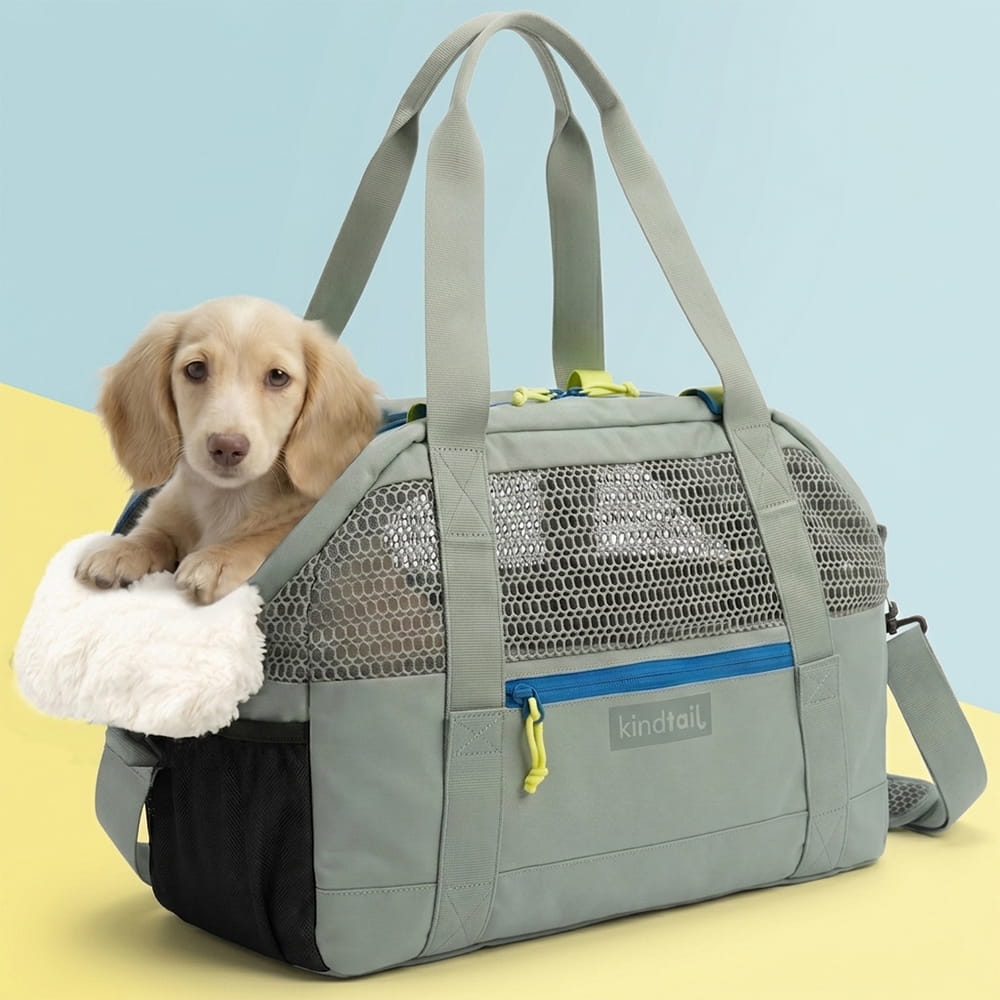
Soft-sided crates are often easy to carry and quick to set up, making them useful for calm dogs, short trips, training events, and temporary rest areas. Mesh panels can provide airflow and visibility, while fabric walls may create a softer atmosphere than exposed metal. They are less suitable for dogs who chew, claw, or push persistently against the structure.
Look closely at the frame, stitching, zippers, and mesh attachment points. A washable cover and a removable base can make a light crate much easier to live with, especially when travel includes muddy paws or an unexpected accident.
Wire crates for ventilation and visibility
Wire crates offer open sightlines and airflow on multiple sides, which some dogs find reassuring. They can also be useful at home when you want to monitor a puppy or place the crate near the family’s usual activity. Their drawbacks are practical: they can be heavy, noisy when moved, and awkward to store unless they fold.
Add a properly fitted cover only if your dog benefits from reduced visual stimulation, and never block the openings so thoroughly that airflow suffers. Check that the floor sits securely and that the door latch cannot be nudged open from inside.
Plastic crates for protection and airline travel
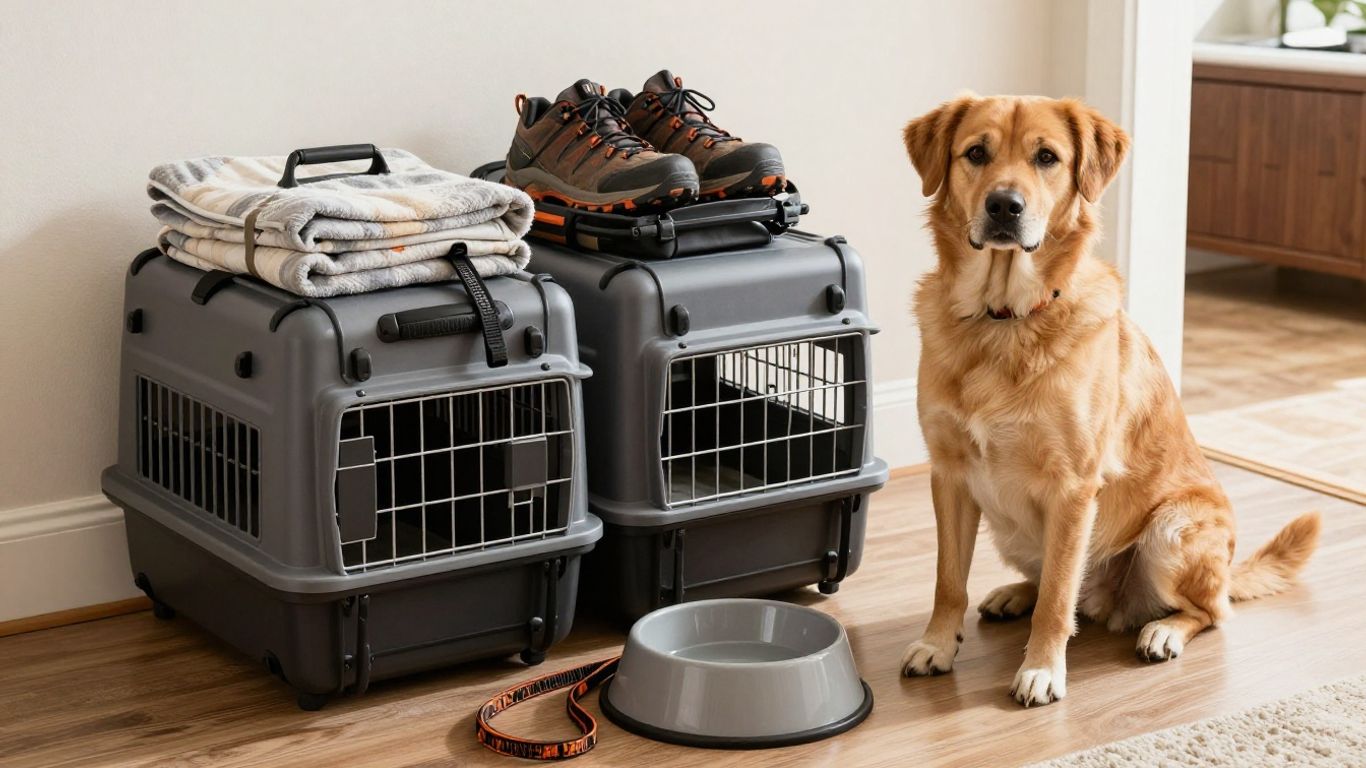
Plastic crates provide a more enclosed shape and can shield a dog from some bumps, drafts, and visual distractions. They are often easier to wipe clean than fabric, though their ventilation openings and airline suitability must be checked carefully. Airline rules vary, so a crate that works for a car is not automatically approved for a flight.
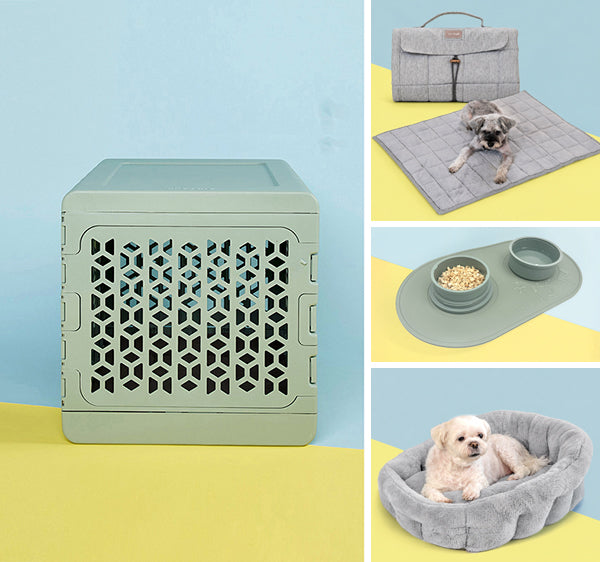
If you prefer a home-friendly enclosed design, KindTail PAWD is documented as a durable, non-toxic plastic crate with a collapsible design, tool-free assembly, and no sharp edges. Keep the claim in perspective: your dog’s size, behavior, and the carrier’s specific travel requirements still determine whether it is appropriate for a particular journey.
Folding and collapsible crates for limited storage space
Folding and collapsible crates are appealing when a full-size enclosure cannot stay assembled all the time. They may be useful in small homes, guest rooms, vehicles, or travel situations where the crate needs to disappear between uses. Before buying, practice opening and closing the mechanism and make sure the assembled frame does not wobble.
For a broader comparison of collapsible options, this collapsible crate guide discusses travel-oriented designs and practical features such as setup, construction, and ventilation. Storage convenience is valuable, but it should never outweigh stability once your dog is inside.
Choose the right crate size
Sizing is one of the most consequential decisions because a crate that is too tight can feel stressful, while one that is oversized may be less useful for rest or puppy training. Use your dog’s actual measurements, not a breed label or a guess based on weight alone. Then account for the bed, mat, water solution, and any other item that will remain inside. A little planning here prevents an uncomfortable return later.
Measure your dog’s height and length correctly
Have your dog stand on a level surface. Measure from the floor to the top of the head or ears, depending on what they need to clear comfortably, and measure from the nose to the base of the tail rather than the tail tip. Add a small amount of room to both measurements so your dog can move naturally without making the crate excessively large.
Repeat the measurements if your dog is still growing or tends to crouch when nervous. Interior dimensions are the useful figures, and sloped walls can reduce usable space even when the outside measurement looks generous.
Leave enough room to stand, turn, and lie down
Your dog should be able to stand without ducking, turn around without squeezing, and lie down in a natural position. They should also have enough room to shift from one resting posture to another. A crate is not meant to function as a tiny suitcase; comfort supports calm behavior during both travel and downtime.
A practical check is to observe your dog inside the empty crate for a few minutes. If shoulders touch the sides during a turn or the head repeatedly meets the roof, move up in size before adding bedding.
Avoid choosing a crate that is too large
Extra space can seem generous, but it may make a nervous dog feel less secure and can complicate house training for puppies. A very large crate may also shift more easily in a vehicle. The best fit is not the smallest possible enclosure; it is a comfortable space with enough room for normal movement and no unnecessary excess.
For households comparing home and travel dimensions, sizing dog crates can help frame the difference between a cozy everyday den and a practical travel setup. Always confirm the current product measurements before ordering.
Plan for puppies and growing dogs
Puppies change quickly, so a crate with an adjustable divider can be more economical than replacing the entire enclosure several times. The divider should leave enough room for standing, turning, and lying down, then move outward as your puppy grows. Recheck the fit every few weeks during rapid growth.
Do not use a divider to compensate for a crate that is fundamentally too short or too low. Growth planning works only when the full-size crate will eventually suit the dog’s adult measurements.
Evaluate essential features and construction
Small construction details often decide whether a portable crate remains pleasant after months of use. Examine the parts you will touch repeatedly: handles, hinges, zippers, doors, corners, and floor panels. Consider how the crate behaves when lifted, folded, cleaned, and placed on a moving surface. Everyday ease matters because a difficult crate is less likely to be used consistently.
Check frame strength, seams, doors, and fasteners
Look for a frame that stays square when assembled and doors that close without forcing. On fabric models, inspect stitching around handles and mesh; on hard-sided models, check seams, corners, and connection points. Fasteners should resist casual pressure from inside, and no exposed edge should scratch your dog’s paws, muzzle, or coat.
Open and close each door several times before a trip. If a latch sticks at home, it will be even more frustrating in a parking lot or unfamiliar room.
Look for ventilation and visibility on every side
Good airflow is essential, particularly in warm weather or a parked vehicle, where temperatures can rise quickly. Look for openings that remain unobstructed when the crate is against a wall or surrounded by luggage. Visibility should match your dog: some pets settle when they can see their family, while others rest better with fewer distractions.
A balanced design gives you ways to manage the environment without sealing the crate off. Never rely on a loose blanket to provide shade if it restricts ventilation or can be pulled inside and chewed.
Compare handles, wheels, and carrying options
Handles should feel secure and sit where the crate remains balanced when lifted. Wheels can help with larger enclosures, but they also add moving parts and may make a crate less stable on uneven ground. If you often travel alone, test whether you can carry the empty crate comfortably before imagining it loaded with bedding and supplies.
A useful portable setup should reduce awkward lifting rather than create another bulky object to manage. Consider door clearance, stairways, car trunks, and the distance from the vehicle to your destination.
Choose flooring that is stable, removable, and washable
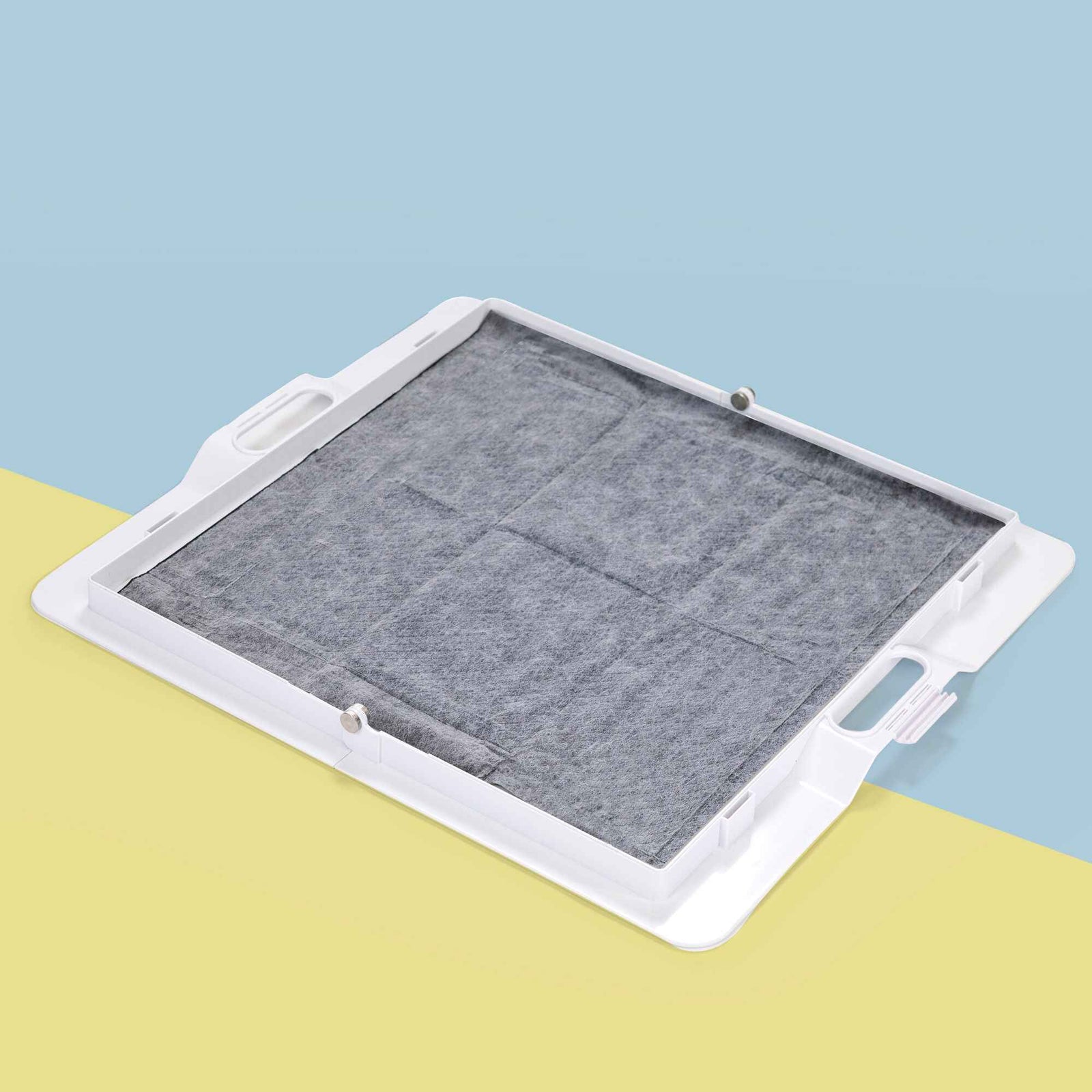
A floor should not flex sharply, slide under your dog, or collect moisture in unreachable seams. Removable flooring is easier to inspect and clean, while a washable liner can make the space feel warmer and more familiar. Test how the floor fits after washing or folding, since loose panels can become a tripping hazard.
When comparing materials, it helps to separate everyday cleaning from structural durability. Articles on easy-clean plastic kennels may offer useful general considerations, while your final decision should still reflect your dog’s size and habits.
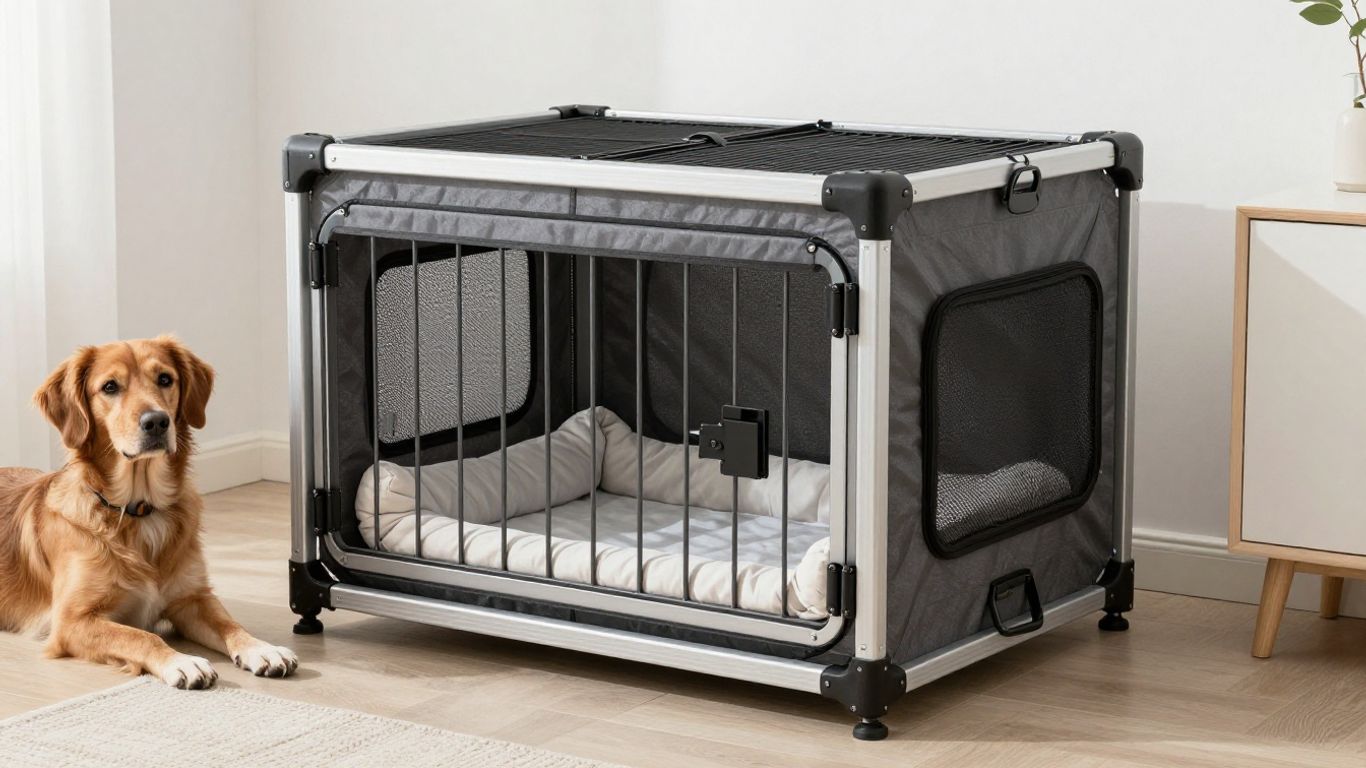
The main features are easier to compare when they are viewed together rather than one at a time. This table gives a quick starting point for matching common crate types with typical uses.
| Crate type | Main advantage | Main concern | Often suited to |
|---|---|---|---|
| Soft-sided | Light and easy to carry | Vulnerable to chewing and clawing | Calm dogs and short trips |
| Wire | Open visibility and airflow | Weight, noise, and storage | Home use and supervised travel |
| Plastic | Enclosed protection and easy wiping | Ventilation and airline rules | Car travel and approved transport |
| Collapsible | Compact storage | Mechanism and frame stability | Small homes and mixed use |
Use the table as a prompt, not a final verdict. A well-made crate in the wrong size or with poor airflow is still a poor match for your dog.
Prioritize safety and travel compatibility
A crate can be comfortable indoors and still need additional planning for transport. Movement, heat, unfamiliar noise, and long waiting periods can all affect a dog’s experience. Before leaving, inspect the crate as if you were the passenger inside it: can it move, overheat, tip, or lose airflow? A few minutes of preparation can remove several avoidable risks.
Secure the crate inside a vehicle
Place the crate where it will not slide, tip, or become trapped by shifting luggage. Follow the crate maker’s instructions for securing it, and keep doors clear so you can reach your dog if needed. Never allow a dog to remain unattended in a hot vehicle, even with windows cracked or the crate positioned in shade.
Take a short test drive before a long outing. Watch whether the crate rattles, whether the floor shifts, and whether your dog can settle without being thrown against a wall during ordinary braking.
Check airline and transportation requirements
Airlines and other transportation providers may set detailed requirements for size, construction, ventilation, door security, identification, and water access. Rules can change, and approval may depend on the route or carrier. Confirm the requirements directly with the provider before buying or arriving at the terminal.
Do not assume that “portable” or “travel-ready” means airline-approved. If flying is a firm requirement, choose around the written rules first, then consider comfort and storage.
Prevent overheating, slipping, and poor airflow
Keep the crate away from direct sun and hot surfaces, and avoid packing bags tightly against ventilation openings. A non-slip base can help, but it should not create a raised edge that catches paws. Water access may be necessary on longer journeys, provided the bowl or bottle is stable and your dog already knows how to use it.
A calm setup is usually better than one crowded with accessories. Leave room for natural movement, and check your dog regularly rather than assuming the crate environment is comfortable throughout the trip.
Introduce the crate before a long trip
Set up the crate at home and leave the door open while your dog investigates it. Add familiar bedding, offer treats nearby, and gradually build from short calm stays to longer periods. Do not wait until departure morning to discover that the zipper, door, or enclosed shape makes your dog uneasy.
A helpful routine might include these small steps:
- Feed occasional treats near the crate entrance.
- Reward voluntary entry without immediately closing the door.
- Practice brief door closures while you remain nearby.
- Take short local trips before attempting a long journey.
After each practice session, note what helped your dog settle and adjust one variable at a time. A crate becomes reassuring through repeated, low-pressure experiences rather than one dramatic introduction.
Set up and maintain a portable dog crate
Once the crate is chosen, the daily details shape how much your dog enjoys it. Place it somewhere peaceful but connected to household life, then make the interior familiar without filling every inch. Good maintenance also protects the investment and keeps the space hygienic. The aim is a cozy nap spot that feels dependable at home and recognizable away from home.
Create a comfortable and familiar crate environment
Use a mat or bed that fits without bunching, and bring the same familiar item when traveling if it is safe to do so. Keep the entrance clear and make sure the crate is level on the floor. Some dogs prefer a quiet corner, while others relax more easily where they can see their family.
Avoid turning the crate into a storage bin. A simple, consistent setup helps your dog understand that the space is for resting, settling, and feeling secure.
Use bedding, water solutions, and calming accessories
Choose bedding according to your dog’s chewing, digging, and temperature habits. A heavy chewer may need a simpler washable mat, while a dog who curls up may appreciate more cushioning. Water should be offered in a stable container or travel solution your dog has practiced using before the trip.
Calming accessories should support, not crowd, the crate. Familiar scent, gentle routines, and predictable placement are often more useful than adding several unfamiliar objects at once.
Clean accidents, fabric, and hard surfaces properly
Remove bedding promptly after an accident and follow its care instructions. Wash fabric covers thoroughly, wipe hard surfaces with a pet-safe cleaner, and allow every part to dry fully before reassembly. Check corners and seams because moisture or residue can hide where panels meet.
Keep a small travel cleaning kit with absorbent towels, waste bags, spare bedding, and appropriate cleaner. This makes an unpleasant moment manageable without turning the whole journey upside down.
For households also reviewing feeding routines, this dog food transition guide covers gradual changes and monitoring for digestive upset. It is separate from crate selection, but useful when travel and a new routine happen at the same time.
Inspect the crate regularly for wear and damage
Before each trip, check doors, fasteners, mesh, seams, handles, wheels, flooring, and connecting points. Look for bent pieces, loose stitching, cracked plastic, rust, or damage caused by chewing. A repair that seems minor at home may become a safety problem once the crate is moving.
Replace damaged components according to the manufacturer’s guidance, and retire the crate if it can no longer contain your dog securely. For general background beyond pet equipment, you may encounter materials guidance such as UHPC concrete, but construction terms from another field should not be treated as a substitute for a crate’s own safety specifications.
Conclusion
Choosing a portable dog crate is really an exercise in understanding your dog’s comfort and your shared routine. Measure carefully, match the construction to the journey, practice before travel, and keep the space clean and familiar. With those foundations in place, a crate can become a reassuring little sanctuary wherever your furry family member goes.
Frequently Asked Questions
What is the best type of portable dog crate?
The best type depends on your dog’s size, temperament, chewing habits, destination, and storage needs. Soft-sided, wire, plastic, and collapsible crates each suit different routines.
How do I know what size crate my dog needs?
Your dog should be able to stand comfortably, turn around, and lie down naturally. Measure height and body length, then compare those figures with the crate’s interior dimensions.
Are soft-sided crates safe for puppies?
They can work for calm puppies under supervision, but they may not suit puppies who chew, scratch, or push at mesh and zippers. Choose construction that matches the puppy’s behavior.
Can I use one crate for home and travel?
Yes, if it provides enough comfort, ventilation, stability, and security for both settings. Check that it can be transported safely and does not become too cumbersome for everyday use.
How can I make a crate more comfortable?
Use familiar bedding, keep the crate level, maintain comfortable airflow, and introduce it gradually. Avoid overcrowding the interior with accessories.
How should I clean a portable dog crate?
Remove bedding, clean accidents promptly, wash fabric according to its care instructions, and wipe hard surfaces with a pet-safe cleaner. Dry every part fully before use.
When should I replace a dog crate?
Replace it when doors, fasteners, seams, mesh, flooring, or structural parts can no longer keep your dog safely contained. Regular inspections help you spot problems early.
Leave a comment
Comments will be approved before showing up.