






How to choose the right dog food storage container and keep kibble fresh
Key Takeaways
A little care in choosing and using a dog food storage container can help keep kibble in good condition and make mealtimes simpler.
- Keep kibble away from heat, sunlight, moisture, and excess air.
- Choose a container that fits your food bag and your feeding routine.
- Keep food in its original bag, then place the closed bag inside the container.
- Wash and fully dry the container between bags.
- Use older food first, and keep storage out of your dog’s reach.
Why proper dog food storage matters
Kibble is easy to store, but it still needs a little protection once the bag is open. A suitable spot and a well-maintained container can help preserve its quality between meals. Think about the conditions around the food as well as the container itself. A few simple habits make this routine easier to keep up.
How air, moisture, light, and heat affect kibble
Air and moisture can affect kibble’s texture and freshness, while sunlight and heat can make a storage spot less suitable. A pantry or cupboard is often a more practical choice than a sunny counter or a warm area beside an appliance. The goal is a stable, dry place where the bag can stay closed between scoops. This same broad idea of matching care to the thing being protected appears in guides to cutting board storage, gold-filled jewelry care, and sun-damage care. A reading list can also range into very different subjects, such as a Frei.Wild anniversary box review or an ExpressVPN review; kibble storage, of course, calls for its own practical routine.
What stale or spoiled food can look and smell like
Before serving a scoop, take a moment to notice whether the kibble looks or smells different from what you expect. An unusual odor, visible moisture, mold, or a marked change in appearance is a reason not to serve it. If you have doubts, check the package information and contact your veterinarian for advice rather than trying to judge the food by taste. Keeping the bag’s date and storage instructions handy makes it easier to assess what you’re seeing.
Why keeping food in its original bag can help
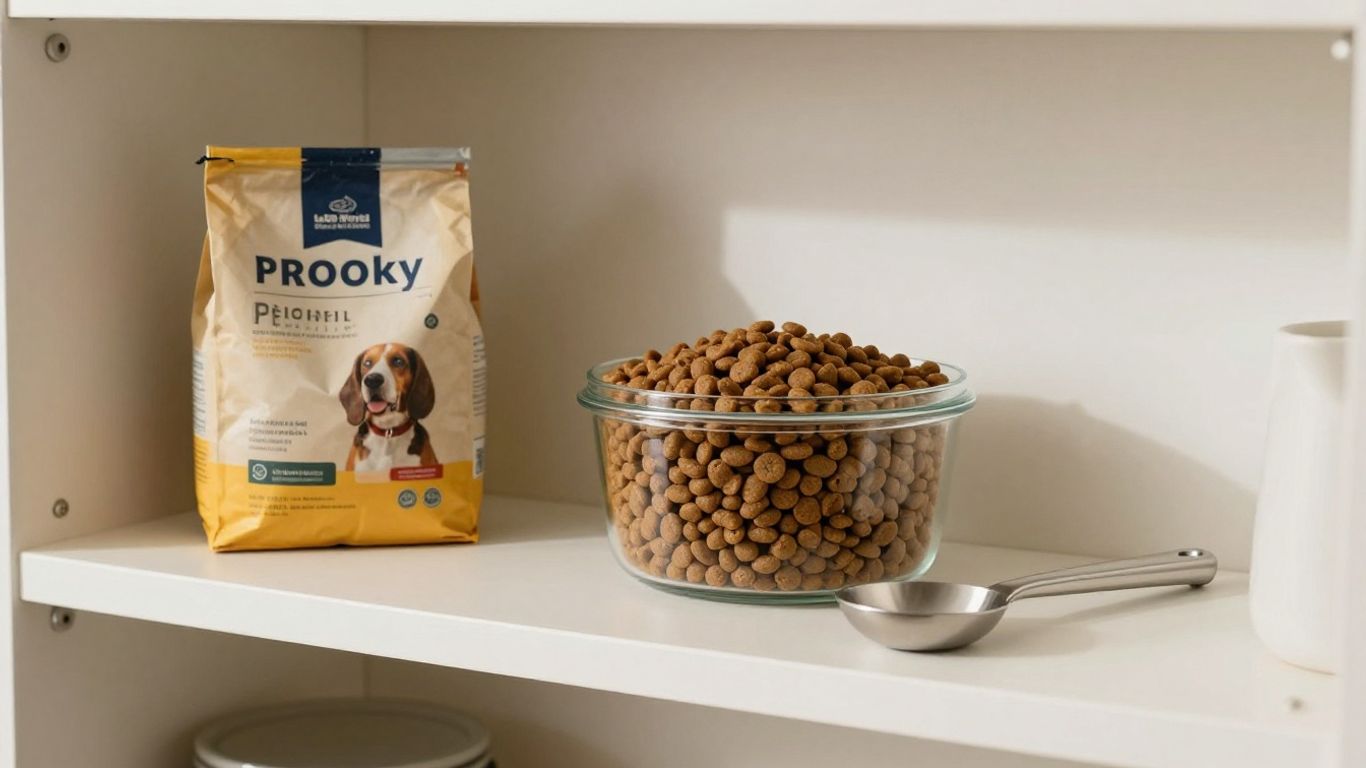
The food bag is made to hold that particular product and carries its details, such as feeding guidance and best-by information. Folding or sealing the top after each use helps limit exposure, and placing the closed bag inside a container adds a layer of organization. Keeping the kibble in its bag also means less food touches the container itself. It’s a small habit that makes the next bag change and cleanup more straightforward.
Choose a container that fits your dog’s food
The right dog food storage container should suit the bag you buy, the space you have, and how often you feed your dog. A container that is too large can take up valuable room, while a very snug one may make it awkward to handle the food bag. Consider the everyday routine before choosing a shape or material. There are plenty of pet food storage options, so a few practical checks can help narrow the choice.
Match the container size to your bag and feeding routine
Check the dimensions of the container and compare them with the food bag, including the space needed to place the bag inside without crumpling it excessively. Think about where it will live and whether you’ll lift it, roll it, or keep it on a shelf. If you buy smaller bags more often, a compact container may be easier to manage than a bin sized for a bulk purchase. Leave enough room to close the bag and lid comfortably.
Compare plastic, stainless steel, and other materials
Material affects weight, upkeep, and how a container fits into your home. The table below gives a simple starting point; the exact finish and construction vary, so check the care instructions for the container you’re considering.
| Material | What to consider | A practical fit |
|---|---|---|
| Plastic | Usually lightweight; inspect the surface and lid for wear | Easy lifting and everyday access |
| Stainless steel | A firm, substantial option; check whether the design suits your space | A durable-feeling container for a pantry or kitchen |
| Other materials | Care needs and closure styles can vary | A choice made around the maker’s instructions and your routine |
Whichever material you choose, keep the food in its original bag and clean the container between bags. The lid and the way the bag fits matter just as much as the material’s appearance.
Look for a secure lid, airtight seal, and sturdy build
A lid should close securely without making every serving a wrestling match. Check whether the closure holds in place, whether the container feels stable when filled, and whether its edges and hinges seem sturdy enough for regular use. A tight fit can be helpful, but look for clear information about the seal rather than assuming the lid keeps out air. If the container is difficult to open or clean, it may not suit your daily routine.
Keep kibble fresh between meals
Once you’ve chosen a container, what you do between feedings matters just as much as the container itself. Keep the food bag closed, choose a cool and dry location, and make it easy to use up one bag before starting another. These habits don’t require special equipment or much time. They simply give the kibble a consistent place in your home.
Close the food bag before placing it in the container
Fold or seal the top of the original bag after each serving, then place the bag inside the container. This helps limit contact with air and keeps crumbs from scattering around the storage area. It also means the food stays with its package information. A simple sequence helps the routine stick:
- Scoop the amount you need.
- Fold or reseal the bag’s opening.
- Place the closed bag inside the container.
- Close the container lid securely.
With the steps in the same order each time, it’s easier to avoid leaving the bag open while you take care of the rest of mealtime. Keep the scoop nearby, but store it clean and dry.
Store the container in a cool, dry spot away from sunlight
A pantry, cupboard, or another cool, dry location can make a convenient home for kibble. Avoid placing the container beside a heater, in a sunny window, or somewhere damp. Check the spot now and then, especially if the seasons change or the space is near an exterior wall. A stable location helps protect the food and keeps the container easy to reach when it’s time to serve a meal.
Use older food before opening a new bag
If more than one bag is open, it’s easy to lose track of which one should be used first. Keep the older bag accessible and check its date and package guidance before opening a replacement. Buying a new bag before the old one is empty can be convenient, but try not to let the two turn into a jumble. A quick check before the next shop helps you plan purchases around your dog’s usual pace.
Clean and maintain the container
A storage container needs an occasional reset, especially when one bag is finished and another is ready to go. Crumbs and food residue can collect in corners, around the lid, or near the bottom. A quick wash between bags gives you a fresh start and a chance to check for wear. Keep the process simple enough that you’ll actually do it each time.
Wash it between bags to clear away crumbs and oils
When a bag is empty, remove the remaining crumbs before washing the container according to its care instructions. Pay attention to the base, seams, lid, and any parts that come into contact with the food. A gentle wash can clear away residue that may be easy to miss during everyday use. The Kind Silicone Dog Food Mat is described as dishwasher-safe and easy to clean; it can help keep the nearby feeding area tidy, though it is not a food storage container.
Dry every part completely before refilling
Once washed, let the container and its lid dry fully before putting food back inside. Check corners, seams, and any removable pieces, since damp spots can be easy to overlook. If you use a cloth to dry it, make sure the cloth is clean. A completely dry container is a simple precaution that helps keep moisture away from the kibble.
Check seals, hinges, and scoops for wear
Cleaning time is a good moment to inspect parts that get handled often. Look for a lid that no longer closes properly, a damaged seal, loose hinges, or a scoop with cracks or residue that won’t wash away. Replace worn pieces when needed rather than relying on a closure that no longer feels secure. Small checks can prevent a minor annoyance from becoming a reason to leave food exposed.
Make storage safer and easier at home
A good storage setup should fit your home as well as your dog’s routine. The easiest spot to reach may not be the safest one if your dog can nudge the lid open or tip the container over. Think about both access and stability before settling on a place. A little planning also helps keep the feeding area comfortable for the whole furry family.
Choose a spot that’s convenient but out of your dog’s reach
Pick a place that’s easy for you to reach during mealtime but not easy for a curious dog to investigate. A cupboard or pantry may work well if it stays cool and dry and gives the container a stable base. If you keep food near the bowls, make sure the container can’t be knocked over during the happy rush to dinner. For a tidier routine around the bowls, these feeding station tips offer ideas for keeping the area functional and easy to clean.
Keep the scoop clean and use it only for pet food
A dedicated scoop makes serving more consistent and helps keep kitchen utensils separate from pet food. Store it in a clean, dry place, and wash it if it becomes dirty or touches the floor. KindTail’s Portabowl is a 2-in-1 nesting system designed for feeding on the go; it serves a different purpose from a home kibble container. Keeping each item suited to its job makes storage and feeding easier to manage.
Consider wheels or a slim shape for tight spaces
If storage space is limited, measure the spot before choosing a container. A slim shape may slide beside a cupboard or into a pantry more easily, while wheels can help with moving a heavier container. Make sure the container still opens fully where you plan to keep it. The Kind Silicone Dog Food Mat has a leakproof design and raised edges to contain spills, so it can be a useful addition around a feeding spot where messes tend to happen.
Avoid common dog food storage mistakes
Good storage is mostly about avoiding a few habits that can undo the care you’ve taken. Mixing leftovers with a fresh bag, choosing a damp location, or trusting a lid without checking its seal can all complicate the routine. None of these mistakes is hard to fix once you spot it. A little attention at bag changes and mealtimes goes a long way.
Don’t pour new kibble over old leftovers
It can be tempting to top off a container as soon as a new bag arrives, but that mixes older crumbs with fresh food and makes it harder to track what you’re using. Empty the container first, clean it, and let it dry before loading the next bag. Keeping kibble in its original bag makes this reset easier. It also gives you a clear place to check product details and dates.
Don’t store food in a damp garage or near cleaning products
A garage or utility area may seem convenient, but it can be exposed to dampness or temperature changes. Keep kibble away from cleaning products and other household supplies as well. Choose a dry, stable location where the food won’t be exposed to spills or strong household odors. If a storage spot feels questionable, it’s worth finding a safer place indoors.
Don’t assume a tight-fitting lid is automatically airtight
A lid can look snug and still leave gaps around its edge. Check how it closes and whether the container’s product information describes a seal. If the lid feels loose, damaged, or inconsistent, don’t count on it to protect the food from air or moisture. Keeping the original bag closed inside the container is a sensible extra step.
Conclusion
A suitable dog food storage container, a cool and dry spot, and a few steady habits can make kibble storage feel effortless. Keep the food in its original bag, wash and dry the container between bags, and choose a setup that works for both you and your dog. It’s a small part of caring for your furry family member, but one that can make everyday mealtimes a little calmer.
Frequently Asked Questions
Should dog food stay in its original bag?
Yes, keeping kibble in its original bag and placing that closed bag inside a container helps retain the package information and limits how much food touches the container.
Where should I keep a dog food storage container?
Choose a cool, dry spot away from direct sunlight, heat sources, damp areas, and household cleaning products.
How often should I clean a dog food container?
Wash it between bags, remove crumbs and residue, and make sure every part is completely dry before refilling.
Is a plastic container suitable for dog food?
It may suit your needs, but check the container’s care instructions and inspect it regularly for scratches, cracks, or a lid that no longer closes securely.
How do I know if kibble has gone stale or spoiled?
An unusual odor, visible moisture, mold, or a noticeable change in appearance can be warning signs. If you’re unsure, don’t serve it and ask your veterinarian for guidance.
Can I mix a new bag of kibble with the food left in the container?
It’s better to finish the older food, then empty and clean the container before adding the next bag. This makes it easier to keep track of what you’re feeding.
Does a tight-fitting lid keep kibble fresh?
Not necessarily. Check that the container has a secure seal, and keep the food closed in its original bag inside the container for an additional layer of protection.
Leave a comment
Comments will be approved before showing up.