






The Best Modern Dog Crates of 2026: The Ultimate Guide to Puppy Crate Training for Stylish Homes
Bringing a new dog into your life is a transformative experience. However, the transition from a litter to a human household requires a strategy that balances your home's aesthetic with your puppy's instinctual needs. Whether you are wondering when should you start crate training a puppy (the answer: Day 1) or looking for the best way to crate train a puppy at night, this 1,500-word comprehensive guide provides the blueprint for success using the stylish, collapsible PAWD® crate.
How do you crate train a puppy?
To crate train a puppy effectively, you must introduce the crate as a positive "den" using treats, high-value toys, and comfortable bedding. Start with short durations during the day, feed meals inside the crate to create positive associations, and maintain a consistent puppy crate training schedule that balances potty breaks, mental stimulation, and enforced naps. Never use the crate as a form of punishment.
Continue Your Journey to Stress-Free Pet Parenting
1. Still Choosing Your Puppy’s First Home?
Not sure which size or style fits your lifestyle? Before you bring your new best friend home, read our guide on How to Choose the Right Crate for Your New Puppy. We break down dimensions, safety features, and how to pick a design that complements your interior.
2. Is Your Puppy Growing Too Fast?
If you’ve invested in a larger crate to "grow into," you might face house-training setbacks. Discover How a Dog Crate Divider Helps With Training. Learn how to adjust your pup's space to prevent accidents and maintain their "den" instinct.
3. Take Your Sanctuary on the Road
Crate training isn’t just for the living room. Once your pup has mastered their puppy crate training schedule, they’re ready for adventure. Check out our expert tips on Preparing Your Dog for Travel to ensure every trip is as comfortable as being at home.
4. Crate Training 101: The Deep Dive
Want to understand the "why" behind the "how"? For a comprehensive look at the ethics and long-term benefits of denning, visit Crate Training 101: The Truth About Modern Dog Crates. It’s the perfect foundation for any new pet parent.
Why Crate Training a Puppy is Essential
Crate training a puppy is not about confinement; it is about providing a "safe space." Ethologists observe that canines are den animals by nature. In the wild, a den is a small, enclosed sanctuary that offers protection from predators and the elements.
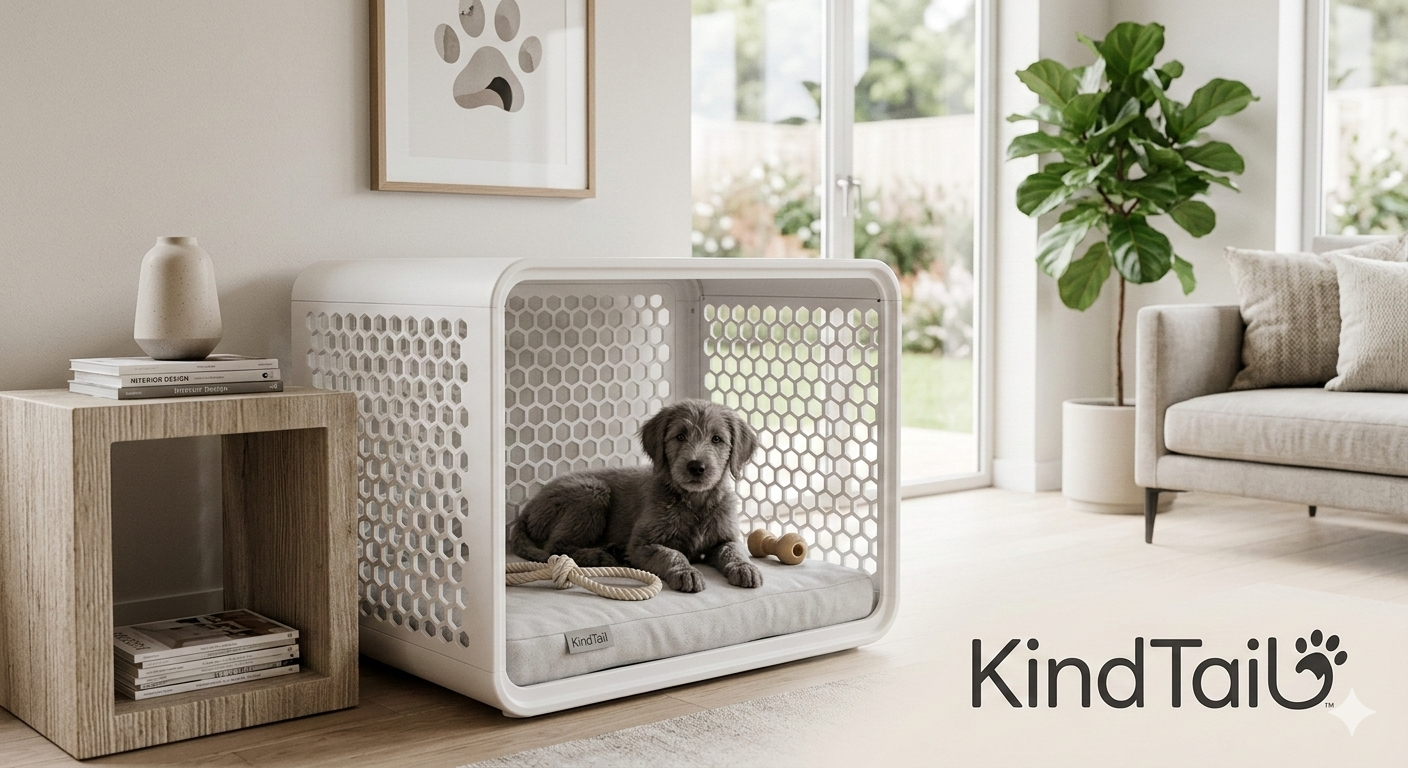
A modern crate, like the KindTail PAWD®, acts as a dedicated sanctuary that reduces environmental overstimulation.
-
House training a puppy crate style: Puppies instinctively avoid soiling their sleeping area. This biological "denning instinct" makes how to house train a puppy using a crate the most effective method for teaching bladder and bowel control.
-
Safety & Prevention: Puppy crate training ensures your pet is safe from household hazards—like electrical cords or toxic plants—when you cannot provide 100% supervision.
-
Travel and Emergencies: A crate-trained dog is much easier to transport safely in a vehicle or accommodate during vet visits and emergency evacuations.
Selecting Your Tools (Crates for Puppy Training)
Before the first training session, you need the right equipment. Traditional wire cages can feel industrial and cold, often clashing with a modern home's interior.
The KindTail PAWD® Advantage
When looking for crates for puppy training, consider the PAWD®. Its unique, honeycomb-inspired design provides the airflow and visibility of a wire crate but with a soft-edged, furniture-grade aesthetic.
-
Size Matters: Your puppy should be able to stand up, turn around, and lie down comfortably. However, if the crate is too large, they may use one corner as a bathroom.
-
Comfort Layering: Use a KindTail Lounger Bed or a familiar-smelling blanket. This adds the sensory comfort necessary for puppy crate training at night.
The 3-Day Blueprint (How to Crate Train Your Puppy in 3 Days)
While total mastery takes time, you can establish the foundation of puppy crate training in just 72 hours by following this high-intensity positive reinforcement plan.
Day 1: Building The Positive Association
The goal of Day 1 is to ensure the puppy views the crate as a "Treat Factory."
-
Open Door Policy: Keep the crate door open and secured so it doesn't swing and startle the pup.
-
The Trail of Crumbs: Toss high-value treats (chicken, cheese, or freeze-dried liver) near the entrance, then just inside, and finally at the very back.
-
The Discovery Game: Occasionally "hide" a new toy inside the PAWD® while the puppy isn't looking. Let them discover it on their own.
Day 2: Closing the Door and Meal Times
On Day 2, we introduce the concept of "confinement" in a way that feels rewarding.
-
Crate Feeding: Feed all meals inside the crate. This is the gold standard for how do you crate train your puppy.
-
The "Close-Open" Drill: While they are eating, gently close the door. Open it the moment they finish. This prevents the door from becoming a source of anxiety.
-
Incremental Stays: Once they are comfortable eating with the door closed, try keeping it closed for 1–2 minutes after the meal is over.
Day 3: Building Duration and Distance
By Day 3, you are working on the "stay" element of crate training puppies.
-
The Quiet Reward: Wait for a moment of silence or relaxation. Click or say "Yes!" and provide a treat through the side of the crate.
-
Distance Training: Step away from the crate. Start with 3 feet, then 10 feet, then leave the room for 60 seconds.
-
Ignore the Whining: If they start "contact calling" (whining for attention), wait for a 5-second gap of silence before opening the door.
The Routine (Puppy Crate Training Schedule)
Structure is the antidote to anxiety. A predictable puppy training schedule crate helps your pup understand the flow of the day.
A Sample 2026 Puppy Schedule (8–16 Weeks)
| Time | Activity | Crate Status |
| 7:00 AM | Immediate Potty Break | Out |
| 7:30 AM | Breakfast & Water | Inside PAWD® |
| 8:00 AM | Supervised Play / Training | Out |
| 9:30 AM | Morning Nap (Enforced) | Inside PAWD® |
| 12:00 PM | Lunch & Potty Break | Out |
| 1:30 PM | Afternoon Nap | Inside PAWD® |
| 10:00 PM | Bedtime | Inside PAWD® |
Survival Guide (How to Crate Train a Puppy at Night)
Nighttime is often the hardest part of puppy crate training. The puppy is away from their littermates for the first time and feels vulnerable.
The Best Way to Crate Train a Puppy at Night

-
Proximity is Key: For the first week, place the PAWD® crate in your bedroom. Being able to hear your breathing or have you drop a hand near the crate can soothe a frightened pup.
-
The Bedtime Ritual: Ensure the puppy has had a vigorous play session followed by a calm potty break.
-
The "Boring" Potty Break: If your puppy wakes up at 2:00 AM, take them out on a leash. Do not talk to them, do not play, and keep the lights low. Once they go, put them directly back into the crate.
Finding Modern Pet Solutions Near You
As "Interspecies Living" becomes a major home decor trend in 2026, pet parents are no longer willing to hide their dog gear. If you are searching for "modern dog crates near me" or looking for crates for puppy training that double as home accents, KindTail’s online boutique offers global shipping that brings luxury directly to your doorstep. Whether you are in a chic New York apartment or a London flat, our collapsible designs are built for the modern, mobile lifestyle.
Your Roadmap to Success
To recap how do you crate train your puppy:
-
Start Early: Begin crate training a puppy the moment they arrive.
-
Be Consistent: Stick to your puppy crate training schedule.
-
Stay Positive: Use puppy crate training tips like high-value treats and praise.
-
Invest in Quality: Use a crate like the KindTail PAWD® that prioritizes safety and design.
Ready to Upgrade Your Puppy's Sanctuary?
Don't settle for a clunky wire cage that disrupts your home's flow. Give your new best friend a space they'll truly love while keeping your living room looking flawless.
Click Here to Shop the KindTail PAWD® Collection – The #1 Choice for Modern Puppy Crate Training!
Leave a comment
Comments will be approved before showing up.