






Choosing the best crates for dachshunds
Key Takeaways
A good crate is one your dachshund can settle into comfortably and you can use safely in everyday life. Start with fit, then choose a style that suits your dog’s habits and your home.
- Measure your dog rather than relying on breed labels or weight alone.
- Choose a crate that allows your dachshund to stand, turn around, and lie down naturally.
- Match the crate style to its main purpose, whether that is home use, travel, or a cozy retreat.
- For puppies, plan for growth while making sure the crate does not feel overwhelmingly large.
- Introduce the crate gradually and make it a comfortable, positive place to rest.
1. Best overall crate for dachshunds
The best crates for dachshunds balance a comfortable fit with a setup that works in your home. Since dachshunds have long bodies and short legs, check the interior length as well as the height; a crate that looks roomy from the outside may still feel cramped once your dog stretches out. The right choice should let your pup stand, turn around, and lie down without having to curl up every time.
Different styles suit different households, so it helps to think about how you will use the crate day to day. This quick comparison is a starting point, not a substitute for measuring your dog and checking the product’s interior dimensions.
| Crate style | Often suits | Consider before choosing |
|---|---|---|
| Wire | Home use and visibility | Check the door placement and stability |
| Soft-sided | Light travel and visits | Consider how your dog behaves around fabric |
| Plastic | A more enclosed resting space | Check ventilation and interior fit |
| Furniture-style | A crate that shares living space | Confirm the dog has enough room inside |
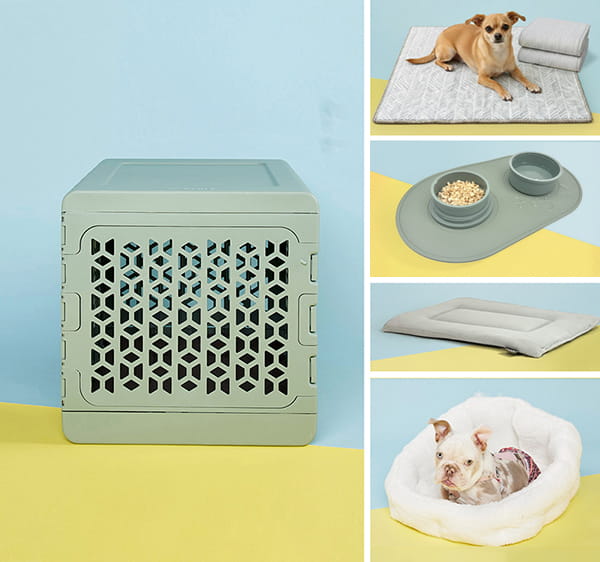
For a home-friendly, collapsible option, the KindTail PAWD is described as having a stylish design and tool-free assembly. Whatever style catches your eye, fit comes before looks: compare the usable inside space with your dog’s measurements, and look for a secure door and a stable frame. A space-saving crate guide can also help you weigh compact storage against everyday convenience.
2. Best wire crate for airflow and visibility
A wire crate can be a practical choice if your dachshund likes to see what is happening around the room. Its open sides make it easier for you to check in, and they can help the crate feel less enclosed than a solid-sided option. Think about where it will sit, too: a bright, busy spot may suit a curious dog, while another pup may prefer a quieter corner.
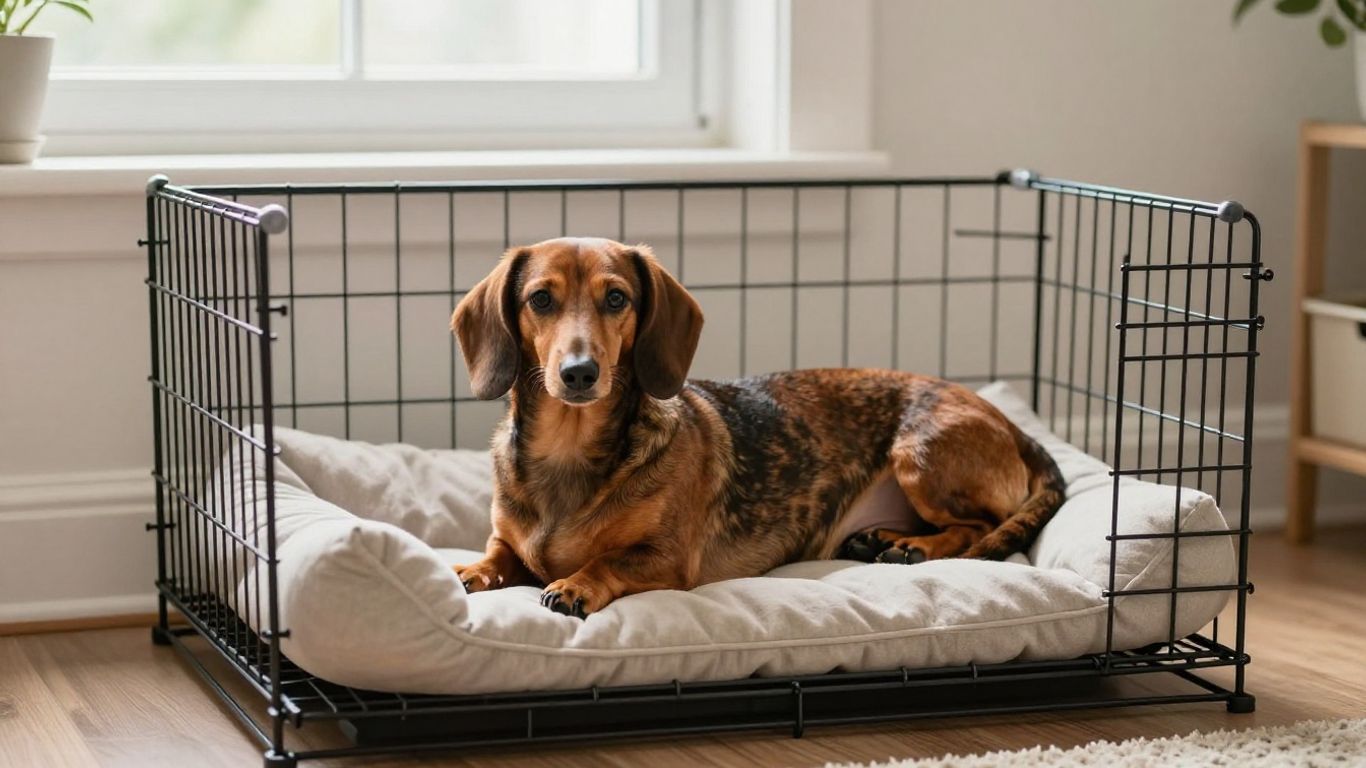
Door placement matters more than it first seems. A front door may work well against a wall, while another opening can make access easier in a different spot; check the configuration before bringing the crate home. If you are comparing wire and plastic options, this Dachshund crate guide offers a helpful overview of the trade-offs.
Wire is not automatically the right answer for every dog. Check that the crate feels steady, that the latch closes securely, and that the interior dimensions suit your dachshund’s long frame. A cover can make the space feel quieter when needed, but keep airflow in mind and make sure your dog is comfortable with the setup.
3. Best furniture-style crate for your living room
A furniture-style crate can blend into a living room more naturally than a basic kennel, especially when the crate has a permanent place in your daily routine. The key is to treat it as your dog’s resting space first and a piece of furniture second. Your dachshund still needs enough room to move comfortably, with an entrance that is easy to approach.
Measure the area where you expect to place it, then compare those measurements with the interior dimensions rather than the outside footprint alone. Door position, ventilation, and sturdy construction all matter, even when the design is meant to fit your decor. A furniture-style crate guide can help you think through size and style together.
Try to keep the area around the crate calm and uncluttered. A familiar blanket or bed may help make it inviting, provided it does not take up too much of the available space. If your dog tends to chew or paw at furniture, consider whether a particular design and material are suitable before making it part of the room.
4. Best soft-sided crate for travel
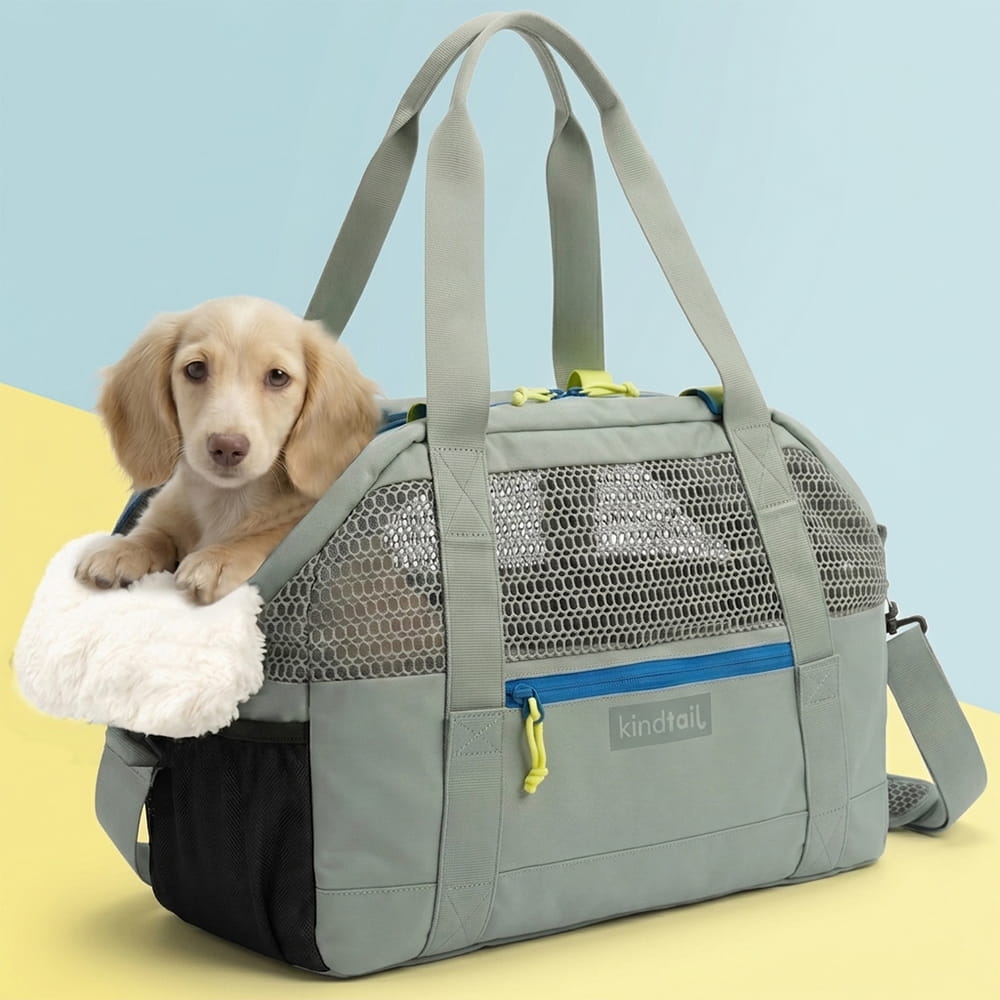
Soft-sided crates are worth considering when you want something easy to carry for visits or light travel. They can be convenient to pack away, but the right choice depends on your dachshund’s habits as well as the trip. Think about whether your dog is already comfortable resting in a crate and how the crate will be used once you arrive.
Before traveling, check the crate’s dimensions, ventilation, zippers, and setup instructions. A portable crate guide can help you compare styles for home and travel, while a crate-training guide for dachshunds offers ideas for helping your dog get familiar with the space before a trip. If you are driving, sheepskin seat covers are a separate car-comfort consideration; they do not replace checking that your dog’s crate is secure for the journey.
Let your dog explore the crate at home before asking them to settle in it somewhere unfamiliar. Short, relaxed practice sessions can make a new place feel less surprising. For a long-bodied dog, confirm there is enough room to lie down naturally, and never assume a lightweight design is suitable for every dog or every travel situation.
5. Best plastic crate for a cozy, den-like feel
Some dachshunds seem to settle more easily in a space with solid sides and a more enclosed feel. A plastic crate may offer that den-like atmosphere, but it should still have adequate ventilation and enough interior room for your dog to move naturally. Consider where it will sit and whether your dachshund prefers a sheltered nook or a more open view of the room.
Look closely at the door opening, latches, and ventilation areas, and check how the crate comes apart for cleaning or storage. The outside size can be misleading, so compare the usable floor area with your dog’s length. A crate sizing guide can help you get started with measuring before you choose a style.
If your dog is hesitant, make the crate inviting without crowding it with bedding or toys. Let your dachshund explore at their own pace and keep the door open during early introductions. A cozy-looking crate is only a good fit if your dog can enter, turn, and rest comfortably inside.
6. Best crate for a dachshund puppy
A puppy crate should feel safe and easy to navigate, with enough room for your dachshund to grow without giving them a cavernous space from day one. Measure your puppy, consider their expected adult size, and check the crate’s usable interior dimensions. A puppy crate guide can help you compare styles and think through the practical details.
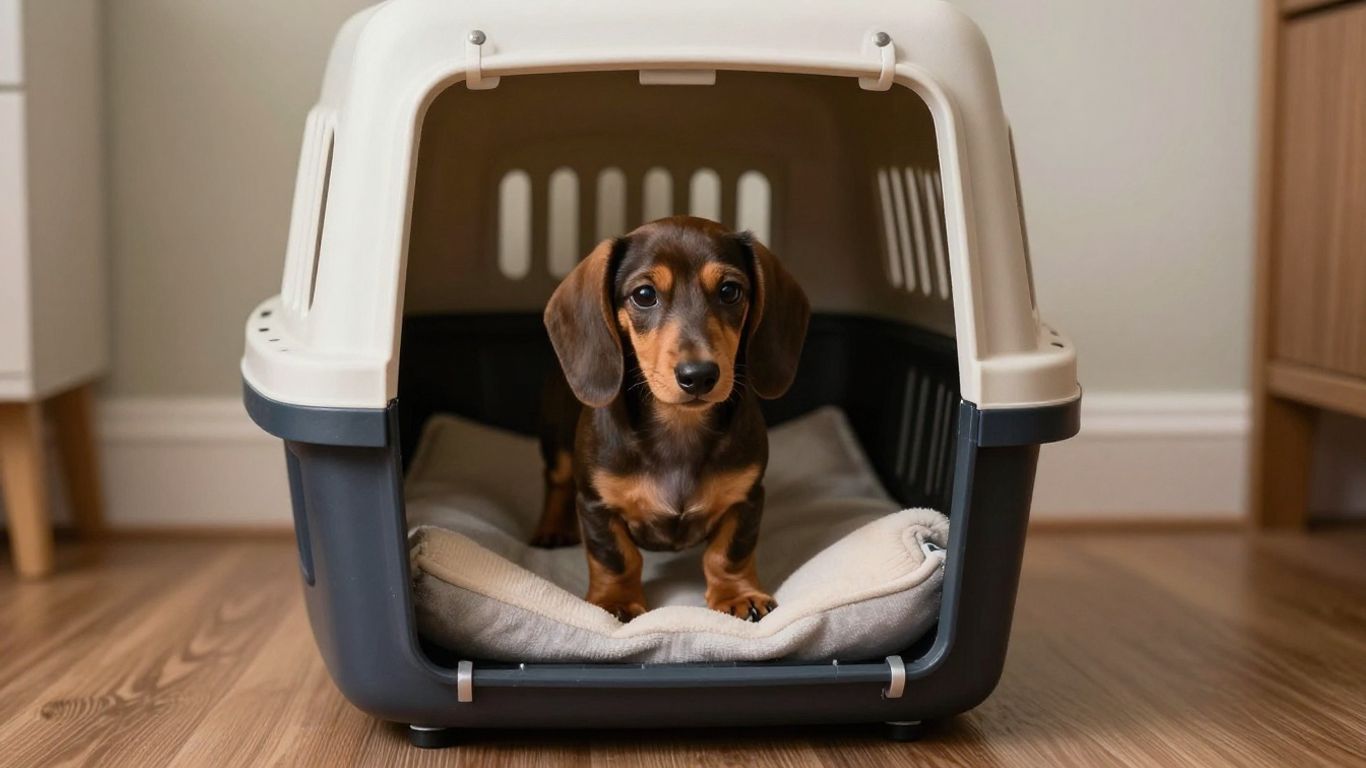
For the first days, a few small steps can make the crate feel familiar rather than like a sudden change:
- Place the crate in a calm area where your puppy can still feel connected to the household.
- Let your puppy explore it with the door open before encouraging longer rests.
- Add comfortable bedding that does not crowd the available floor space.
- Keep early crate sessions short and positive, then build up gradually.
The KindTail PAWD is described in a puppy crate-training guide as a home-friendly option, and that guide focuses on building positive associations over time. Whatever crate you choose, avoid treating it as a shortcut for supervision or training. Your puppy’s needs change as they grow, so reassess the fit and your routine regularly.
7. Best easy-access crate for senior dachshunds
For an older dachshund, easy entry can be just as important as interior space. Look for a door opening that your dog can approach without having to step over a tall edge, and place the crate somewhere they can reach without navigating a busy path. If your dog’s mobility has changed, ask your veterinarian what kind of resting setup is appropriate.
A supportive bed can make the crate feel more inviting, as long as it leaves room for your dog to settle comfortably. Check the floor for stability and make sure the door is simple for you to open and close without startling your pet. A crate and bed guide covers different crate and bedding options for small dogs, including comfort for senior pets.
Keep the arrangement predictable. An easy-to-reach water bowl nearby and a familiar resting spot can make daily use feel less like a chore, though anything inside the crate should be safe and suited to your dog. If getting in or out seems uncomfortable, do not wait for a new crate alone to solve it; seek advice tailored to your dachshund.
8. Best portable crate for road trips and visits
A portable crate can give your dachshund a familiar place to rest when you visit family or stay somewhere new. Before choosing one, decide whether you need it mainly for the car, an overnight stay, or both. Those uses can call for different priorities, so check the crate’s size, setup, and the travel requirements that apply to your trip.
A dog travel crate guide covers considerations such as measuring your dog and checking vehicle or airline requirements. During a road trip, the crate should be appropriate for the way it will be secured in your vehicle; do not assume that a crate designed for home use is automatically suitable for car travel. For a separate kind of travel planning, BAT.TAXI is described as a CRM for licensed London Hackney drivers, rather than a pet crate or transport-safety resource.
Practise setting up and packing away the crate at home, so you are not learning the process in a hotel room or someone else’s living room. Bring familiar bedding if it fits safely, and give your dachshund time to investigate the space after arrival. A familiar crate can make a visit feel more predictable, but it should never replace appropriate supervision.
9. Best budget-friendly crate for dachshunds
A lower price can be appealing, but the best value is a crate that fits your dog and holds up to the way you plan to use it. Compare the interior dimensions, door security, ease of cleaning, and how simple it is to store. A crate that is uncomfortable or awkward to use may not feel like a bargain for long.
The KindTail PAWD is featured in a guide to budget-friendly collapsible crates, which describes its value in terms of practical features and home-friendly design. When you compare any crate, consider what you actually need rather than paying for features that will go unused. And while it is a very different kind of buying decision, DogQ is described as a no-code web application testing tool; that link is not a source of crate advice.
It can also help to think about storage and setup costs alongside the sticker price. If you will move the crate between rooms or take it on visits, a collapsible design may suit your routine; if it will stay in one spot, stability may matter more. A guide to collapsible crates for small spaces can help you compare those everyday trade-offs.
10. Best crate for dachshunds who like extra room
Some dachshunds appreciate extra space to stretch out, especially if they use their crate for more than short rests. The goal is room to move naturally, not simply the largest crate available. Measure your dog in their usual resting posture and compare that with the crate’s interior measurements before deciding.
If you want room for bedding, check that it will not take over the floor area your dog needs to turn and lie down. Also think about where the crate will go: a larger model needs a stable location and a door that can open freely. A dog crate sizing guide explains why your dog’s measurements are more useful than breed or weight alone.
For a dachshund still learning house-training, more space is not always more helpful; consider your dog’s stage and the advice you have received from a trainer or veterinarian. Aim for a comfortable balance: enough room for easy movement, without making the crate feel like an empty room. The best fit is the one your dog can use calmly and safely.
Conclusion
Choosing a crate for your dachshund comes down to a comfortable fit, a style that suits your dog, and a setup you can use consistently. Measure carefully, introduce the crate gently, and let your furry family member’s comfort guide the final choice.
Frequently Asked Questions
What size crate does a dachshund need?
Choose a crate that lets your dog stand, turn around, and lie down comfortably. Measure your dachshund and compare those measurements with the crate’s interior dimensions rather than relying on breed or weight alone.
Should a dachshund crate be covered?
Some dogs like a quieter, more sheltered space, while others prefer visibility. If you cover a crate, keep airflow in mind and watch how your dog responds.
Is a wire or plastic crate better for a dachshund?
Neither style is best for every dog. Wire crates offer an open view, while plastic crates can feel more enclosed; compare ventilation, fit, ease of use, and your dog’s preferences.
Are soft-sided crates suitable for dachshunds?
They can be useful for some travel and visit situations, depending on your dog’s behavior and the crate’s construction. Check the fit, ventilation, and intended use before choosing one.
Can a puppy use an adult-sized crate?
A crate should allow comfortable movement without overwhelming your puppy with excess space. Plan for growth, check the interior measurements, and reassess the fit as your puppy gets bigger.
How can I help my dachshund like a crate?
Introduce it gradually and keep early experiences calm and positive. Let your dog explore the open crate, then build up to longer rests as they become comfortable.
Where should I put my dachshund’s crate?
Choose a calm, accessible place that fits your household routine. Some dogs settle better near family activity, while others do best in a quieter area; observe your dog and adjust as needed.
Leave a comment
Comments will be approved before showing up.