

How to feed a dog while traveling: easy tips for meals on the go
Key Takeaways
A little planning can make meals feel more familiar for your dog, even when the scenery keeps changing. Keep the routine simple, and adjust for your dog’s needs and the trip ahead.
- Pack enough of your dog’s usual food, with a small buffer for delays.
- Portion meals ahead and bring bowls, water, and cleanup supplies.
- Keep feeding times and meal locations as calm and predictable as possible.
- Plan stops around meals, and never leave your dog in a hot car.
- Ask your veterinarian for advice about special diets, repeated skipped meals, or stomach upsets.
Plan your dog’s meals before you leave
When you’re figuring out how to feed a dog while traveling, start with the routine your dog already knows. A quick plan for portions, storage, and meal times can prevent last-minute scrambling at a gas station or hotel. Think through the whole route, including delays and the first meal after you arrive.
Check how much food to pack for the trip
Work out how many meals your dog will need, then measure the usual amount for each one. Bring a little extra in case a drive runs long or plans change, but avoid guessing at portions while tired or distracted. If the trip spans several days, lay out the meals on paper or in your phone notes before packing.
A simple inventory helps keep the math straight: count travel days, add meals for the arrival and return days, and consider whether your dog eats more than once a day. Keep the familiar amount as your starting point, unless your veterinarian has recommended a different plan. You can also read practical feeding while traveling advice for a broader look at portions and storage.
Keep your dog’s usual food in the mix
Travel can bring new sounds, smells, and schedules; there’s no need to add an unfamiliar menu if you can help it. Pack the food your dog normally eats, especially if they have a sensitive stomach or a prescribed diet. Keeping the familiar food in the routine gives you one less change to manage while everything else feels new.
If your dog’s food is difficult to carry or store, ask your veterinarian about suitable options before you go rather than making a sudden switch at the destination. If a work trip is part of the plan, this separate sales-team motivation guide may be useful for workplace planning; it isn’t a feeding resource.
Look up food storage options at your destination
Check what your accommodation offers before you decide how to pack. A mini-fridge may be enough for some foods, while other diets need more dependable cold storage. If you’re heading to New Orleans, a New Orleans visitor guide can help you think ahead about local weather and destination logistics as you plan the trip.
This quick comparison can help you spot what to confirm with your host or hotel before departure.
| Food or supply | Storage question | Before-you-go check |
|---|---|---|
| Dry food | Can it stay cool and dry? | Pack a sealed container or bag |
| Unopened canned food | Is there a cool, secure place? | Check labels and packaging |
| Opened or perishable food | Is reliable refrigeration available? | Confirm fridge access and follow storage directions |
| Meals for a special diet | Can you keep the food as directed? | Ask your veterinarian about a travel plan |
The right choice depends on your dog’s food and the length of your stay, so follow its packaging instructions and confirm the actual storage setup. If you’re preparing your home before leaving, this vacation plumbing checklist covers a separate part of trip preparation.
Ask your vet about special dietary needs
A dog who eats a therapeutic diet, has a medical condition, or needs a carefully managed recipe may need more than a simple packing plan. Check with your veterinarian early, while there’s still time to get advice or arrange suitable food. Bring the food label or recipe details to the conversation so the guidance fits your dog’s actual meals.
It can also help to ask what to do if a meal is delayed, the food gets too warm, or your dog won’t eat in a new setting. A short, specific plan is easier to follow on the road than trying to make a decision in the middle of a busy travel day.
Pack a travel-friendly feeding kit
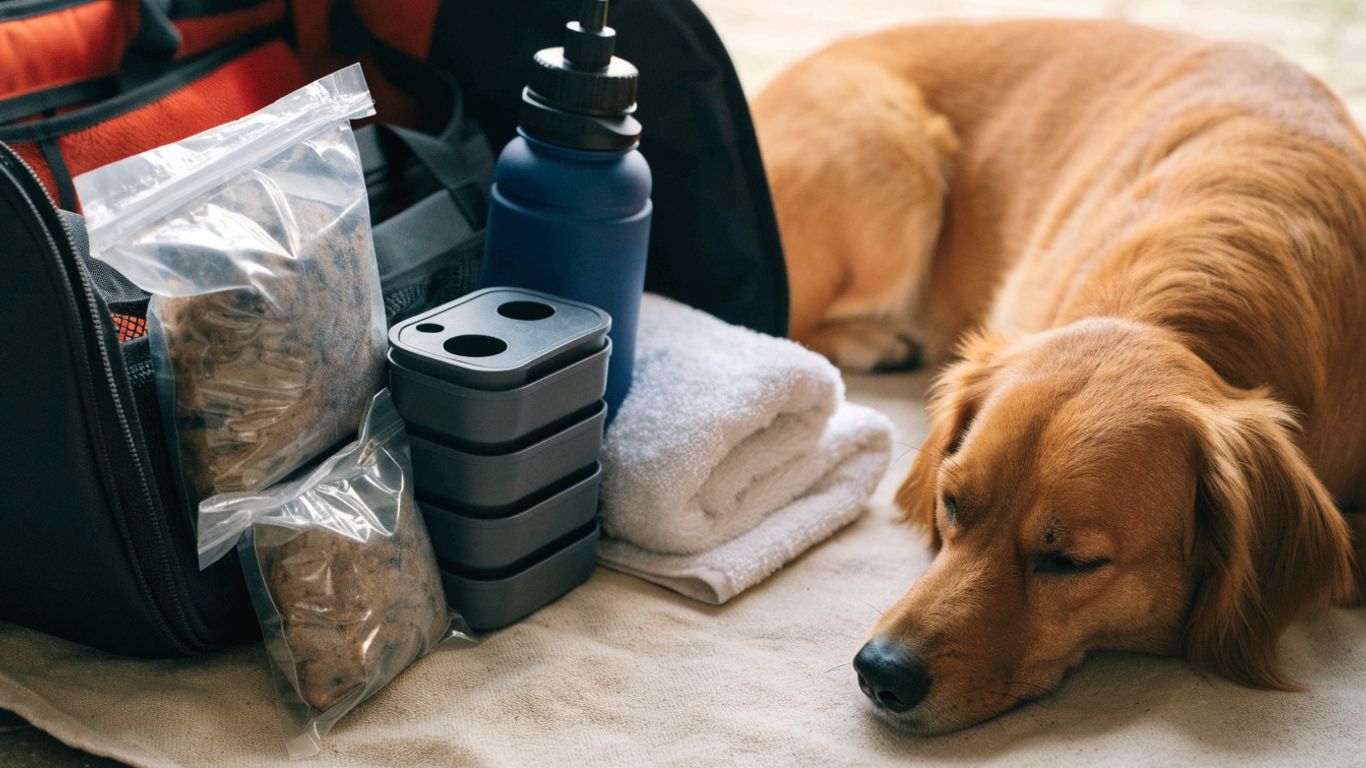
A small, well-organized kit keeps feeding from becoming a scavenger hunt in the trunk. Put meal supplies together so you can reach them at a rest stop or after checking in, without unpacking everything else. The KindTail travel feeder is described as compact and stackable, a handy format to consider when planning what to bring.
Portion meals into labeled containers
Pre-portioning makes it easier to serve the usual amount when you’re away from home. Use containers or bags that close securely, and label them with the day or meal so you don’t have to remember what’s inside. If your dog eats different foods at different times, mark those clearly too.
For food that needs refrigeration, portioning doesn’t replace safe storage; keep it at the temperature and for the length of time specified on its packaging. Pack the portions where you can reach them without disturbing fragile items or digging through luggage. A simple label can save a lot of fumbling when your dog is ready to eat.
Bring bowls, water, and cleanup supplies
The basics are easy to overlook when you’re packing for everyone at once. Gather the things you’ll use at each meal in one spot, then check them off before you close the bag. KindTail’s travel gear includes portable bowls, among other travel-friendly items; the KindTail Portabowl has a nesting design described for feeding and hydration on the go.
A short kit list can keep meals tidy without taking over the whole packing plan:
- A familiar food bowl and a separate water bowl
- Drinking water and a refillable water container
- A towel or wipes for drips and muddy paws
- Waste bags for quick cleanup around rest stops
Keep the kit somewhere easy to reach, rather than buried under suitcases. Your dog can eat and drink from familiar equipment, and you won’t need to improvise with whatever happens to be in the car.
Protect food from heat, moisture, and pests
Pack food in secure containers and keep it away from damp gear, direct sun, and places where curious noses can reach it. Dry food can lose its quality if it gets wet, while perishable meals need storage that follows the package directions. Don’t assume a parked car is a safe storage spot, especially in warm weather.
At a hotel or rental, move food to a secure indoor place as soon as you arrive. Check that containers are closed after each serving, and keep food separate from cleaning supplies or other items that could spill. A little care with storage helps preserve the meals you planned so carefully.
Keep mealtimes familiar on the road
A trip may shift the clock, but it doesn’t have to erase every part of your dog’s routine. Regular meals and water breaks can make the day feel less confusing for your furry family member. Aim for a familiar pattern where you can, while leaving room for the realities of traffic and sightseeing.
Stick as closely as you can to your dog’s normal schedule
If breakfast normally comes after a morning walk, keep that sequence when the day allows. Try to plan around your dog’s usual mealtimes instead of waiting until everyone is hungry and worn out. A small shift is sometimes unavoidable, but a predictable routine can make the transition feel gentler.
For a long drive or a busy itinerary, note the usual meal windows in your trip plan. Then you can choose a stop or a quiet moment before the schedule gets crowded. That little bit of foresight is often more useful than trying to recreate home perfectly.
Choose a calm, safe spot for meals
A quiet corner away from foot traffic gives your dog room to settle and eat at their own pace. At a rest area, look for a safe spot away from vehicles, discarded food, and other dogs who may be passing close by. At your stay, place the bowl where it won’t be bumped or left in a walkway.
Keep your dog with you while they eat, and don’t leave a bowl where unfamiliar pets or wildlife can reach it. Familiar bedding or a mat can help define a small meal space, especially in an unfamiliar room. The goal isn’t a perfect setup—just somewhere calm enough for your dog to focus.
Offer water regularly, especially in warm weather
Bring water with you rather than assuming you’ll find a suitable source whenever you need one. Offer it during breaks, after activity, and when the weather is warm, without forcing your dog to drink. Watch your dog’s comfort and make water part of the stop routine, not an afterthought.
A travel bowl can make it easier to offer a drink without carrying a full-size dish. For more help choosing equipment, these travel bowl features include portability, cleaning, and spill resistance. Keep a clean refill available, and discard water that has been sitting out or has picked up dirt.
Feed your dog safely during car trips
Meal planning matters even more when the car is part of the day. A few well-timed stops let your dog eat, drink, and stretch without turning the back seat into a dining area. For a broader road-trip plan, see these short road trip tips for preparing your dog and arranging breaks.
Plan meal stops around your route
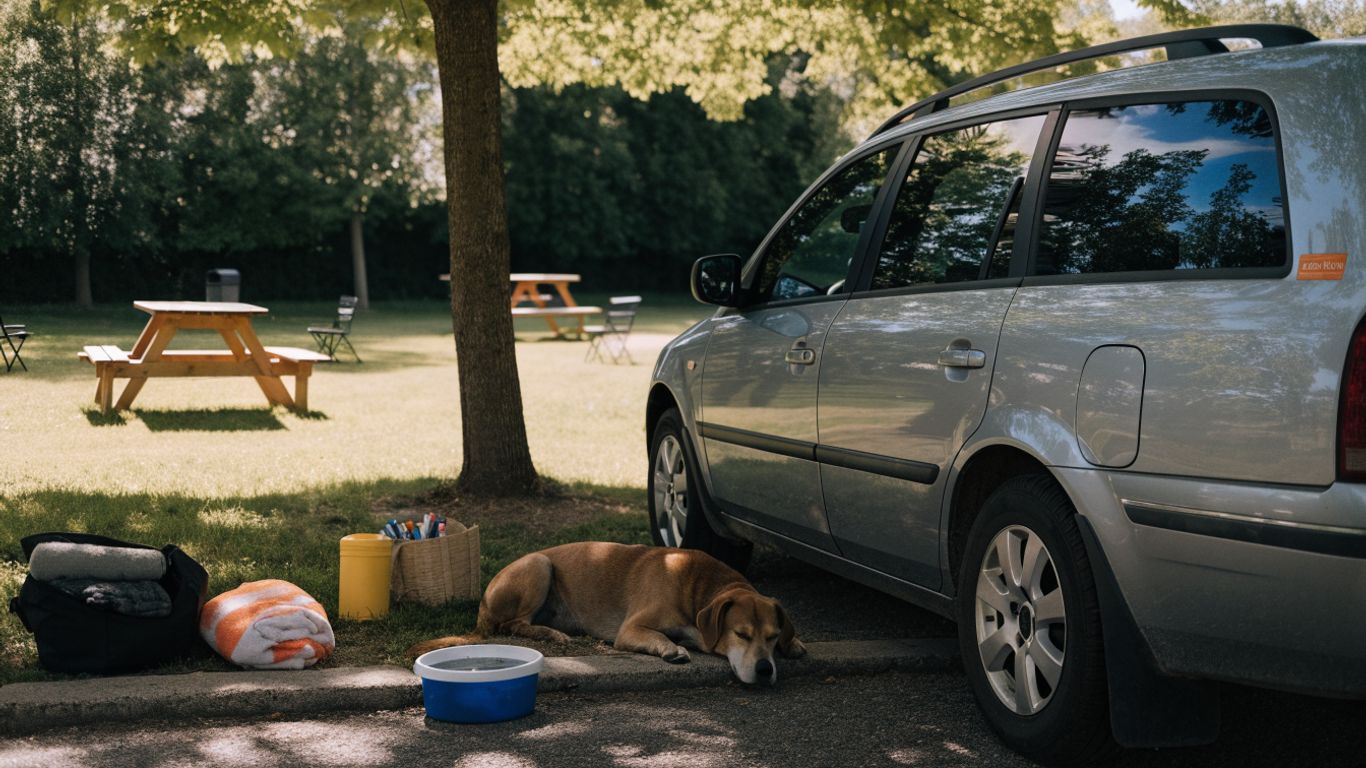
Mark possible stopping places before you set off, especially on longer stretches where options may be limited. A good stop gives your dog a chance to get out safely, have water, and eat in a calm place if it’s time for a meal. Keep a backup stop in mind in case traffic or closures change the route.
If you’re traveling for work, a work-travel responsibilities guide covers a separate question: employer and employee duties on business trips. If you’re booking stays online, a property’s cookie policy is also a separate privacy detail, not a measure of its pet-feeding setup.
Avoid feeding a full meal right before driving
Some dogs may feel uncomfortable if they eat a full meal just before a long drive. Consider planning a meal stop with time to settle before you continue, and ask your veterinarian what timing makes sense for your dog. That’s particularly worthwhile if your dog has a history of travel nausea or other health concerns.
Every dog is different, so avoid treating a rigid rule as a substitute for veterinary advice. Build a little flexibility into your route, and let your dog relax after eating rather than rushing straight back into the car.
Never leave food or your dog in a hot car
A parked vehicle can heat up quickly, even when the weather seems mild or the windows are cracked. Take your dog with you when you leave the car, and bring their food rather than storing it in a hot vehicle. If you can’t keep food within its recommended storage conditions, don’t serve it until you’ve checked what’s safe to do.
Before setting off again, make sure your dog is safely secured and comfortable. Temperature awareness is part of every stop, not just the longest ones. When conditions are warm, choose shaded breaks and keep fresh water close at hand.
Make meals work at hotels and other stays
A new room can be restful for people and strange for dogs, so set up meals simply when you arrive. Check the house rules, find a suitable place for food, and keep the routine recognizable. A few questions asked before booking can prevent awkward surprises after a long drive.
Check pet rules and kitchen access before booking
Confirm that dogs are allowed and ask whether the property has any specific feeding or cleanup rules. If your dog’s food needs refrigeration, verify that a fridge is available and that guests can use it. Don’t rely on a listing photo or a general description when a particular storage detail matters for your dog’s diet.
If you’re traveling with a dog, it can also help to keep a pet travel checklist alongside your booking notes. Ask where dogs may eat and whether there’s a safe outdoor area for breaks, too. Clear answers make it easier to choose a stay that works for both of you.
Store food securely in a room or vehicle
Once you’ve checked in, move the food to the storage place you confirmed and keep it closed between meals. Avoid leaving bags open on the floor or in a spot your dog can investigate overnight. If the food needs refrigeration, follow its storage directions and check that the appliance is working as expected.
Keep the day’s portion accessible while storing the rest securely. That way, you can prepare the next meal without leaving the full supply exposed. For travel by van, an easygoing van trip plan offers other ideas for organizing a dog’s space and breaks on the road.
Clean bowls and feeding areas after each meal
A quick wipe-down keeps crumbs, spills, and lingering food smells from attracting pests or bothering the next guest. Wash bowls according to their material and the property’s rules, then let them dry before packing. Wipe the surface beneath the bowl, too, especially if your dog tends to splash water.
Choose a spot that’s easy to clean and away from shared walkways. Bringing a small cloth or a few wipes can make the job quick, even when you’re tired from the day. It’s a small kindness to the host—and a more comfortable way to settle in with your dog.
Handle skipped meals and stomach upsets
Travel can unsettle even a dog who usually eats enthusiastically. A changed routine, a busy room, or a long day may affect appetite, so stay observant without panicking over one unusual meal. Keep familiar food and water available, and contact your veterinarian if you’re concerned about your dog’s health.
Give a nervous dog time and a quiet place to eat
Give your dog a little time to explore and settle before offering food in a new space. Put the bowl in a quiet spot, then step back rather than hovering over them. Some dogs prefer a familiar mat or a familiar person nearby; let your dog show you what helps them relax.
If your dog doesn’t eat right away, pick up the food when appropriate and try again at the next usual meal time. Avoid adding a parade of treats or new foods in an effort to persuade them. A calm, predictable approach can be more reassuring than extra fuss.
Introduce unfamiliar food gradually
Sometimes a trip makes a change unavoidable, such as when the regular food runs short. If you have time, transition gradually by mixing the new food with the usual one according to your veterinarian’s advice. Avoid experimenting with a new diet just because it seems convenient while traveling.
For a special diet or a dog with a sensitive stomach, ask your vet what backup food is appropriate before departure. Keep track of any change and how your dog responds, rather than switching repeatedly. Familiarity is helpful, but your dog’s health needs come first.
Know when to call your veterinarian
Contact your veterinarian if your dog repeatedly refuses meals, develops ongoing vomiting or diarrhea, or seems unusually weak or uncomfortable. Seek urgent veterinary help for severe symptoms or a rapid change in your dog’s condition. If you’re away from home, look up a nearby clinic before you need one.
When you call, share what your dog ate, when symptoms began, and any food changes or travel stressors you noticed. Keep packaging or the diet details handy if they may help explain the situation. You know your dog’s usual behavior best; if something feels seriously wrong, don’t wait for the trip to be over.
Conclusion
Travel meals don’t need to be elaborate: pack familiar food, plan storage and stops, and give your dog a calm place to eat and drink. A little preparation makes it easier to keep your furry family member comfortable while you explore somewhere new together.
Frequently Asked Questions
How much dog food should I pack for a trip?
Count the meals your dog will need for every travel day, then pack a small extra amount for delays or changed plans. Keep portions consistent with your dog’s usual feeding routine unless your veterinarian has advised otherwise.
Should I change my dog’s food before traveling?
If possible, keep feeding the food your dog already knows. If a change is necessary, ask your veterinarian how to introduce the new food gradually, especially if your dog has a medical condition or sensitive stomach.
How should I store dog food while traveling?
Follow the food’s packaging directions and confirm that your destination has the storage you need. Keep dry food sealed and dry, and use reliable refrigeration for food that requires it.
When should I feed my dog during a car trip?
Plan meal breaks around your dog’s normal schedule, with time for a calm stop. Some dogs feel uncomfortable after a full meal immediately before a long drive, so ask your veterinarian about timing that suits your dog.
How often should I offer my dog water on the road?
Bring fresh water and offer it regularly during breaks, after activity, and in warm weather. Watch your dog’s comfort and make sure the water stays clean.
What should I do if my dog skips a meal while traveling?
Give your dog a quiet place and some time to settle, then offer their familiar food again at an appropriate time. Contact your veterinarian if skipped meals continue or your dog seems unwell.
Can I leave dog food in a parked car?
Avoid leaving food in a hot car, where heat can affect its safety or quality. Carry it with you and store it according to the product’s directions.