

Pet food storage made simple: Keep every bite fresh and safe
Key Takeaways
A few simple habits can help keep your pet’s meals fresh and make the feeding routine easier to manage. Store each food according to its packaging, and keep the setup clean, cool, and secure.
- Keep dry food sealed and away from heat, moisture, and direct sunlight.
- Follow package directions for opened wet food and refrigerated or frozen diets.
- Choose a container that fits your pet’s eating pace and your available space.
- Wash and fully dry storage containers before refilling them.
- Check food and packaging regularly, and discard anything that seems spoiled or damaged.
Why proper pet food storage matters
Good pet food storage is about more than keeping a bag tidy. Air, humidity, heat, and light can affect freshness, while messy handling can introduce moisture or debris. A few steady habits make it easier to serve food that looks and smells as expected.
How air, moisture, heat, and light affect freshness
Once a bag is opened, air and humidity can gradually change the texture and smell of dry food. Warm spots and direct sunlight can speed that process, so a cupboard or pantry away from appliances is usually a better choice than a sunny counter. Keeping food sealed between meals helps protect its quality.
Signs food may have spoiled
Trust your senses, while remembering that not every problem is visible. A strong or unusual odor, damp or clumped kibble, mold, or a change in appearance can be a reason to stop serving the food. If you are unsure, check the packaging and contact the manufacturer or your veterinarian rather than taking a chance.
Why storage habits matter for food safety
Food can pick up crumbs, pests, or moisture when its bag is left open or its container is not clean. Wash your hands before handling meals, use a dry scoop, and close the package promptly after serving. A clean, consistent routine helps prevent small spills and stale leftovers from becoming part of the next meal.
What the “use by” date can and can’t tell you
A printed date applies to food under the conditions described on the package, and opening it can change how long it stays fresh. Read the manufacturer’s storage instructions and note any guidance about using the food after opening. A date is useful, but it does not replace checking the food and its packaging each time you serve it.
Choose the right storage setup
The best setup is the one that keeps food protected and suits your household’s routine. A container can be helpful, but it should not make it harder to check the original label or use the food in a timely way. Consider where the food will live, how much you buy, and how easy the container is to clean.
When an airtight container helps
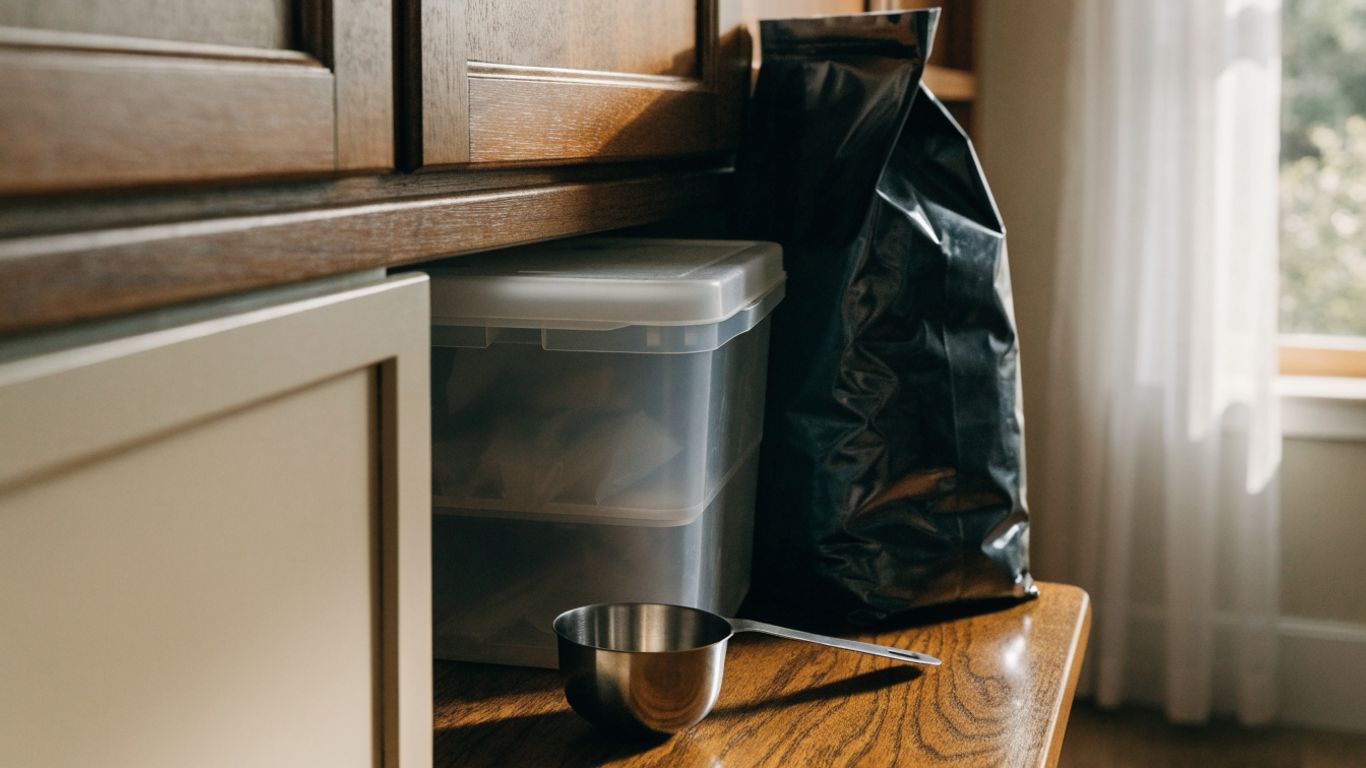
A well-sealed container can help limit contact with air and moisture after opening. It also keeps a bag from being left loosely folded between meals. For more ideas on choosing a container and keeping kibble fresh, see this dog food storage guide; the right fit depends on your available space as well as the amount you use.
Picking a container size that fits your routine
A container should hold the amount you can use while the food is still in good condition, not simply the biggest bag you can buy. Check dimensions before ordering, especially if the container needs to fit in a narrow cupboard or under a shelf. In a small kitchen, ideas for storing bulky kitchen items can help you think through tight storage spots, too.
Food-safe materials and features to look for
Look for a sturdy container intended for food storage, with a lid that closes securely and surfaces you can wash and dry completely. Smooth interiors make it easier to remove crumbs and inspect the container before refilling. A bulk kibble container comparison can offer a useful starting point when weighing capacity and practical features.
When keeping food in its original bag makes sense
The original bag carries the food’s label and handling information, so keeping it intact can make it easier to identify the product and follow its directions. If you use a separate bin, place the whole bag inside rather than pouring food directly into the bin. This also makes it simpler to empty and clean the storage container between bags.
Store kibble, wet food, and treats
Different foods call for different routines, and the package is the best place to start. Dry kibble, opened cans, chewy treats, and frozen diets do not all keep in the same way. A little separation makes it easier to follow the right instructions for each one.
Keeping dry food crisp and fresh
Keep kibble in a sealed bag or a clean, dry container, and avoid storing it beside a warm appliance. The table below is a quick reminder of the main conditions to watch; follow the product label if its directions differ.
| Storage factor | What to watch for | Simple habit |
|---|---|---|
| Air | Open or loosely folded bags | Seal the bag after serving |
| Moisture | Damp scoops or humid storage | Use dry tools and keep food dry |
| Heat | Warm cupboards or appliance sides | Choose a cooler location |
| Light | Sun hitting a clear container | Store away from direct sunlight |
Even a good container cannot undo exposure that has already occurred, so close the food promptly after each serving. Keep the label nearby and check the kibble’s condition as you go.
Refrigerating opened wet food
After opening wet food, cover it and refrigerate it according to the label’s directions. Use a clean utensil to portion each meal, and avoid leaving leftovers out longer than the packaging recommends. If the food’s smell or appearance changes, do not serve it.
Storing treats with different textures
Crunchy biscuits tend to need a dry, sealed spot, while soft treats may have different instructions on their packaging. Keep treats in their original wrappers when that helps preserve the directions, and separate them from everyday food if you have several varieties. For outings, the KindTail Portabowl is a compact, two-compartment travel bowl for carrying food and water; it’s a handy option for serving while away from home, not a substitute for storage directions.
Handling refrigerated or frozen pet food
Refrigerated and frozen diets need careful attention to the package’s temperature and thawing instructions. Keep them separate from ready-to-eat human food where practical, and use clean surfaces and utensils when portioning. If you are arranging limited freezer space, even guides to other cold-storage choices, such as selecting a plunge tub, can be a reminder to measure the available area before bringing home bulky equipment.
Find the best spot at home
A good storage location keeps food accessible to the people who serve it and protected from conditions that can affect freshness. It should also be difficult for curious pets to reach. Think about the path from delivery to cupboard to bowl, then choose a spot that makes the routine simple.
Choosing a cool, dry place away from sunlight
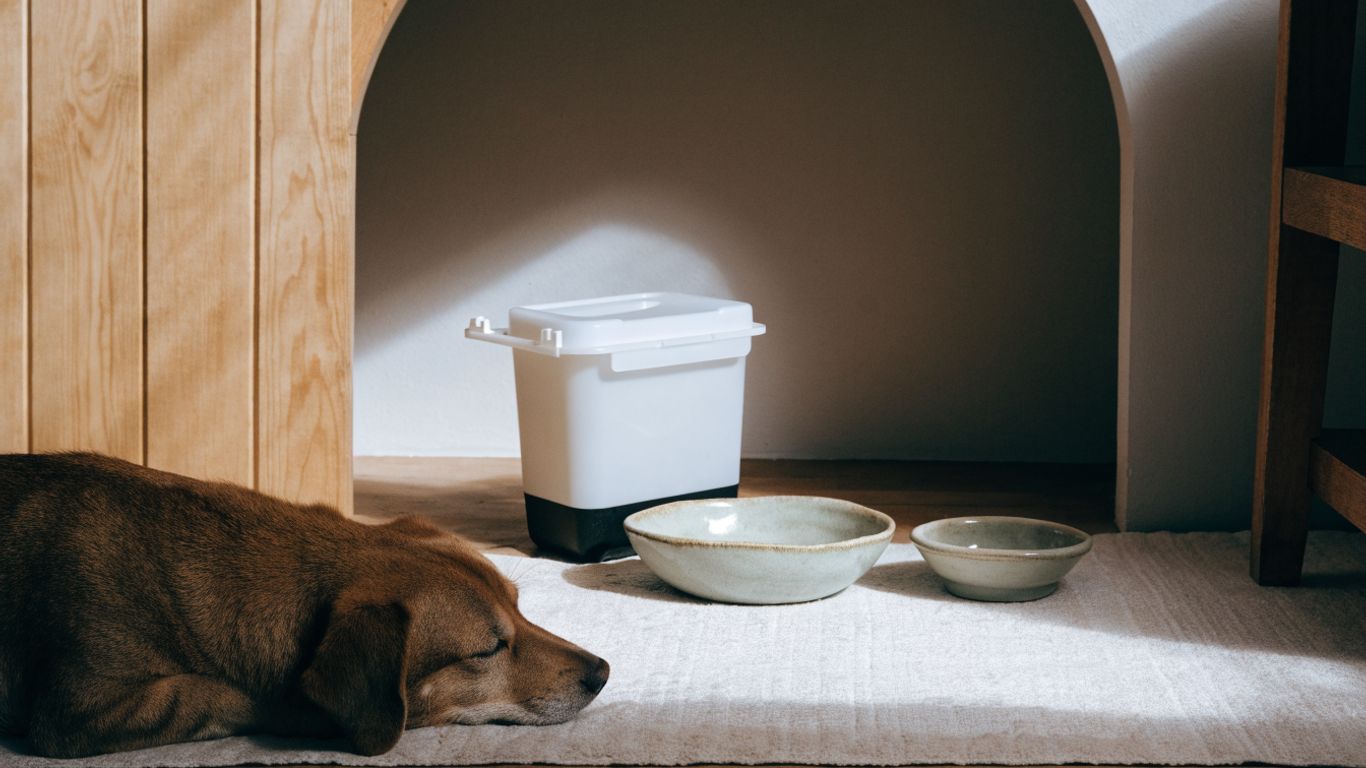
A pantry, cupboard, or other dry interior spot is often more suitable than a porch, garage, or bright windowsill. Avoid places that warm up when the oven or radiator is running, and keep bags off damp floors. If your home has little storage, measure the space before settling on a container.
Keeping food away from cleaning products and chemicals
Pet food should not share a shelf with cleaners, pest-control products, or other chemicals that could spill or leave residue. Keep those supplies closed and stored separately, and make sure any topical household products are well away from food. For example, CBD pain relief gel is a non-food item and belongs in a separate storage area.
Making storage easy to reach but hard for pets to raid
Choose a spot that lets you serve meals without carrying a heavy container across the room, then close it securely between uses. Keep bags and containers out of reach of pets who might chew, tip, or paw them open. A comfortable feeding corner can work well alongside secure food storage; a tidy feeding station offers practical ideas for keeping the mealtime area easy to clean.
Adjusting your setup for a warm or humid home
In a warm or humid home, avoid outdoor sheds and cabinets beside heat-producing appliances. Smaller containers can help you open only the amount you expect to use soon, while the rest stays sealed in its bag. Keep an eye out for condensation or dampness, and relocate food if the storage area feels warm or musty.
Keep containers clean and food fresh
A container is only useful if it stays clean and dry. Crumbs left at the bottom can mix with fresh food, and a damp interior can affect the next refill. Build a quick check into your routine whenever a bag runs out.
Washing and drying containers between refills
Empty the container completely, wash it with warm soapy water, and rinse away any residue. Let it dry fully before adding a new bag or batch of food; a towel can help, but check corners and seams for lingering moisture. This small pause is worth it, especially when the next bag is ready to open.
Avoiding old food under a fresh top-up
It is tempting to pour new kibble over what remains, but older pieces can get trapped at the bottom. Empty the container first and check for crumbs, stale food, or anything unusual. Cleaning before refilling gives you a clearer view of the new food and its opening date.
Using scoops without adding moisture or germs
Use a clean, dry scoop and put it away somewhere it will not collect water or food residue. Avoid using the bowl as a scoop, since it may be damp or dirty after a meal. If you need a compact feeding option for outings, the KindTail PAWD all-in-one pet crate is designed to be easy to set up, clean, transport, and store; keep food itself sealed according to its packaging.
Checking packaging for damage before storing
Before putting food away, look for torn seams, punctures, damp patches, or a damaged seal. If a package is compromised, check the manufacturer’s guidance before serving the food. Store it only when you can keep it protected and identify its label and date.
Buy in bulk without wasting food
A larger bag can be convenient, but only if you can store and use it properly. Think about your pet’s usual portion, how many pets share the food, and where an opened bag will live. Planning those details first can prevent a bargain-sized purchase from turning into stale leftovers.
Matching bag size to your pet’s eating pace
Estimate how quickly your household goes through a bag, then compare that with the package’s storage guidance after opening. A smaller bag may be the more practical choice if your pet eats slowly or has a small daily portion. When choosing, weigh convenience against the time the food will remain open.
Keeping unopened bags sealed until needed
Leave unopened food in its original packaging until you are ready to use it, and store it in a cool, dry place. Check the seal and date before buying several bags, then rotate older packages forward so they are used first. Keep new supplies away from heat and moisture while they wait.
Labeling containers with opening dates
Writing the opening date on a label makes it easier to keep track of how long a bag has been in use. Include the food name if you store more than one variety, and keep the original package or its information nearby. This simple habit is especially helpful when different family members feed the pet.
Planning storage for multi-pet households and different diets
In a home with several pets, use separate, clearly labeled containers or bags so each diet stays distinct. Keep serving tools clean between foods, and choose storage that makes each pet’s routine easy to follow. If you are sorting out a long-term household plan, reading about decisions around inherited property may be relevant to the broader home-planning process, though food storage itself is best handled day by day.
Conclusion
Fresh food starts with a simple routine: follow the label, keep each food sealed and stored in the right place, and clean containers before refilling them. Choose a setup that fits your pet’s appetite and your home, then check supplies as you go. It needn’t be complicated to make mealtimes feel a little more settled.
Frequently Asked Questions
Should I pour kibble directly into a storage container?
Keeping the food in its original bag inside a clean container can preserve the label and makes it easier to empty and wash the container between refills. If you do pour food directly in, follow the package directions and clean the container thoroughly before adding a new bag.
Where should I store an opened bag of dry pet food?
Choose a cool, dry place away from sunlight and heat. Fold or seal the bag securely after each serving, or place the whole bag in a clean container with a secure lid.
Can I keep pet food in the garage?
A garage may become hot, humid, or damp, so it is not always a suitable spot. Check the conditions there throughout the year and follow the storage instructions on the food’s packaging.
How often should I wash a pet food container?
Wash and fully dry it between refills so old crumbs and residue do not mix with fresh food. If food spills or the container becomes dirty before it is empty, clean it sooner.
How can I tell if pet food has gone bad?
Unusual odors, visible mold, dampness, clumping, or a change in appearance are reasons to stop serving it. When you are uncertain, check the label and contact the manufacturer or your veterinarian.
Does dry pet food need to be refrigerated?
Dry food generally follows the storage directions on its package and is usually kept sealed in a cool, dry place. Refrigerate opened wet food or other products only as directed by their labels.
How much pet food should I buy at once?
Choose a quantity your pet can finish while the food remains in good condition under the package’s storage guidance. Consider your pet’s portion size, eating pace, and available storage space before buying in bulk.